Tortoiseshell Maine Coon Colors: 6 Types and How to Spot Each
Some cats look like they were painted by hand. Black, red, and cream swirl together on one big, fluffy body, and no two cats look the same. If you are looking up tortoiseshell Maine Coon colors, you probably want to know which types exist and how to tell them apart.
This article covers the six main types, why almost all of them are female, how kitten coats change, and how to care for that thick fur. The facts come from CFA and TICA breed standards and from vet-reviewed breed pages. This is general information, so ask your own vet about your cat’s health.
What Is a Tortoiseshell Maine Coon?
Tortoiseshell is a coat pattern. It is not a breed. A tortoiseshell Maine Coon is a Maine Coon with black fur mixed with patches of red or cream. The mix looks like the shell of a tortoise, which is how the name began. Most people just say “tortie.”
The Maine Coon is the breed. The Cat Fanciers’ Association (CFA) recognized it in 1975, and The International Cat Association (TICA) followed in 1979. Both groups allow the tortie pattern.
Here is a fact that surprises many buyers. In the CFA show standard, body color and pattern earn only 15 of 100 points. The head, body, and coat count for far more. So all tortoiseshell Maine Coon colors are judged on the cat first and the paint job second.
Be careful with labels, too. Some kittens sold as tortie Maine Coons are really mixes. If you are unsure, read about mixed breed Maine Coon cats before you talk to a seller.
Why Are Tortoiseshell Maine Coons Almost Always Female?
The gene for red fur sits on the X chromosome. Females have two X chromosomes. Males have one X and one Y.
A female can carry the black gene on one X and the red gene on the other. Before birth, one X switches off at random in each cell. That is why the colors form patches. A typical male has only one X, so he is black or red, but not both.
That makes male tortoiseshell Maine Coon colors very rare. Vet sources say only about 1 in 3,000 tortoiseshell cats is male, and most are sterile. These males usually carry an extra X chromosome.
The 6 Main Tortoiseshell Maine Coon Colors
Breeders and cat clubs name each look by its base color and extra marks. These are the tortoiseshell Maine Coon colors you will meet most often.
1. Classic Tortoiseshell
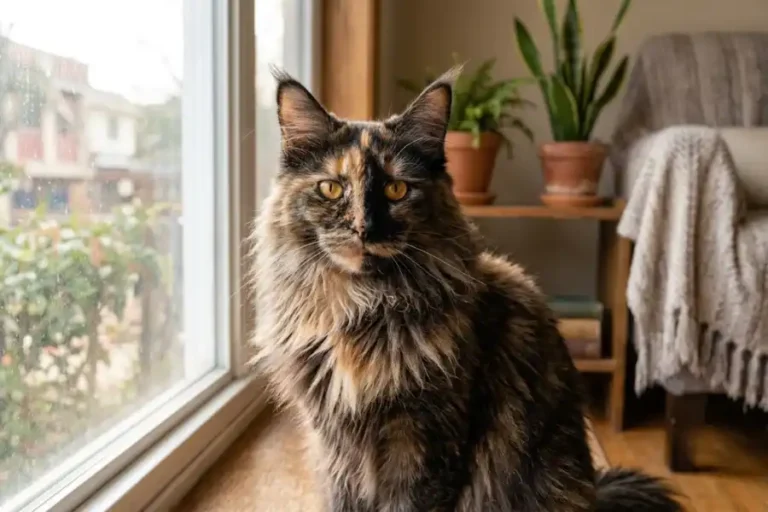
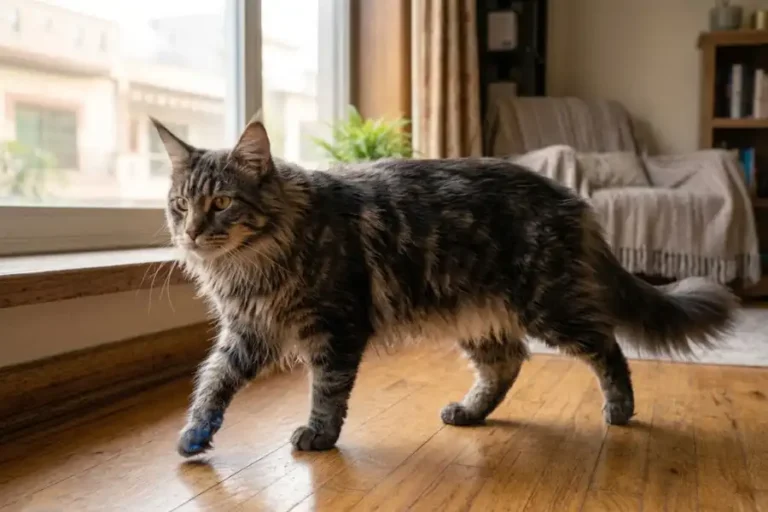
This is the look most people picture. The coat is black with patches or swirls of red. Some cats have more red. Others have more black. The patches can be sharp, or they can blend into each other like brush strokes.
2. Blue-Cream
Blue-cream is the soft version. In cat language, “blue” means gray. So you see gray fur with cream patches. The look is calm, like a cloudy sky mixed with warm sand. It still counts as a tortie pattern, just in lighter shades.
3. Torbie (Tortoiseshell Tabby)
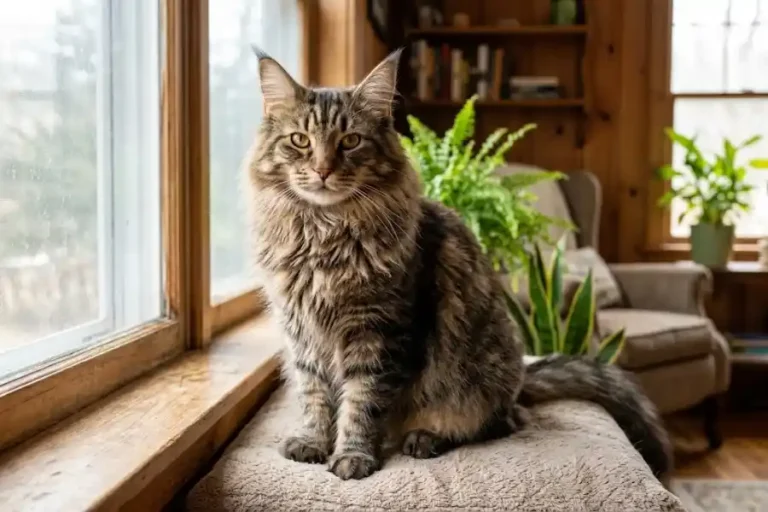
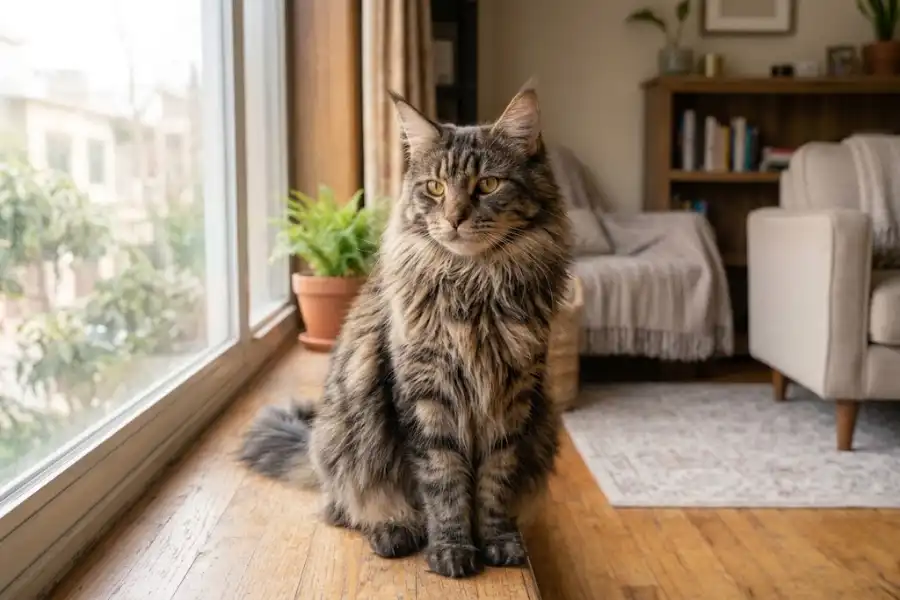
Torbie is short for tortie tabby. These cats have tortie patches plus tabby stripes. Look for stripes inside the red patches and the tabby “M” mark on the forehead. Tabby is one of the most common patterns in Maine Coons, so torbies are easy to find.
4. Tortoiseshell and White
Add white to the mix and you get a tortie and white. The white usually shows on the chest, belly, and paws. When white covers a large part of the coat, many people call the cat a calico. The two are close cousins. Our post on the calico Maine Coon shows how they compare.
5. Smoke Tortoiseshell
Smoke cats have a pale or white undercoat, and the color sits only at the tips of the hair. When the cat sits still, it looks like a tortie. When it moves, you catch flashes of silver at the roots. This look is hard to spot on kittens, so ask the breeder for photos of the parents.
6. Shaded Tortoiseshell
A shaded cat has a light, silvery base with color on the upper part of each hair. The result is a soft, sparkly coat that looks brighter than a classic tortie. Like smoke, this look shows best on an adult cat.
How to Tell Tortoiseshell Maine Coon Colors Apart
Not sure which type you are looking at? Run through this quick check in order.
- Look for large white areas on the chest, belly, or paws. If you see them, it is a tortie and white (or a calico if the white is large).
- Look for stripes. If you see stripes inside the colored patches, it is a torbie.
- Check the base color. If the fur is gray and cream instead of black and red, it is a blue-cream.
- Part the fur and check the roots. Pale or white roots point to smoke or shaded.
- If none of these fit, you most likely have a classic tortoiseshell.
Do Tortoiseshell Maine Coon Colors Change as Kittens Grow?
A little, yes. A kitten starts with a short, fluffy coat. The thick adult coat comes in slowly, and Maine Coons take a couple of years to fill out. As the fur grows, patches can look softer, richer, or more blended.
Smoke and shaded coats are the hardest to read. The pale roots may not show well on a young kitten. So ask the breeder for photos of both parents as adults. That is the best preview of how your kitten may look.
Do Tortoiseshell Maine Coons Have Tortitude?
Many owners say tortoiseshell cats have extra attitude, often called tortitude. They describe cats that are bold, playful, and a little bossy. Vet-reviewed breed pages also call tortie Maine Coons independent and mischievous.
The science is thin, though. Most of the proof comes from owner stories, not lab tests. Enjoy the idea, but expect each cat to have its own personality. Early play and gentle handling matter more than coat color.
Health, Lifespan, and Price
Coat pattern does not decide health. A tortie Maine Coon faces the same risks as any Maine Coon, including a heart disease called HCM and hip problems. Ask the breeder for health test records for both parents.
Most Maine Coons live about 12 to 15 years with good care. Our post on Maine Coon lifespan shows what helps them live longer.
Price needs a clear head. Female torties are not rare in the cat world, and tortoiseshell Maine Coon colors should not add a huge fee on their own. A fair price reflects health testing, pedigree, and care. Be wary of any seller who calls a tortie coat “ultra rare” to justify a high cost.
Grooming a Tortoiseshell Maine Coon
The long, thick coat needs steady care. Brush with a steel comb two or three times a week. Focus on the spots where mats form: behind the ears, under the legs, along the belly, and around the back legs.
During spring and fall, the coat sheds more. Brush daily then. Our post on Maine Coon shedding explains what to expect each season. Tortoiseshell Maine Coon colors do not change the routine, so the same tools work for every type. Go slow, keep your touch gentle, and add a treat. A cat that enjoys brushing is much easier to groom for life.
Frequently Asked Questions
Are tortoiseshell Maine Coon colors rare?
Female torties are fairly common among cats. Males are very rare. Looks like smoke and shaded tortie can take longer to find.
Is a tortoiseshell Maine Coon a separate breed?
No. It is a Maine Coon with a tortoiseshell coat pattern.
Can a male Maine Coon be tortoiseshell?
Yes, but it is very rare. About 1 in 3,000 tortoiseshell cats is male, and most are sterile.
What is the difference between a tortie and a calico?
A tortie has black and red mixed together with little or no white. A calico has large white areas with patches of black and red.
What eye colors do tortoiseshell Maine Coons have?
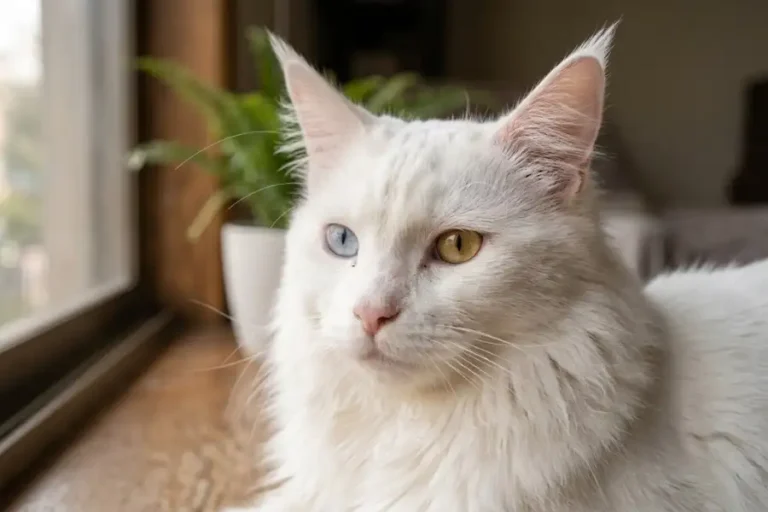
Green, gold, and copper are common. Eye color does not follow the tortie pattern.
Final Thoughts
Tortoiseshell Maine Coon colors give you plenty of choices, from classic black and red to soft blue-cream, striped torbie, and silver-tipped smoke. Pick your cat for health and personality first, then enjoy the coat. Ask for health records and parent photos, brush often, and you will have a stunning companion for many years.