Maine Coon Eye Color: What Every Shade Really Means
Have you ever locked eyes with a Maine Coon? If so, you know why people stop and stare. Those big, wide-set eyes are one of the first things anyone notices about this breed. The color behind them tells a small story about the cat’s genes, its coat, and sometimes even its health.
This article covers every Maine Coon eye color: why kittens are born with blue eyes, when that color settles for good, and what odd eyes or sudden changes might mean for your cat.
The Main Maine Coon Eye Colors
Maine Coon eyes come in a few natural shades. None of them is better than the others. Some are just rarer than others.
- Green: The most common shade in adult Maine Coons. It can be pale and soft, or deep like an emerald.
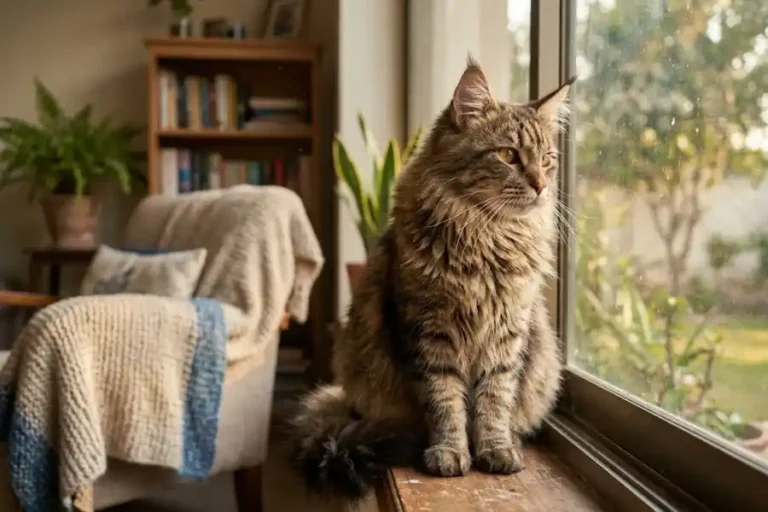
- Gold or copper: Warm, sunny tones. These often show up in tabby cats and darker-coated cats.
- Hazel or gold-green: A mix of green and gold. This is common in mixed-color coats.
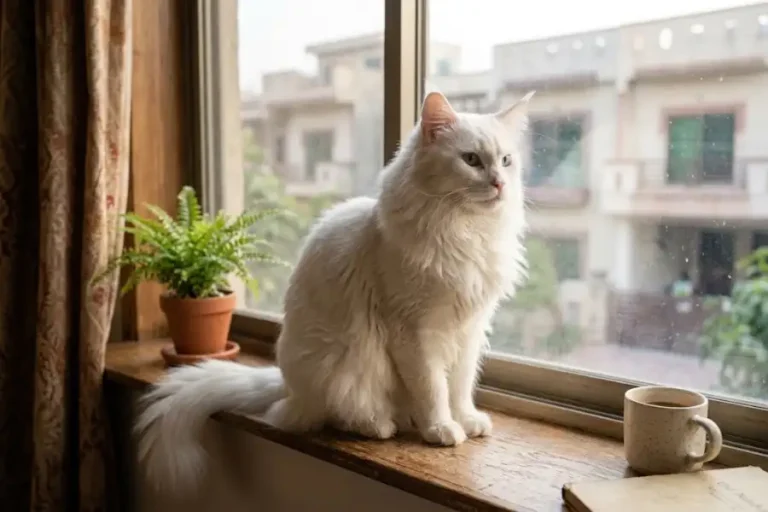
- Blue: Bright and rare. It is usually linked to white or mostly white coats.
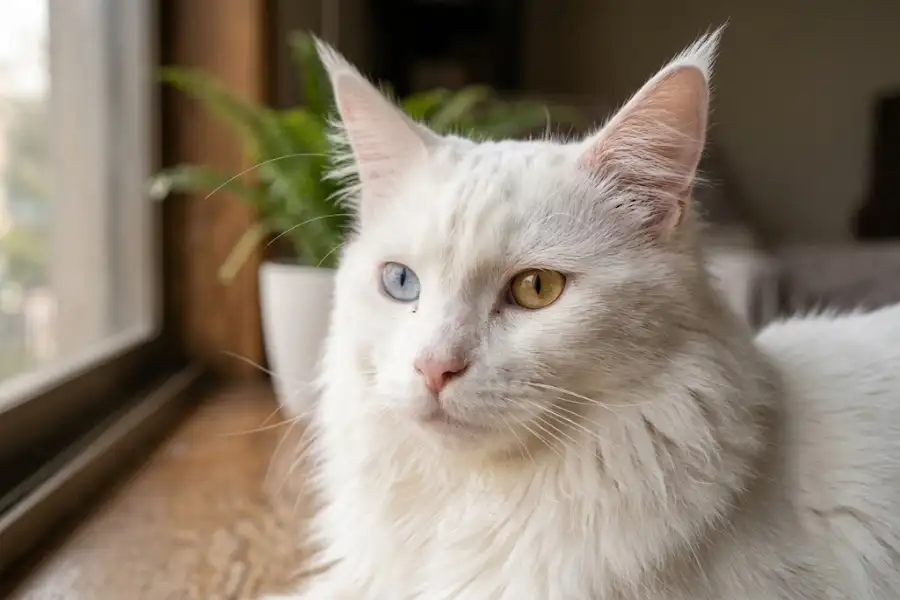
- Odd eyes: Two different colors in one cat. Most often, one eye is blue and the other is gold or green.
A cat’s exact shade depends on its coat color, its family line, and plain luck. That is the same reason two kittens from one litter can end up with different eye colors.
Why Are Maine Coon Kittens Born With Blue Eyes?
Every Maine Coon kitten opens its eyes with the same starting color: a hazy, grayish blue. This has nothing to do with the color it will have as an adult.
Newborn kittens have very little melanin in the iris. Melanin is the pigment that gives eyes, skin, and fur their color. Without much melanin, light passes through the iris and scatters. That scattering is what looks blue, in the same way a clear sky looks blue.
As the kitten grows, cells called melanocytes wake up. They start making melanin and adding it to the iris. The final eye color is just a record of how much melanin builds up, and where it lands.
When Do Maine Coon Eyes Change Color?
Eye color does not shift overnight. It follows a fairly steady timeline:
- Birth to 6 weeks: Eyes stay a cloudy newborn blue.
- 6 to 8 weeks: The first hints of adult color appear near the pupil.
- 8 to 12 weeks: Color spreads outward. You can often see it change week by week.
- 4 to 6 months: Most kittens have reached their true adult eye color by now.
Some Maine Coons keep shifting in small ways until they near their first birthday. So a kitten’s final shade is not always set by the time it goes to its new home. Want an early clue? Look at the small ring right around the pupil at around week 8. That ring often hints at what is coming.
What Decides Which Eye Color a Maine Coon Gets?
Genes control eye color, and those same genes often also control coat color. That is why certain eye colors tend to pair with certain coats.
- Dark tabbies and solid dark coats often have gold, copper, or hazel eyes.
- Silver coats and light tabby coats often lean toward green.
- White coats, or coats with a lot of white, are the most likely to carry blue or odd eyes.
Breeders who track family lines for years can often guess a kitten’s future eye color before it even opens its eyes. They look at the parents and grandparents behind it.
Blue-Eyed Maine Coons: Rare and Closely Watched
Blue eyes in an adult Maine Coon almost always trace back to one thing: a lack of pigment. This is caused by the white spotting gene or the dominant white gene. Cats with mostly or fully white coats are the ones who tend to keep that newborn blue color instead of turning gold or green.
Because blue eyes are tied so closely to white fur, cat show groups only accept blue or odd eyes on Maine Coons that are white, or that carry a large patch of white. A gold-and-white or brown tabby Maine Coon with blue eyes would not meet that show rule, even though the cat is perfectly healthy.
Odd-Eyed Maine Coons Explained
An odd-eyed cat has two eyes of two different colors. The medical term is heterochromia. Most often, one eye is blue and the other is gold, copper, or green. It happens when the white spotting gene blocks pigment from one eye but not the other.
There are a few types worth knowing:
- Complete heterochromia: Each eye is a full, solid color. This is the classic odd-eyed look.
- Central heterochromia: A ring of one color sits around the pupil. The rest of that same iris is a different shade.
- Sectoral heterochromia: A patch or wedge of color breaks up one solid iris.
Odd eyes are uncommon, and many owners love the look. But odd eyes are simply a pigment pattern. They do not change how well the cat can see.
Do Blue Or Odd Eyes Mean a Maine Coon Is Deaf?
This is one of the most searched questions about eye color. The short answer: sometimes, but not always.
The gene that removes pigment from the coat and eyes can also affect the inner ear as a kitten develops. Studies on white cats show that many blue-eyed white cats have some hearing loss. The risk climbs with the number of blue eyes. A cat with two blue eyes has a higher chance of hearing loss than a cat with just one blue eye. When hearing loss does show up in an odd-eyed cat, it is usually only in the ear on the same side as the blue eye.
This link only applies to white or mostly white coats. A green-eyed or gold-eyed Maine Coon with a normal tabby or solid coat is not part of this pattern at all. If you are adopting a white or mostly white kitten with blue or odd eyes, ask about a hearing test called a BAER test. It can confirm whether hearing loss is present, so you can plan care around it.
When a Sudden Eye Color Change Needs a Vet Visit
A slow shift from kitten blue to an adult shade over several months is normal. A sudden change in an adult cat is not. Watch for a cloudy eye, a new color patch, or a color that looks dull and different from one week to the next.
Sudden changes like these can point to:
- Inflammation inside the eye
- A hidden injury
- A cataract forming
- Higher pressure inside the eye
If your adult Maine Coon’s eye color changes fast, or one eye suddenly looks different from the other, book a vet visit rather than waiting it out.
Frequently Asked Questions
What is the rarest Maine Coon eye color?
Blue and odd eyes are the least common. Both depend on the white spotting gene or the dominant white gene reaching the iris.
Can a Maine Coon’s eye color change after it is fully grown?
A small shift in shade can happen with age or light. But a sudden, sharp change in an adult cat is unusual. Mention it to your vet.
Do all white Maine Coons have blue eyes?
No. White Maine Coons can have blue, gold, green, or odd eyes. White fur and blue eyes are linked, but one does not always bring the other.
Does eye color affect a Maine Coon’s personality?
No. There is no proof that eye color links to temperament. A cat’s personality comes from its genes, its early handling, and its home life, not the shade of its iris.
Final Thoughts
Every Maine Coon starts life with the same cloudy blue eyes. The color it settles into by around six months says more about its coat genes than anything else. Green, gold, and hazel are common and healthy. Blue and odd eyes are rarer. They tend to show up with white coats, and they carry a real, well-known link to hearing loss that is worth checking, not worrying over. Whatever shade your Maine Coon ends up with, it is a small, beautiful piece of the genetics that make this breed so easy to spot in a crowd.