Lion Cut for Maine Coon Cats: When It Helps and When to Skip It
Your Maine Coon leaves fur on every chair. New mats keep showing up behind the ears. Summer feels long and hot. So you start to wonder about a lion cut for Maine Coon cats.
A lion cut is a clip done by a groomer. The body fur is cut short. The mane, the tail tip, and sometimes the leg fur stay long. Your cat ends up looking like a tiny lion.
It sounds cute. It can also sound a bit scary. Both reactions are fair. This post gives you the facts so you can pick what fits your cat. You will see the good, the bad, the cost, and some safer options.
Here is the short version. A lion cut for Maine Coon cats is not cruel, and it is not a must. It can help a cat with bad mats or a coat you cannot keep up with. For a healthy cat that accepts brushing, it is usually not needed.
What Is a Lion Cut for Maine Coon Cats?
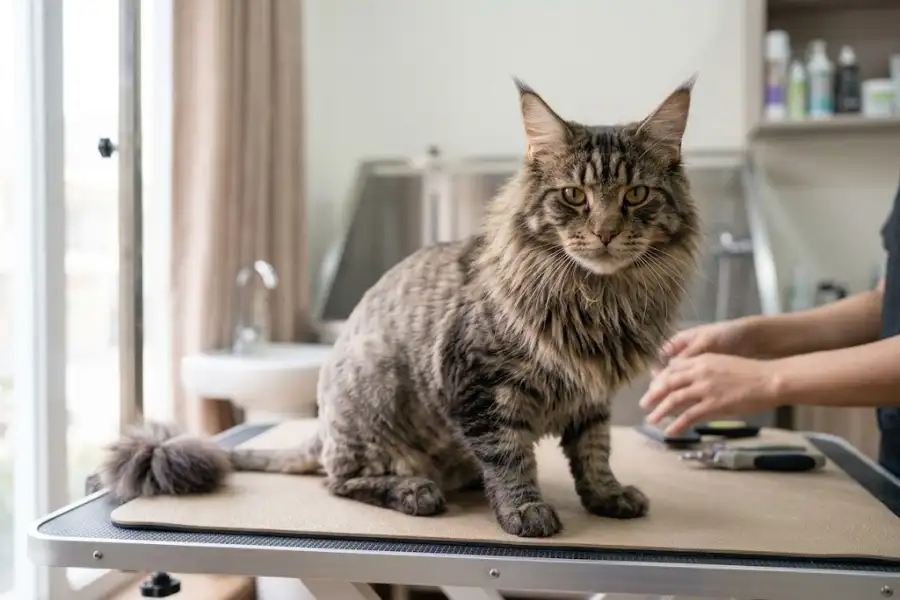
A lion cut is one of the most common clips for long-haired cats. A groomer uses clippers to cut the fur on the back, sides, belly, and legs. The fur around the head and neck stays long. That is the “mane.” The tail often keeps a tuft at the end. Some groomers also leave “boots” on the paws.
It is not the same as a small trim. A trim takes off a little length. A lion cut takes off most of the body coat. That is a big change for a breed known for thick, flowing fur.
For a calm cat, the visit takes about 30 to 60 minutes. A nervous cat may need breaks or a second visit.
Why Do Owners Choose a Lion Cut for Maine Coon Cats?
People pick this clip for a few common reasons:
- Mats that sit close to the skin and will not brush out
- Heavy shedding and fur all over the house
- Fewer hairballs from less loose fur
- A cat that hates brushing
- An older or heavy cat that cannot reach and clean its own coat
- Easier skin care when a vet wants to treat the skin
Mats are the big one. Tight mats pull on the skin. They can hurt and cause sores. In bad cases, a vet or groomer may suggest shaving the matted spots, or the whole body. That is a health choice, not a style choice.
Does a Maine Coon Need a Lion Cut in Summer?
No, not for heat alone. The Maine Coon coat grew in cold Maine winters, but it also helps a cat stay steady in warm weather. Many groomers and vets say a healthy cat does not need to be shaved to stay cool.
If your home runs warm, try these steps first:
- Run a fan or keep the air on
- Give your cat a cool tile or floor spot
- Set out fresh water, and think about a pet fountain
- Brush more often in spring, when the old coat falls out
Heavy panting, drooling, or weak, tired behavior in a cat is a warning sign. Call your vet right away.
The Pros of a Lion Cut for Maine Coon Cats
- It removes mats and gives the coat a fresh start
- There is less loose fur around your home for a while
- You can see the skin, which helps with flea checks and skin care
- Cats that get messy in the back end stay cleaner
- Some cats seem lighter and more playful afterward
- You brush less while the coat is short
The Cons and Risks
- Sunburn. Skin that was covered is now open to the sun. Pale cats can burn fast, even through a window.
- Cold and heat swings. The coat works like insulation. Short fur can leave your cat chilly in a cool room.
- Skin irritation. Clippers can cause nicks or red spots. Cat skin is thin and loose, so it is easy to cut.
- Stress. Loud clippers and being held still scare some cats.
- Uneven regrowth. The new coat may come back patchy or feel different for a while.
- Itchy regrowth. Short new fur can itch, and some cats lick or scratch more.
- No lasting fix. Fur grows back, and mats can return if brushing stops.
- Home tension. In homes with more than one cat, the smell change can lead to hissing for a few days.
Is a Lion Cut Cruel for a Maine Coon?
No, not when a skilled groomer does it for a good reason. Cats react in different ways. Some act proud and show off the new look. Others hide, sulk, or act odd for a few days.
Watch for these signs after the cut:
- Hiding more than normal
- Skipping meals
- Licking one spot again and again
- Hissing at other pets
Most cats settle in within a few days. If the signs last more than a week, call your vet.
Is a Lion Cut for Maine Coon Cats Right for Your Cat?
A lion cut may fit if your cat:
- Has mats close to the skin
- Cannot groom well because of age, weight, or sore joints
- Will not accept brushing at all
- Needs skin care that a vet has approved
Think twice, or ask your vet first, if your cat:
- Has sensitive skin or a skin problem
- Is very anxious or fights the groomer
- Has a health issue that could call for sedation. Maine Coons can face heart disease, so read our short page on HCM in Maine Coons and talk to your vet before any sedation
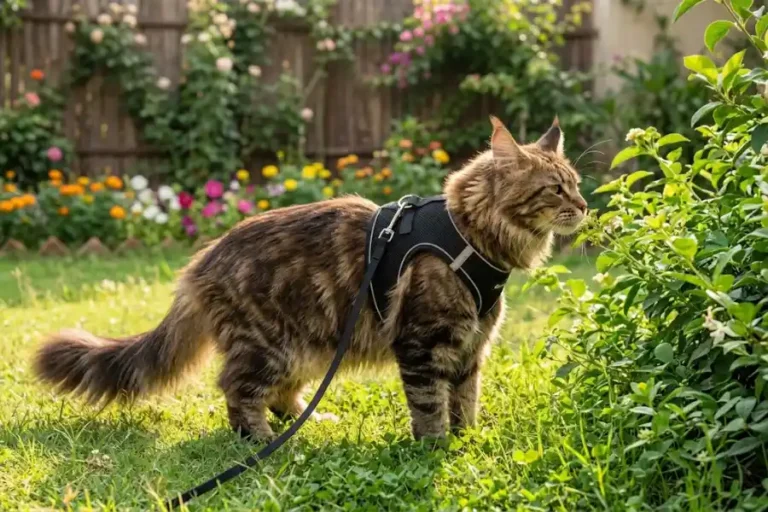
- Goes outdoors
- Has pale or pink skin and loves sunny windows
- Would get the cut in the cold months, unless the cut is for health reasons
What Does a Lion Cut for Maine Coon Cats Cost?
In the US, many groomers charge about $80 to $200 for a lion cut. Large cats and matted coats land near the top. Mat removal can add $20 to $50. Prices change by city and by groomer, so ask for the price before you book.
Maine Coons are big. That means more time on the table and a higher bill than a small cat.
How to Book a Safe Lion Cut
- Check with your vet first. This matters most for senior cats and cats with health problems.
- Pick a cat-savvy groomer. Ask how they handle nervous cats. Ask if they ever use sedation. Sedation should only come from a vet.
- Choose a mild season. Late spring or early summer works for most homes. Skip cold months unless a vet says the cut is needed.
- Say what you want. Tell the groomer how long the mane should be. Say if you want the leg fur left on.
- Leave mat removal to the pro. Do not cut mats with scissors at home. Cat skin slips and tents easily, so cuts happen fast.
- Bring comfort items. A favorite blanket and a few treats help your cat relax after the visit.
- Ask for a nail trim. Many groomers do this in the same visit. Big paws need regular care, and our page on Maine Coon claws and nails shows how to trim them safely.
Aftercare and Regrowth After a Lion Cut for Maine Coon Cats
The first few days
Let your cat rest in a quiet spot. Keep your cat indoors. Offer a warm bed. Check the skin for red spots, nicks, or scabs. Keep direct sun on the skin short, even by a window.
Weeks 2 to 4
Short fuzz starts to show up. It may itch. Brush gently with a soft brush. Do not worry if your cat grooms a lot more than usual, but call your vet if you see sore or bare skin.
Months 3 to 6
Most Maine Coons need about three to six months to grow the coat back. Some take up to eight months. The new coat may look uneven or feel different at first. It usually settles with time. If the fur still looks patchy after six months, ask your vet.
Baths and brushing
Many groomers wash the cat before the cut. After the cut, give the skin time to settle. Then go back to a normal bathing plan. Too many baths can dry out the skin, so a gap of six to eight weeks is a safe start for most cats. Our Maine Coon bathing routine page lays out the steps.
Keep brushing, too. Short fur still needs a soft brush so mats do not come back as the coat grows.
Safer Options to a Lion Cut for Maine Coon Cats
If you are not sure, try these middle steps first:
- Brush on a schedule. Aim for two to three times a week with a slicker brush and a comb. Brush daily in spring and fall, when the coat sheds more. If you want a simple plan, start with our Maine Coon care basics.
- Ask for a sanitary trim. The groomer clips only the back end and belly. Your cat stays clean, and most of the coat stays.
- Book mat removal only. The groomer takes out just the problem spots.
- Try a comb-out visit. A pro can remove loose undercoat without a full clip.
- Check the diet. Good food with omega-3 fats can help the coat stay healthy. Ask your vet what suits your cat.
Common Myths About the Lion Cut
- Myth: Shaving stops shedding. Your cat still sheds as the coat grows back.
- Myth: The coat will never grow back. It does grow back, though it can take months.
- Myth: Shaving cools every cat. A healthy Maine Coon rarely needs it.
FAQs
Is it OK to give a Maine Coon a lion cut?
Yes, in the right case. A lion cut for Maine Coon cats is safe when a skilled groomer does it, the cat is healthy, and the reason is good. It fits a matted or hard-to-groom cat better than a healthy one.
How long does it take for a Maine Coon’s fur to grow back after a lion cut?
Most cats take about three to six months. Some take up to eight months.
How often can a Maine Coon get a lion cut?
Most owners keep it to a few times a year at most. Some groomers redo the cut every 8 to 12 weeks to keep the look. Ask your groomer and your vet what suits your cat.
Will a lion cut change my Maine Coon’s coat?
It can. The coat may look uneven or feel softer or coarser for a while. Most cats get their normal coat back with time.
Can I give my Maine Coon a lion cut at home?
It is best to leave it to a pro. Cat skin is thin and loose, and one sudden move can lead to a cut. Clippers also scare many cats.
Do Maine Coons get cold after a lion cut?
They can in a cool room. Keep your home at a steady, comfy temperature and give your cat a warm bed.
Conclusion
A lion cut for Maine Coon cats can be a kind choice when mats, age, or health make brushing hard. A healthy cat does not need one to stay cool. Talk to your vet, pick a cat-savvy groomer, and plan for the sun and the regrowth. If you are unsure, start with regular brushing or a sanitary trim. Let your cat’s comfort lead the decision.