Purebred Maine Coon: How to Spot the Real Thing (Not a Mix)
So someone told you that your cat “looks like a purebred Maine Coon.” Or maybe you’re about to pay a breeder a few thousand dollars for one and you want to be sure you’re getting what you’re paying for. Either way, you’ve landed in the right place.
Here’s the truth most people don’t want to hear: a cat can be huge, fluffy, and have ear tufts like a lynx, and still not be a purebred Maine Coon. Size and fluff are clues. They are not proof. This guide walks you through the real signs, the one thing that actually confirms breed status, and the traps that catch new buyers every single day.
What “Purebred” Actually Means
A purebred Maine Coon is a cat whose parents, grandparents, and further back are all documented Maine Coons, recorded with an official cat registry. That documentation is called a pedigree. It’s the cat version of a birth certificate that traces back several generations.
This matters because “Maine Coon” means something more specific than “big fluffy cat.” It’s a distinct breed with a written standard, the kind used to judge cats at shows. A cat can share the look without sharing the bloodline.
The Physical Signs of a Purebred Maine Coon
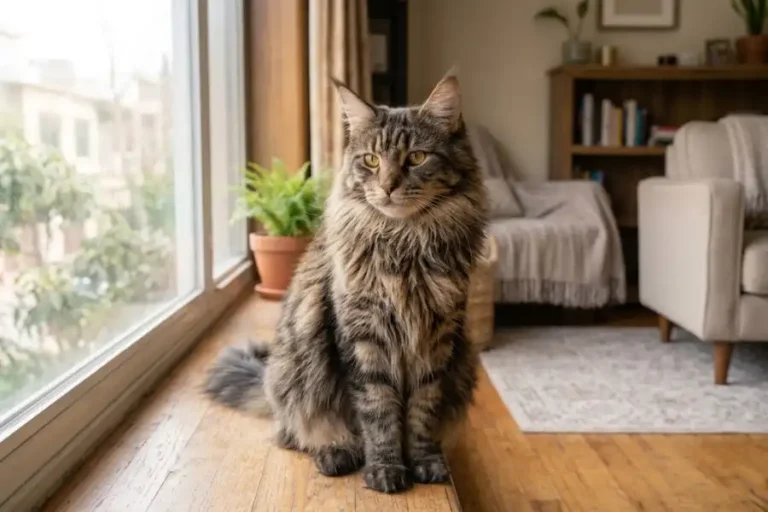
You can’t confirm a purebred by eye alone. But real Maine Coons do share a set of traits that are worth checking. If a cat is missing most of these, it’s probably a mix or a different breed entirely.
- Size: Males usually weigh 13 to 18 pounds, and females run smaller at 8 to 12 pounds, easily outweighing the average house cat (our Maine Coon Cat Size Comparison has the exact numbers). Both should feel solid and muscular, not soft or round.
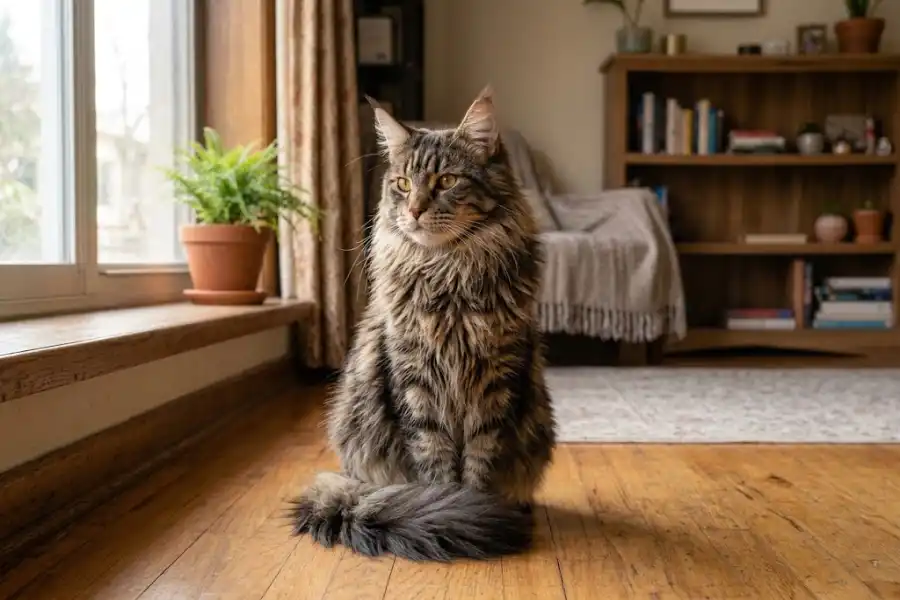
- Body shape: Long and rectangular, not compact. A Maine Coon often looks longer from head to tail than a typical house cat, with a broad chest and sturdy legs.
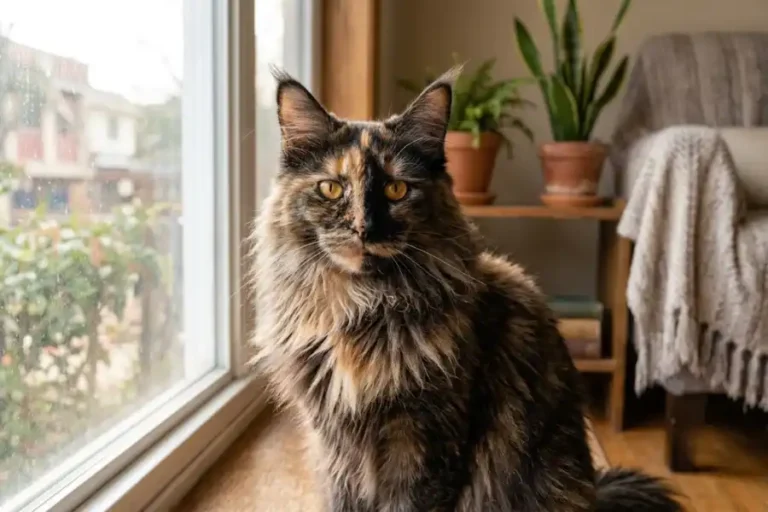
- Ears: Tall and wide at the base, with pointed “lynx tips” and tufts of fur growing inside, called furnishings.
- Tail: Long, thick, and bushy, often close to the length of the body. It should be able to reach the cat’s own shoulder when curled forward.
- Coat: A shaggy, water-resistant double coat that’s shorter on the shoulders and longer around the belly and britches, with a thick ruff of fur around the neck that looks like a small mane.
- Eyes: Large and slightly oval, usually green, gold, or copper, set at a slight angle.
- The “M” marking: Many Maine Coons, especially tabbies, have a faint M-shaped pattern on their forehead.
- Paws: Big, round, and tufted with fur between the toes, built for walking on snow.
- Personality: Playful but not needy, famous for “chirping” instead of meowing, and often oddly dog-like. Many will fetch toys, follow you room to room, and even learn to open doors.
Check off most of these and you likely have a cat with real Maine Coon ancestry. But here’s the part almost nobody tells you clearly.
Why Looks Alone Can Fool You
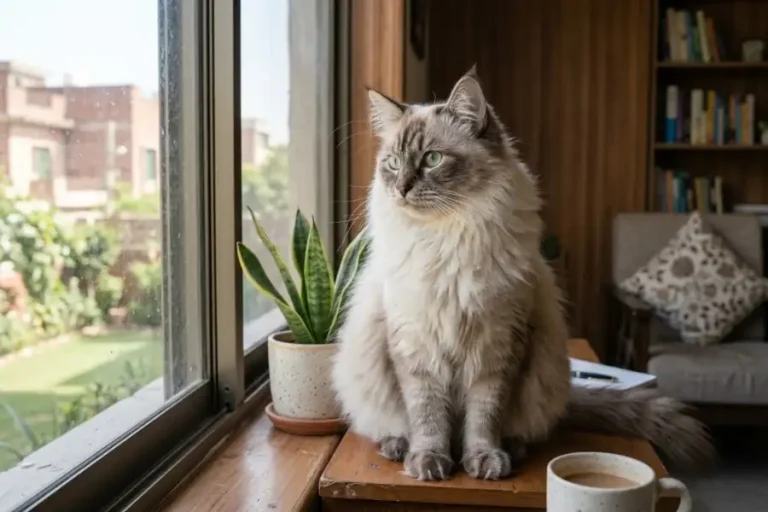
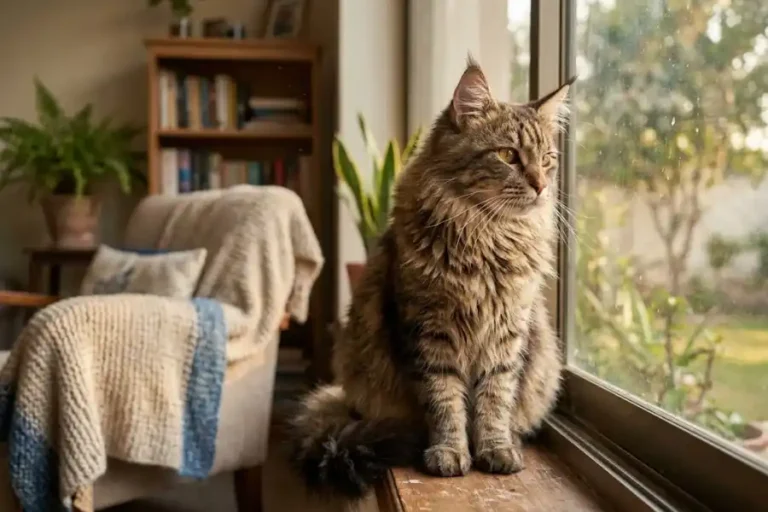
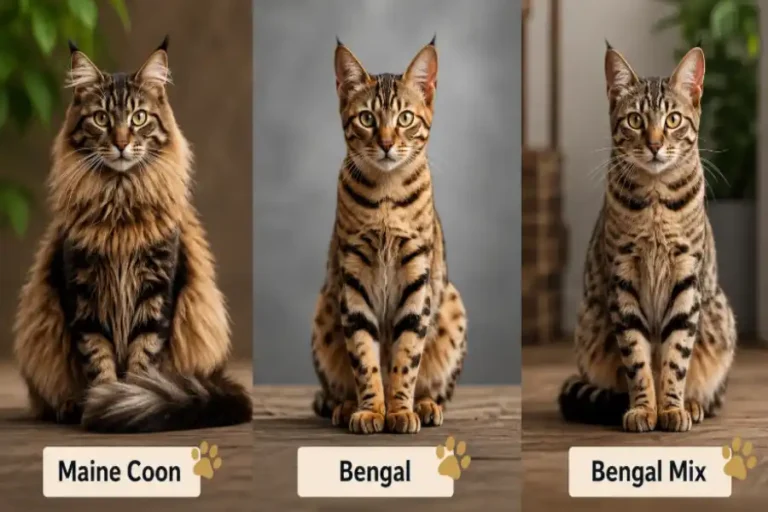
Plenty of cats carry Maine Coon-like traits without a drop of Maine Coon in their pedigree. Lined up side by side in a Maine Coon vs Normal Cat comparison, the differences are obvious, but in person, a big fluffy mix can fool almost anyone. Norwegian Forest Cats, Siberians, and even large domestic longhairs can look strikingly similar: big body, tufted ears, bushy tail, the works. Breeders sometimes call these “Maine Coon lookalikes,” and shelters label cats “Maine Coon mix” based purely on appearance, with no paperwork to back it up.
A cat is not a purebred Maine Coon just because it’s big and fluffy. Only pedigree papers, or a verified breeder record, can actually confirm it.
This is the single most important idea in this whole article. Remember it before you pay a purebred price for a cat that might just be a very convincing mix.
The Only Real Proof: Pedigree Papers and Registration
If you want certainty, not a guess, you need documentation from a recognized registry. In the United States, the two major ones are:
- The Cat Fanciers’ Association (CFA)
- The International Cat Association (TICA)
A legitimate breeder should hand you registration paperwork listing the kitten’s parents, often several generations back, along with a registered cattery name. This isn’t optional extra paperwork. It’s the entire point of buying from a breeder instead of a shelter or a stranger online.
Here’s a step most articles skip: you can verify this yourself. Both CFA and TICA let you search their online cattery directories to confirm a breeder is real and currently registered. If a seller claims to be TICA or CFA registered, ask for their cattery name and look it up yourself before you send any money. A real breeder won’t mind. A scammer will suddenly go quiet.
Can a DNA Test Prove a Cat Is a Purebred Maine Coon?
This is where a lot of people get confused, so let’s clear it up.
Consumer cat DNA kits, the kind you can order online, are useful, but they don’t work the way most buyers assume. They estimate breed composition by comparing your cat’s DNA to a reference database. They can tell you “this cat is likely 40% Maine Coon-type,” but that’s an estimate, not an official pedigree confirmation. It won’t get your cat registered anywhere.
There’s also a separate kind of DNA test that responsible breeders run, one that checks for specific health conditions common in the breed, like hypertrophic cardiomyopathy (HCM) and spinal muscular atrophy (SMA). These tests confirm health status, not breed purity. A good breeder should be able to show you both this health testing and the pedigree, not one instead of the other.
So the honest answer is this: DNA testing can support a purebred claim, but pedigree papers from a real registry are still the only true proof.
Red Flags: When a “Purebred” Kitten Probably Isn’t
Scam listings for Maine Coon kittens are common, especially online. Watch for these warning signs before you commit to a purchase.
- The seller says papers are “coming later” or “not needed.”
- The price seems far below market rate for a supposedly purebred kitten.
- There are no photos of the kitten’s actual parents.
- The breeder won’t let you video call or visit, even from a distance.
- They push for payment through wire transfer or gift cards only.
- The cattery name can’t be found in any TICA or CFA directory search.
- Every question gets a vague, rehearsed-sounding answer.
One or two of these might have an innocent explanation. Several at once is a clear sign to walk away.
What a Purebred Maine Coon Really Costs
Based on current listings from registered catteries across the U.S., purebred Maine Coon kittens typically range from $1,500 to $5,000. A few factors push the price up or down:
- Bloodline and show titles: Kittens from champion or grand champion parents cost more.
- Color and pattern: Rare colors, like solid white or certain silver patterns, often carry a premium.
- Health testing: Catteries that run full genetic panels, heart scans, and hip and patella checks tend to charge more, and that’s usually worth it.
- Pet vs. breeding rights: A kitten sold as a spayed or neutered pet is cheaper than one sold with breeding rights.
- Location and demand: Prices shift depending on how many reputable breeders are near you.
Anything advertised far below this range for a “papered, purebred” kitten deserves extra scrutiny.
The Hidden Costs of Owning One
The purchase price is just the start. Maine Coons are bigger than average cats, and that shows up in your monthly bills, not just the sticker price.
- Food: A large, muscular cat eats more than a standard house cat, especially on a quality diet built for bigger breeds.
- Litter and supplies: You’ll need oversized litter boxes, beds, and scratching posts. Standard-sized ones fill up fast or simply don’t fit.
- Grooming: The coat sheds heavily, especially in spring. Regular brushing isn’t optional if you want to avoid mats.
- Veterinary care: Routine visits, dental cleanings, and the breed-specific heart screenings mentioned earlier all add up over a cat’s life.
- Pet insurance: Many owners choose insurance specifically because of the breed’s known heart and joint risks, and it’s worth pricing out before you bring a kitten home.
Health Issues Every Buyer Should Ask About
Purebred status isn’t only about looks and paperwork. A responsible breeder actively screens for the health problems that show up more often in this breed. Ask directly about these before you buy:
- Hypertrophic cardiomyopathy (HCM): A heart condition that’s more common in Maine Coons than in many other breeds. Ask if the parents have had a cardiac ultrasound.
- Hip dysplasia: Not unusual in a breed this large. Reputable breeders screen for it.
- Spinal muscular atrophy (SMA): A genetic condition specific to the breed. A simple DNA test can confirm a cat is clear of it.
- Polycystic kidney disease (PKD): Less common in Maine Coons than in some breeds, but still worth asking about.
A breeder who welcomes these questions and has documentation ready is showing you real expertise. One who brushes them off is showing you the opposite.
Questions to Ask a Breeder Before You Buy
- Can I see the registration papers for this kitten and both parents?
- What cattery name are you registered under, and with which registry?
- Can you show me proof of health testing for HCM and SMA?
- Can I see the parents in person or on a video call?
- What is included if I need to return the kitten or if a health issue is discovered early on?
- Do you offer a written health guarantee?
A confident, transparent breeder will answer every one of these without hesitation.
Frequently Asked Questions
Is a Maine Coon without papers still purebred?
It might be, genetically. But without registration papers, there’s no way to formally confirm it. For all practical purposes, an unpapered cat is treated as a Maine Coon mix, even if it looks completely purebred.
How can I check if a breeder is really registered?
Search the breeder’s cattery name directly in the CFA or TICA online directories. If they claim registration but don’t appear in either database, treat that as a serious red flag.
Do all purebred Maine Coons have the “M” marking?
No. The M marking shows up mainly on tabby-patterned cats. A solid-colored purebred Maine Coon may not have it at all, so its absence doesn’t rule out a purebred cat.
Are Maine Coon mixes bad pets?
Not at all. A mix can be just as loving, playful, and healthy as a purebred, and our guide to Mixed Breed Maine Coon Cats covers exactly what traits and care to expect if you go that route. The purebred label matters mainly if you plan to show or breed the cat, or if you simply want documented certainty about its ancestry.
What’s the fastest way to spot a scam listing?
An unusually low price paired with vague or missing paperwork is the biggest warning sign. Legitimate purebred kittens from health-tested lines rarely sell far below market rate.
Conclusion
At the end of the day, a purebred Maine Coon is defined by its paperwork, not its size or its fluff alone. Learn the physical signs, always verify registration yourself, and ask breeders the hard questions before any money changes hands. Do that, and you’ll end up with more than a cat that merely looks the part. You’ll know for sure. And if you’re still weighing whether this breed is the right fit for your home in general, our full Maine Coon Cat guide is a good next stop.