Reputable Maine Coon Breeders: 9 Signs and 7 Red Flags
Maine Coon kittens look perfect in every photo. Big paws. Fluffy ears. Sweet eyes. The trouble is that scammers and careless sellers use the same kind of photos.
Finding reputable Maine Coon breeders takes some work. But the effort protects your money and your future cat. A kitten from a careful breeder is more likely to be healthy, calm, and well raised. A kitten from the wrong place can bring stress and big vet bills.
This article shows what good breeders do and what bad ones hide. You will also get a checklist and a list of questions to use before you pay anyone.
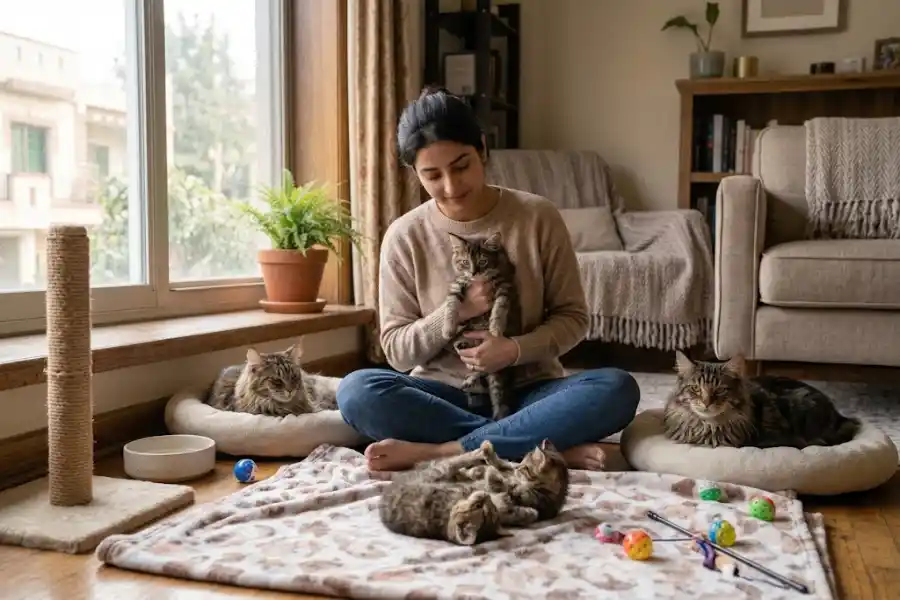
Alt text: Reputable Maine Coon breeder sitting with a healthy Maine Coon mother cat and kittens at home
The Short Answer
Reputable Maine Coon breeders do these five things:
- They register their cats with a group like CFA or TICA.
- They test breeding cats for inherited health problems, including heart disease.
- They let you meet the parents and see the kittens’ home, or join a live video call.
- They keep kittens until at least 12 weeks old.
- They give you a written contract with a health guarantee.
If a seller skips one of these, slow down. If a seller skips most of them, walk away.
What Makes a Breeder Reputable?
A reputable breeder puts the cats first. Selling kittens comes second. They plan each litter with care, and they track the health of every cat in their program.
Registration matters, but it is only a starting point. The Cat Fanciers’ Association (CFA) and The International Cat Association (TICA) keep pedigree records. Both groups also have a code of ethics for their breeders.
Still, a club paper does not prove good care. Think of registration as an ID card. Health tests, open doors, and a fair contract are the proof.
Where to Find Reputable Maine Coon Breeders
Start with places that have rules for breeders or let you meet them in person.
- CFA and TICA breeder lists. Both groups let you search for catteries by breed and by state.
- Cat shows. Breeders show their cats at these events. You can see the cats up close and hear how the breeders talk about their work.
- Your vet. Many vets know who raises healthy kittens in your area.
- Other Maine Coon owners. Ask what they liked about their breeder and what they would change.
Social media can help you find a name. Treat it as a first look only. Anyone can post cute photos, and likes do not prove good care.
9 Signs of Reputable Maine Coon Breeders
1. They Test Their Cats for Health Problems
This is the biggest sign. Maine Coons can pass some health problems to their kittens. Good breeders test for these problems before they breed.
Here are the main ones to know:
- HCM is a heart disease that thickens the heart wall.
- SMA is a spine and muscle disease.
- Hip dysplasia is a weak hip joint that can cause pain.
- PKD is a kidney disease. Some breeders test for it too.
Good breeders run DNA tests. They also get heart ultrasounds, called echocardiograms, for their breeding cats. Many check hips with X-rays as well. Ask to see the papers for both the mother and the father.
Here is a point many articles skip. The DNA test for HCM helps, but it does not tell the whole story. The UC Davis Veterinary Genetics Laboratory says the A31P gene change raises HCM risk in Maine Coons. It also says HCM has been found in cats that do not carry that change. Studies call the heart ultrasound the best way to spot the disease. That is why careful breeders use both tests and repeat the heart checks as cats age.
Note: No breeder can promise a kitten will never get HCM. Testing lowers the risk, but it does not remove it. Show the papers to your own vet for a second opinion.
Healthy parents give kittens a better start. That can shape the Maine Coon lifespan, too.
2. They Are Registered and Can Prove It
Ask for the cattery name and the registered names of the parents. Then check them with the registry yourself. A logo on a website is not proof.
Be careful with words like “papers coming soon.” Real breeders know the registration status of their cats and kittens.
3. They Let You See the Cats and the Home
Reputable Maine Coon breeders are proud of their space. You should see the mother, the kittens, and the area where they live. Look for clean beds, fresh water, and calm cats. The home should not feel crowded or smell strong.
Some breeders keep their homes closed to protect kittens from germs. That is fair. In that case, ask for a live video call. You want to see the mother and kittens in real time, not a short clip from last month.
4. They Keep Kittens Until at Least 12 Weeks
Kittens need time with their mother and littermates. They learn how to play, bite softly, and use the litter box. They also finish their first shots.
Many cat groups set 12 weeks as the lowest age for a kitten to leave. The World Cat Federation, for one, says kittens should stay until the 12th week. Some Maine Coon breeders wait until 14 weeks. A seller who offers a kitten at 8 weeks is not doing you a favor.
5. They Ask You Many Questions
Good breeders want to know who will own the kitten. Expect questions about your home, your work hours, your other pets, and your plans.
They may ask how long the kitten will be alone each day. That is a good sign. If you work long hours, find out how to leave your Maine Coon home alone safely before you answer.
A seller who asks nothing and only wants money is a red flag.
6. They Give You a Written Contract and Health Guarantee
A contract protects both sides. Read it before you pay a deposit. A good contract usually includes:
- the kitten’s details and the price
- a health guarantee and how long it lasts
- a clause that says the breeder will take the cat back if you cannot keep it
- spay or neuter terms for pet kittens
- shot and deworming records
- when and how you will get the registration papers
If a breeder will not put promises in writing, do not rely on them.
7. They Breed Only a Few Litters
Mother cats need rest between litters. The World Cat Federation says a female should have no more than two litters a year, and once a year is better.
Reputable Maine Coon breeders plan a small number of litters and often keep a waiting list. A wait is a good sign. A seller who has many kittens ready on any day may be running a kitten business, not a cattery.
8. They Raise Kittens in the Home
Kittens raised around daily life get used to people, sounds, and gentle handling. Ask how the breeder socializes the kittens. Good answers include daily play, visitors, and everyday noise like the TV and the vacuum.
If kittens live in cages or a garage for long periods, look elsewhere.
9. They Stay in Touch After the Sale
A caring breeder wants updates. They answer questions about food, litter, and health long after you take your kitten home. They also want the cat to come back to them, not a shelter, if life changes.
7 Red Flags That Reputable Maine Coon Breeders Avoid
One red flag may have a simple reason. Several together mean it is time to leave.
- Kittens are always for sale. Be careful if the seller has many litters at once or sells several breeds.
- The price is very low. Health tests and vet care cost money. A cheap kitten probably skipped something.
- You feel pressure to pay fast. A good breeder does not rush you.
- There is no visit and no video call. Photos can be stolen. A live call is hard to fake.
- They ask for gift cards, wire transfers, or crypto. These payments are very hard to get back.
- They make promises no one can keep. Examples are “HCM-proof” or a guaranteed giant adult size.
- A mix is sold as a purebred. Mixed breed Maine Coon cats can make lovely pets, but you should know what you are buying and pay a fair price.
How to Avoid Maine Coon Scams
Scammers love popular breeds. These steps take a few minutes and can save you hundreds of dollars.
- Run the kitten photos through a reverse image search. If the same photos show up under other names, they are stolen.
- Ask for a live video call. Ask the seller to show the kitten next to a note with your name and today’s date.
- Check the cattery name and the parents’ names with CFA or TICA.
- Search the seller’s name, phone number, and email with the word “scam.”
- Ask for the name of their vet and for a past buyer you can talk to.
- Avoid wire transfers and gift cards. Use a payment method that has some buyer protection when you can.
Questions to Ask Reputable Maine Coon Breeders
Print this list or keep it on your phone. Good breeders enjoy these questions.
- Which health tests did you run, and may I see the results? You want real lab or vet papers for both parents.
- Are the parents registered, and with which group? The answer should be clear and easy to check.
- Can I meet the mother and see where the kittens live? A live video call is fine if the home is closed.
- How old are the kittens when they go home? Look for 12 weeks or older.
- What shots and vet care will my kitten have had? Ask for dates and records.
- What does your contract cover? Ask about the health guarantee and the return clause.
- What happens if I cannot keep the cat? The best answer is that they will take the cat back.
- How many litters do you have each year? The answer should be small.
- Can I talk to past buyers? A breeder who is proud of their work will say yes.
- What food and litter does the kitten use now? Keep them the same for the first days to avoid an upset stomach.
What Do Kittens From Reputable Maine Coon Breeders Cost?
Prices change by region, color, and what the price includes. Many sources place Maine Coon kittens at about $800 to $2,500 in the US. Show cats and kittens sold with breeding rights cost more.
The price pays for a lot. Reputable Maine Coon breeders spend money on health tests, vet visits, shots, food, and care for the mother cat. That is why a very low price is a warning sign.
Ask what the price includes. Some breeders add the first shots, deworming, a microchip, or spay and neuter. Also plan for the costs after pickup, like food, litter, and vet visits. Maine Coons are big cats, and they eat a lot.
What to Do Before Your Kitten Comes Home
Once you pick a breeder, you may need to wait months. Good breeders plan few litters, so a wait is normal.
- Ask for a receipt for your deposit and keep a copy of the contract.
- Set a pickup date for when your kitten is at least 12 weeks old.
- Get your home ready. Read our page on Maine Coon kitten proofing before pickup day.
- Book a vet visit for the first few days. Many contracts ask for one.
- Keep the same food the breeder uses at first. Change it slowly later.
Frequently Asked Questions
How do I know if a Maine Coon breeder is legit?
Check the registration, ask for health test results, and meet the cats in person or by live video. Read the contract and talk to past buyers. A legit breeder welcomes every one of these steps.
Is a CFA or TICA breeder always reputable?
No. Registration shows pedigree records, not good care. Even registered breeders can cut corners. Check the health tests, the home, and the contract too.
How old should a Maine Coon kitten be when it goes home?
At least 12 weeks. Some breeders wait until 14 weeks so the kitten has more time to grow and finish early shots.
Do reputable Maine Coon breeders ship kittens?
Some do, but many prefer that you pick up your kitten in person. If shipping is the only choice, ask for live video calls, a clear contract, and a plan that keeps the kitten safe. Do not pay anyone who refuses a video call.
How long is the wait for a kitten?
It can be several months. Good breeders plan few litters, so ask where you are on the list.
Can I adopt a Maine Coon instead?
Yes. Rescues sometimes have Maine Coons and mixes. Adoption often costs less, and you give a cat a second chance. You may not get a pedigree or health records for the parents, so ask the rescue what they know.
Final Thoughts
The best breeders are open, patient, and proud of their cats. They show you the tests, the home, and the contract before you ask. They also ask you hard questions, because they care where their kittens end up.
Take your time with this choice. Use the signs, red flags, and questions in this article, and trust your gut if something feels wrong. Reputable Maine Coon breeders will not mind the wait or the questions. A healthy, happy Maine Coon is worth it.