Calico Maine Coon: Rarity, Price, and Personality Explained
Picture a cat the size of a small dog. Now add a coat splashed with orange, black, and white patches, no two patterns ever the same. That is a calico Maine Coon, and it is one of the most eye-catching cats you will ever see.
These cats turn heads everywhere they go. But there is more to them than good looks. Their color pattern comes from a rare genetic quirk. Their personality can surprise you. And their price tag can shock you too.
This article walks through what makes the calico Maine Coon different from other cats. We will look at their genetics, their looks, their health, their price, and how to find one the right way. By the end, you will know more than most people who own one.
What Is a Calico Maine Coon?
A calico Maine Coon is simply a Maine Coon cat with a calico coat. It is not a separate breed. It is a breed plus a color pattern.
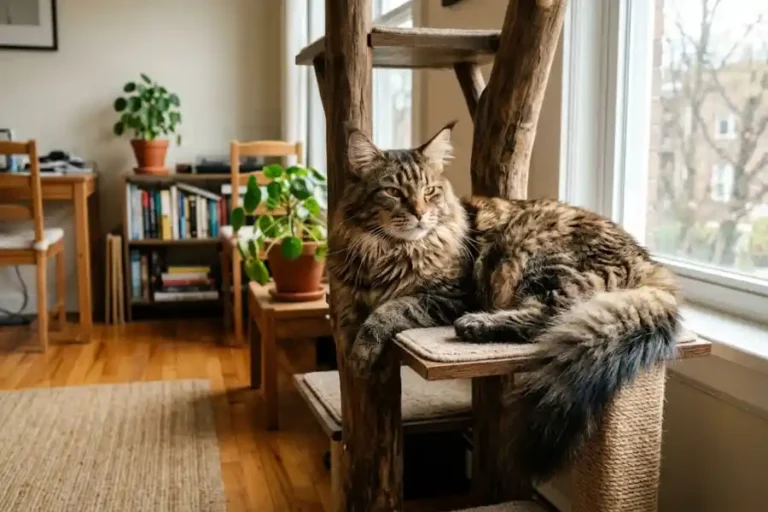
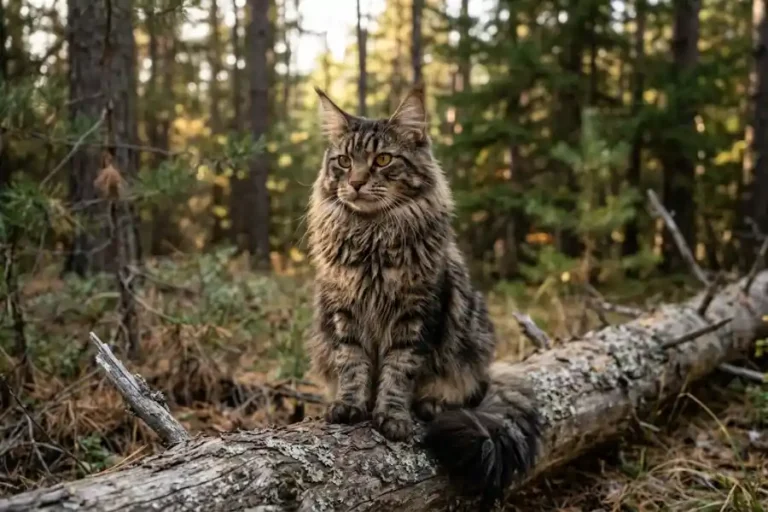
The Maine Coon part gives the cat its huge size, tufted ears, bushy tail, and friendly nature. This breed is one of the oldest natural cat breeds in North America. It is also one of the most popular breeds in the country today.
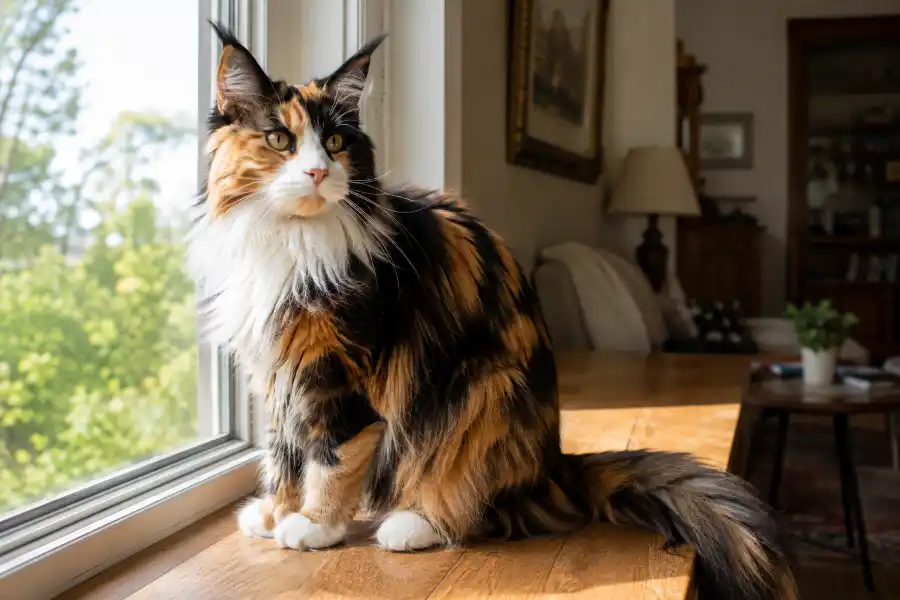
The calico part is the coat. Calico means three colors show up together: white, black, and orange (often called red). The patches sit side by side in bold, clear sections. They do not blend into each other.
Put the two together, and you get a giant, fluffy cat wearing a one-of-a-kind coat that no breeder can plan or copy on purpose.
Why Are Calico Maine Coons Almost Always Female?
This is the part that surprises most new cat owners. The calico pattern is tied directly to sex chromosomes, and that makes male calico Maine Coons extremely rare.
Here is the simple version. The genes for black fur and orange fur both sit on the X chromosome. Female cats have two X chromosomes. Male cats have only one X and one Y.
To show both black and orange, a cat needs two X chromosomes. That means only female cats can naturally carry both colors. Add white spotting on top, and you get the calico pattern, almost always in a female cat.
About 99.9% of all calico cats are female. A male calico Maine Coon can happen, but only through a rare genetic condition where the cat carries an extra X chromosome (XXY instead of XY). These males are usually sterile and often have health issues linked to the extra chromosome. If you ever meet one, you have met a true genetic rarity.
Calico vs. Tortie vs. Patched Tabby: Don’t Mix These Up
A lot of buyers get confused here, and sellers do not always explain it clearly. Here is the difference in plain terms.
- Calico: Black, orange, and white in clear, separate patches. White is a main part of the pattern.
- Tortoiseshell (Tortie): Black and orange mixed and blended together, with little to no white.
- Patched Tabby (Torbie): A tortie base with tabby stripes showing through the patches.
- Dilute Calico: The softer version, with blue-gray and cream instead of black and orange.
If a cat has no white or only a tiny speck of white, it is not truly a calico. It is a tortie. This distinction matters a lot if you are paying a premium price for a “true” calico Maine Coon.
What Does a Calico Maine Coon Look Like?
Size and Build
Maine Coons are giants of the cat world. Males usually weigh 13 to 18 pounds, and some reach over 20 pounds. Females tend to stay smaller, around 8 to 12 pounds.
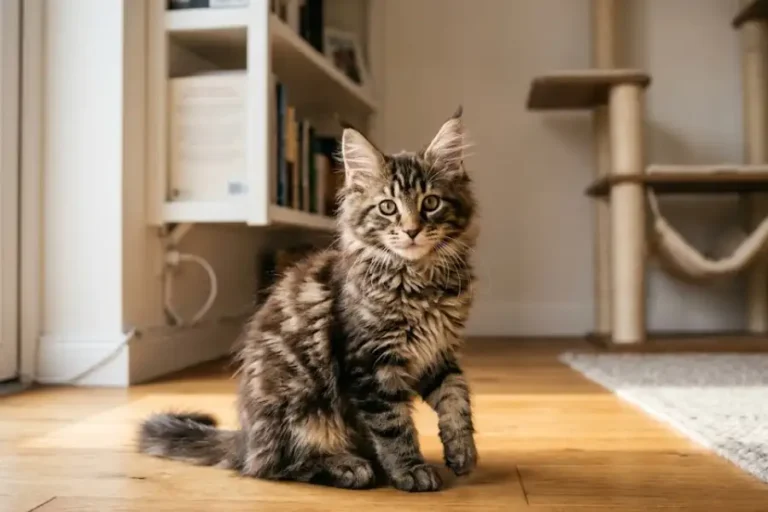
These cats grow slowly. Most do not reach full size until they are three to five years old. So that “small” kitten you bring home will keep growing for years.
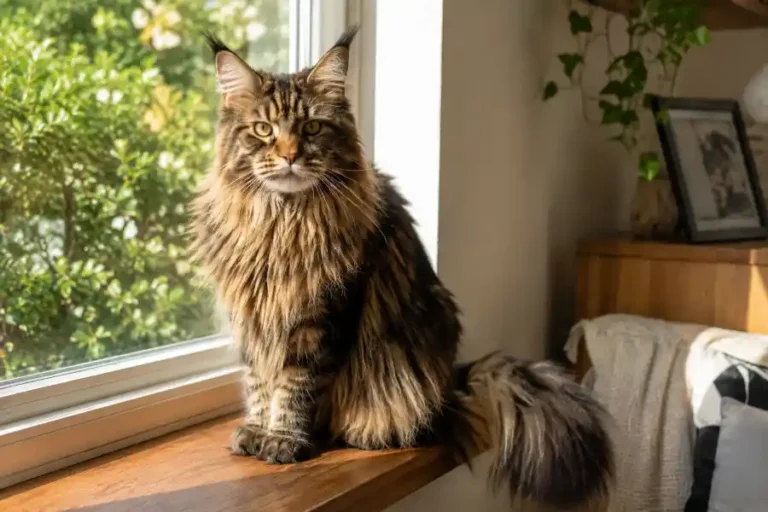
Along with their size, Maine Coons have a long, rectangular body, a broad chest, tufted paws, and a tail almost as long as their body. Their ears often have tall lynx-like tufts at the tips.
Coat Patterns You Might See
- Standard calico: Large, bold blocks of white, black, and orange.
- Dilute calico: Soft blue-gray, cream, and white instead of bold colors.
- Calico tabby (caliby): Calico patches with visible tabby stripes inside them.
No two calico Maine Coons look the same. The color placement is decided by random chance early in the kitten’s development, so even littermates will never match.
Personality: What Are Calico Maine Coons Really Like?
You may have heard people talk about “calico cattitude,” the idea that calico cats are extra sassy or moody. There is no real science behind this. Coat color does not control personality.
What shapes a calico Maine Coon’s personality is the Maine Coon breed itself, plus how the kitten was raised. And Maine Coons are known for being gentle, easygoing, and social. Many owners call them “gentle giants” or even “dog-like” because they follow their people from room to room and enjoy being part of the action. They also tend to be fairly chatty, and their Maine Coon vocalizations lean more toward soft chirps and trills than a sharp, demanding meow.
Most calico Maine Coons are:
- Friendly with children and other pets
- Curious and playful well into adulthood
- Vocal and chatty, especially when greeting their favorite people
- Smart enough to learn tricks or open doors and cabinets
- Loyal to their favorite humans, often following them room to room
Breeders often point out that a kitten’s early weeks matter more than its coat color. A calm mother, gentle handling, and early exposure to people shape temperament far more than genetics ever could.
Health and Lifespan
A calico Maine Coon does not have extra health risks just because of its coat color. Its health risks come from being a Maine Coon, a large breed with a few known weak points.
Conditions to watch for include:
- Hypertrophic cardiomyopathy (HCM): A heart condition that is more common in Maine Coons than in many other breeds. Ask breeders for proof of heart screening.
- Hip dysplasia: More likely in large-bodied cats due to their size and weight.
- Spinal muscular atrophy (SMA): A genetic condition specific to the Maine Coon breed. Reputable breeders test for this.
- Polycystic kidney disease (PKD): Less common, but still worth asking about.
With good care, a calico Maine Coon typically reaches the full Maine Coon lifespan of 12 to 15 years. Some healthy, well-cared-for cats live even longer.
Grooming and Daily Care
That gorgeous long coat needs regular upkeep. Here is what to expect:
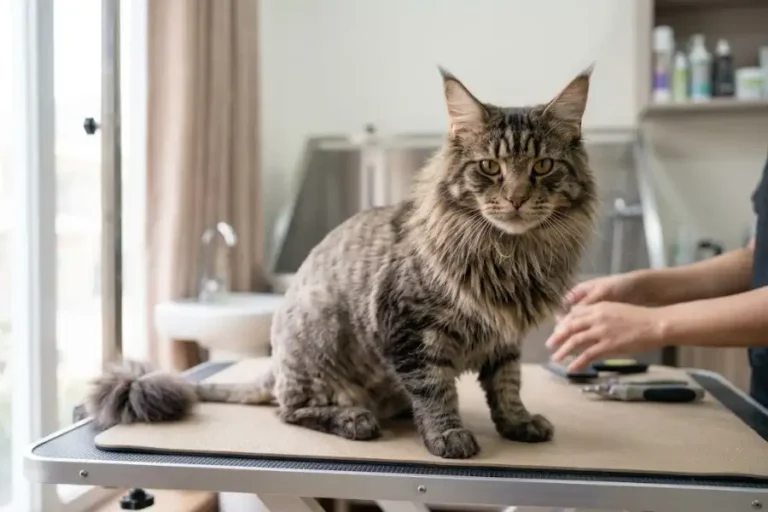
- Brush two to three times a week to prevent mats, especially behind the legs and around the belly
- Trim nails every two to three weeks
- Check ears weekly for dirt or wax buildup
- Feed a high-protein diet suited to a large, slow-maturing breed
- Provide tall scratching posts and sturdy climbing spaces, since these cats are bigger and heavier than average
Despite the long fur, Maine Coons are not as high-maintenance as some other longhaired breeds. Their coat is somewhat water-resistant and less prone to tangling than a Persian’s, for example.
How Much Does a Calico Maine Coon Cost?
Prices vary widely depending on the breeder, location, and the kitten’s pedigree. Here is a typical breakdown:
- Pet-quality calico Maine Coon: $1,500 to $3,000
- Mid-range, health-tested kittens from registered breeders: $3,000 to $5,000
- Show-quality or rare bloodlines: $5,000 to $6,500 or more
- Adoption from a rescue: $100 to $500, though calicos are rarely available this way since they are in high demand
Here is something worth knowing: calico is not always a huge price jump over other colors. Because most calicos are female, and because breeders cannot plan for the pattern in advance, the color itself does not always add a massive premium. What raises the price more is health testing, pedigree, and breeder reputation, not the coat alone.
Be cautious of any calico Maine Coon kitten priced far below $1,000. That price usually signals a lack of health testing, poor breeding conditions, or an outright scam.
Are Calico Maine Coons Recognized by Cat Registries?
Yes. Both the Cat Fanciers’ Association (CFA) and The International Cat Association (TICA) recognize calico as an accepted color pattern within the Maine Coon breed standard. This means a calico Maine Coon can be shown and registered just like any other color, as long as the cat meets the breed’s physical standards.
This matters if you plan to show your cat or want documented proof of pedigree. Always ask a breeder for registration papers rather than taking their word for it.
How to Find a Healthy, Well-Bred Calico Maine Coon
Because calico Maine Coons are in high demand, scammers often target buyers searching for this exact color. Protect yourself with these steps:
- Ask for health testing results for HCM and SMA instead of a verbal promise
- Request to see the kitten in person or on a live video call instead of relying on photos alone
- Check for CFA or TICA registration papers
- Never wire a deposit to a breeder you cannot verify through reviews or a real physical location
- Visit or research the cattery’s reputation before paying anything
- Expect a written contract covering health guarantees and spay or neuter terms
A responsible breeder will welcome your questions. If a seller rushes you or refuses to answer basic health questions, treat that as a warning sign.
Frequently Asked Questions
Can a male Maine Coon be calico?
Yes, but it is extremely rare. Male calicos need an extra X chromosome (XXY) to show both black and orange along with white. This happens in roughly 1 in 3,000 calico cats, and these males are usually sterile.
Are calico Maine Coons rarer than other colors?
The calico pattern itself is uncommon because it depends on random genetic chance during early development. Breeders cannot pair two cats and guarantee a calico kitten, which is part of why the pattern feels special.
Do calico Maine Coons have different personalities than other Maine Coons?
No. Personality comes from the Maine Coon breed and the kitten’s upbringing, not the coat color. Any “calico attitude” is a popular myth, not a proven trait.
How big do calico Maine Coons get?
Males often reach 13 to 18 pounds, with some over 20 pounds. Females usually settle between 8 and 12 pounds. Full growth is not reached until three to five years of age.
What is the difference between a calico and a tortoiseshell Maine Coon?
Calico coats show clear, separate patches of black, orange, and white. Tortoiseshell coats blend black and orange together with little or no white.
Final Thoughts
A calico Maine Coon brings together two rare things: a beloved giant breed and a coat pattern shaped by genetic chance. That combination is part of why they capture so much attention, both online and in person.
If you are thinking about adding one to your family, focus less on the price tag and more on health testing, breeder reputation, and registration papers. The coat is beautiful, but a healthy, well-socialized cat is what will bring you joy for the next 12 to 15 years.