Blue Smoke Maine Coon: Coat Color, Price and Health Tests
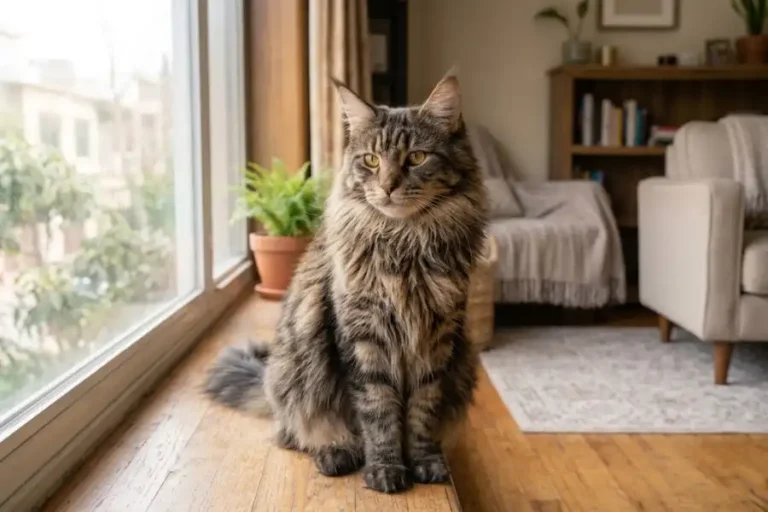
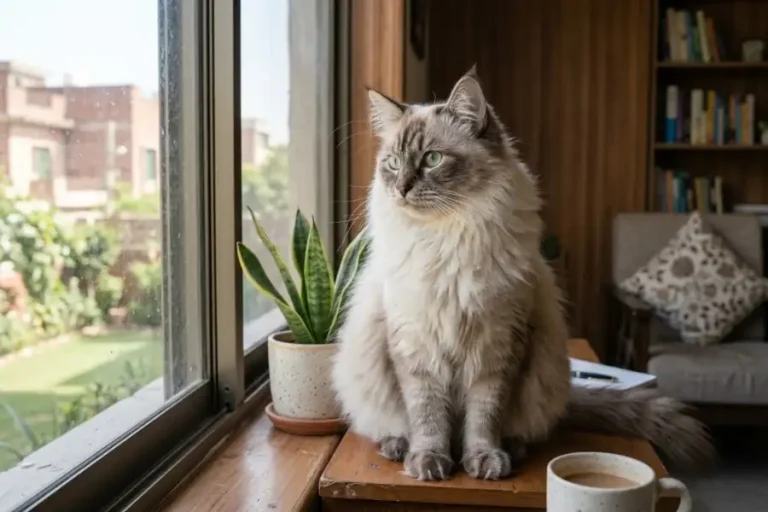
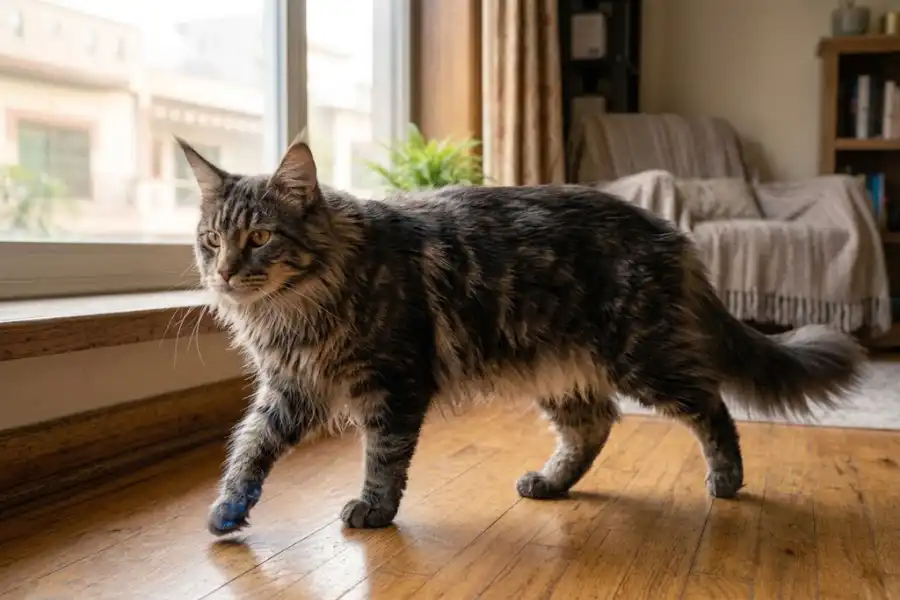
Picture a big, calm cat with a dark blue-gray coat. Then it takes one step, and a flash of silver-white shows up underneath. That is a blue smoke Maine Coon. The color looks plain at rest. In motion, it looks like magic.
This article tells you what a blue smoke Maine Coon really is and how to spot a true one. You will see how kittens change as they grow and what you should expect to pay. You also get a health checklist and a simple plan for finding a good breeder. It is all written in short, easy words, so it works even if this is your first big cat.
Blue Smoke Maine Coon at a Glance
- Coat color: A blue-gray top coat with a white or silver undercoat.
- Nose and paw pads: Blue, to match the coat.
- Eye color: Green, gold, green-gold, or copper.
- Size: Large. Many weigh between 13 and 26 pounds.
- Time to grow up: Three to five years to reach full size.
- Lifespan: Often 12 to 15 years. Some live longer.
- Kitten price: Many US breeders list pet kittens between $2,500 and $3,500. Smoke colors often cost more.
What Is a Blue Smoke Maine Coon?
A blue smoke Maine Coon is a Maine Coon with a certain coat color. It is not a different breed. It has the same big body, tufted ears, and bushy tail as any other Maine Coon.
In the cat world, “blue” does not mean bright blue. It means a soft gray with a cool, bluish tone. It is a lighter version of black. “Smoke” means each hair is pale near the skin and dark at the tip.
Put the two together and you get a blue smoke. The Cat Fanciers’ Association (CFA) lists blue smoke as an accepted Maine Coon color. Its standard describes a white undercoat with dark blue tips. A cat at rest looks blue. A cat on the move shows the white underneath.
How to Tell a True Blue Smoke From a Look-Alike
Lots of cats look gray. Only some are real smokes. Use this checklist.
- Part the fur. Gently part the coat with your fingers. A true smoke shows a pale white or silver base.
- Check the nose and paw pads. In the breed standards, they should be blue to match the coat.
- Look at the tips. They should be an even blue-gray. A rusty or warm tint is called tarnish. The silver gene blocks black pigment better than red pigment, so a warm tint can sneak through.
- Ask about the parents. The silver gene is dominant. That means at least one parent must have it, and it shows up as a pale undercoat. If neither parent has a pale undercoat, the kitten cannot be a smoke, even if it looks like one.
Blue Smoke vs. Solid Blue vs. Blue Silver Shaded
These colors get mixed up all the time, especially in kitten photos. The differences are below.
- Solid blue: One even blue tone from the nose to the tip of the tail. The color goes all the way down to the roots.
- Blue smoke: Looks solid, but the roots are white or silver. The dark tips cover most of each hair.
- Blue silver shaded: Looks lighter and frosty. Blue tipping forms a cape over the back, sides, and tail. The chin, chest, and belly stay white.
- Blue silver tabby: Has stripes or swirls on top of a silver base. It is the same silver gene, but on a tabby cat instead of a solid one.
Smoke and shaded kittens can look alike when they are very young. That is why some kittens get the wrong label early on. The makeup of the coat does not change with age, but it becomes easier to see.
The Simple Genetics Behind the Smoke Look
You do not need a science degree to understand this. Think of it as three steps.
- Start with a black cat.
- Add the dilute gene. It turns black into blue.
- Add the silver gene, also called the inhibitor gene. It blocks color at the bottom of each hair.
The result is a blue smoke Maine Coon. In short, a solid blue cat plus the silver gene equals blue smoke.
Mix in other genes and you get more options. A blue-cream smoke has patches of blue and cream over the smoke coat. Because the tortie pattern rides on the X chromosome, these cats are almost always female. A blue smoke and white cat has white patches, often on the face, bib, belly, and paws.
Do Blue Smoke Kittens Change Color?
Yes, and this is the part most articles skip. A kitten’s coat is not the same as an adult coat. Smoke kittens can be tricky to judge.
What You May See in a Young Kitten
The pale undercoat is not always easy to see at first. Some young smoke kittens look dull, patchy, or a little brownish. An experienced breeder can often tell the smoke pattern by about 8 to 12 weeks. The full effect comes later, when the adult coat grows in.
What Changes as the Cat Grows
Most gray Maine Coons keep changing for their first one to three years. In smoke cats, the pale undercoat usually shows more as the adult coat thickens. A blue smoke Maine Coon looks more dramatic with time. Sunlight and shedding season can also make the coat look lighter or darker from week to week.
Why Buyers Should Be Careful
A kitten sold as “blue smoke” at eight weeks may turn out to be another color. Good breeders use the term “developing smoke” when the genes point to smoke but the coat has not shown it yet. Always ask which parent carries the silver gene. Ask to see photos of both parents.
Size, Personality, and Daily Life
Maine Coons are often called the “dogs of the cat world,” and the name fits. They are smart, friendly, and gentle. Most get along well with kids and other pets. Some even like to play in water.
Coat color does not change a cat’s temperament. A blue smoke Maine Coon acts like any other Maine Coon. Expect a curious, active cat that wants to be near you.
These cats are big and slow to mature. Plan on 15 to 30 minutes of play each day. Buy a tall, sturdy cat tree and strong scratching posts. Picking the right Maine Coon litter box size matters too, since a standard box is often too tight for a cat this big.
Health: What to Check Before You Buy
The smoke gene is about coat color. The health risks below come with the Maine Coon breed, not with the blue smoke color. Still, every blue smoke Maine Coon buyer should know them.
Heart Disease (HCM)
Hypertrophic cardiomyopathy, or HCM, makes the heart muscle too thick. It is the most common heart disease in cats, and Maine Coons are at higher risk. A DNA test checks for one known gene change. But a clear result is not a promise. That is why good breeders also give their breeding cats heart ultrasounds, ideally with a cardiologist. As an owner, ask your vet about heart checks starting around age two or three, then every year or two.
Spinal Muscular Atrophy (SMA)
SMA is an inherited nerve problem. A kitten gets it only if both parents pass on the gene. Signs show up at about three to four months, such as an odd walk. It is not usually painful, and affected cats can live for years. A simple DNA test lets breeders avoid pairing two carriers.
Hip Dysplasia
Hip dysplasia means the hip joint does not fit well. Maine Coons get it more than many other breeds, likely because of their size. Estimates vary, but many sources put it at around 20 percent. Breeders may use hip X-rays. Keep in mind that hip testing in cats is still a growing science.
The Big Tip: Ask About the Parents
Kittens cannot be fully health tested. So ask to see the parents’ results for HCM, SMA, and heart ultrasounds. A DNA health panel often costs $120 to $300, so a good breeder should have it done already.
How Much Does a Blue Smoke Maine Coon Cost?
There is no single price. Cost depends on the breeder, the bloodline, and the kitten’s quality. Here is what we saw on breeder websites in 2026:
- Many US catteries list pet kittens from about $2,500 to $3,500.
- One Wisconsin cattery listed a black smoke male at $3,350 and a smoke male with extra toes at $3,500.
- One Michigan breeder says shaded and smoke colors cost more because they are less common.
- Some European-line breeders list kittens at $4,000 or more.
- Breeding rights can cost about double the pet price.
- Retired adult cats can cost far less. One Missouri cattery listed a retiring blue smoke female for $750.
Prices change often, so check with each breeder. Be careful with a price that is far below the rest. Very cheap kittens often come with no health tests and no papers. That can cost you much more later.
Grooming a Smoke Coat
A blue smoke Maine Coon has a long coat that needs regular care. Brushing keeps the fur from matting, especially on the back legs. Smoke and silver coats show tangles and loose undercoat faster because the pale roots stand out. Loose fur piles up fastest when Maine Coon shedding peaks, so keep a comb handy.
- Brush or comb a few times each week.
- Use a steel comb on the belly, behind the ears, and on the back legs.
- Brush more during shedding season.
- Trim nails and check the teeth on a regular schedule.
How to Find a Good Breeder
Finding a healthy blue smoke Maine Coon takes a little homework. Follow these steps.
- Ask for health papers. Look for HCM and SMA DNA results plus heart ultrasounds for both parents.
- See the parents. Ask for photos or a video call. Ask which parent carries the silver gene.
- Get a contract. A written health guarantee shows that the breeder stands behind the kitten.
- Ask when kittens go home. Many breeders keep kittens until at least 12 weeks, so they can grow and learn from their mother.
- Check the registry. Ask if the cats are registered with a group such as CFA or TICA.
- Think about adoption. An adult cat from a Maine Coon rescue has a finished coat, so what you see is what you get.
Is a Blue Smoke Maine Coon Right for You?
A blue smoke Maine Coon is great for many homes, but not all. Here is a short look at both sides.
The good:
- A stunning coat that looks different in every light.
- A friendly, dog-like personality.
- Smart enough to learn simple tricks for treats.
The hard parts:
- Regular brushing is a must.
- Kitten prices are high.
- Health screening can add vet costs over time.
- They need space, play, and a lot of company.
Blue Smoke Maine Coon FAQ
Is a blue smoke Maine Coon rare?
It is less common than the classic brown tabby. Still, breeders across the US raise them. You may wait for a litter, and you may pay a little more.
What color are blue smoke Maine Coon eyes?
The CFA lists green, gold, green-gold, and copper. Blue or odd eyes are allowed only in cats with white, such as a blue smoke and white. If you are comparing coats, the full range of Maine Coon eye color is worth a look.
What is the difference between smoke and silver?
It is the same gene. On a solid-color cat, it is called smoke. On a tabby cat, it is called silver.
Can a blue smoke Maine Coon be a tortie?
Yes. It is called a blue-cream smoke, with patches of blue and cream. Most are female.
Does the smoke color change a cat’s personality?
No. Coat color has no effect on temperament. Every Maine Coon is an individual.
How long does a blue smoke Maine Coon live?
Often 12 to 15 years. With good care, some live longer, and food, vet checks, and a healthy weight all play a part in the Maine Coon lifespan.
Final Thoughts
A blue smoke Maine Coon is a quiet beauty with a surprise in the coat. Before you bring one home, remember three things. First, part the fur and check the parents, because a true smoke needs the silver gene. Second, expect a kitten’s coat to change for a year or two. Third, put health tests ahead of color, because a healthy cat is the best cat.
Do those three things, and you will have a gentle giant that turns heads for many years.