Maine Coon Shedding: Why It Happens and How to Control It
You vacuum on Monday. By Wednesday, there’s already a soft drift of fur under the couch again. If you own a Maine Coon Cat, this probably sounds familiar. These cats are famous for their size, their dog-like personalities, and their thick, flowing coats. That same coat is also why Maine Coon shedding can feel like a full-time job.
The good news is that most Maine Coon shedding is completely normal. The better news is that once you understand why it happens, you can cut the mess down by a lot without doing anything drastic. This article breaks it all down step by step: why Maine Coons shed so much, when to worry, and what works to keep the fur under control.
Do Maine Coons Really Shed That Much?
Yes, Maine Coons shed, and often more noticeably than short-haired cats. This isn’t because something is wrong with them. It’s simply because they have more fur, and longer fur is easier to spot on your floor, your couch, and your black jeans.
Every cat sheds. It’s a normal part of how skin and fur stay healthy. Old or damaged hair falls out so new hair can grow in. With a Maine Coon, that same amount of shedding just looks like a lot more because each strand is longer and the coat underneath is thicker.
Why Maine Coons Shed So Much Fur
Maine Coon shedding comes down to biology and history. This breed developed in Maine, a state with brutal winters, and their coat evolved to handle serious cold. Over time, that gave them one of the most complex coats of any cat breed.
A Maine Coon’s coat has three layers working together:
- A soft undercoat that traps warm air close to the skin
- A middle layer of shorter guard hairs that adds extra insulation
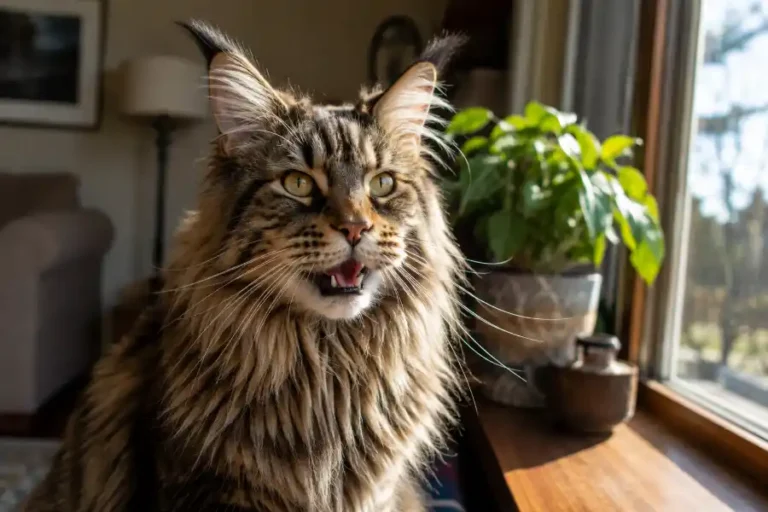
- A top layer of long, glossy guard hairs that repels water and gives the coat its shiny look
Scientists have also linked a specific gene, called FGF5, to how long a cat’s hair grows before it naturally falls out. Maine Coons carry a version of this gene that stretches out the hair growth cycle, which is part of why their fur grows so long and full in the first place. More hair simply means more shedding when it’s time for that hair to go.
The Maine Coon Shedding Calendar
One thing most articles skip is how differently shedding plays out depending on where and how your cat lives. Here’s what to expect, stage by stage.
Outdoor and Semi-Outdoor Cats
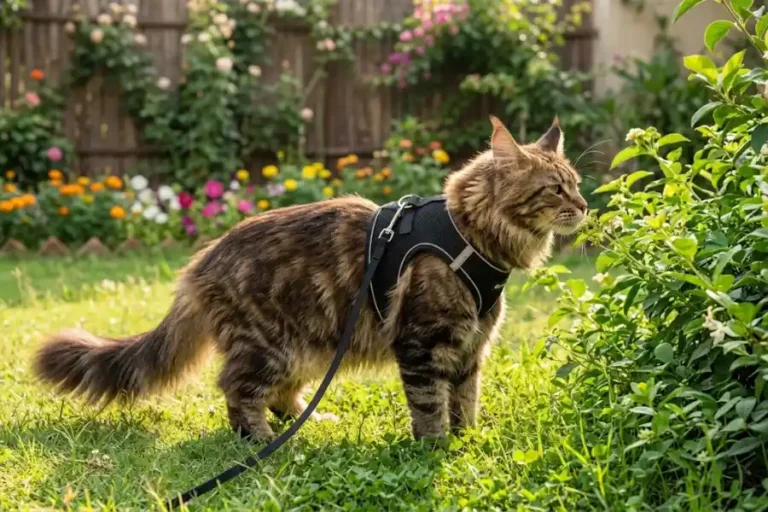
Cats who spend real time outside follow natural daylight patterns. This usually means two heavy shedding seasons: one in spring, when the thick winter undercoat is pushed out to make room for a lighter summer coat, and one in fall, when the opposite happens to prepare for winter. These seasonal blowouts are dramatic but short, usually lasting a few weeks.
Indoor Cats
Indoor life confuses a cat’s internal shedding clock. Constant indoor lighting and steady temperatures signal to the body that it’s always “mild weather.” Because of this, many indoor Maine Coons shed lightly all year long instead of having two clear seasons. It’s usually less dramatic than a seasonal blowout, but it can feel constant because there’s no quiet period in between.
Kittens Going Through the “Coat Change”
This stage catches a lot of new owners off guard. Maine Coon kittens are born with a soft, fluffy baby coat and don’t shed much at all early on. Somewhere between about six months and two years old, that baby fluff sheds out and the adult double coat grows in underneath. Breeders sometimes call this the “ugly duckling” phase, because the coat can look patchy, uneven, or thin in random spots while it’s happening. This is temporary and completely normal.
A patchy-looking coat in a young Maine Coon usually isn’t a health problem. It’s often just the adult coat pushing its way in.
Normal Shedding vs. a Coat Problem: A Quick Checklist
Most Maine Coon shedding is nothing to worry about. But it helps to know the difference between “a lot of fur” and “an actual problem.” Here’s a simple way to check.
Usually normal:
- Fur comes out evenly across the body, not in one clump area
- The skin underneath looks healthy, with no redness or sores
- Your cat is eating, playing, and acting like themselves
- Shedding increases around spring and fall, or during a kitten coat change
Worth a vet visit:
- Bald patches or thinning in one specific spot
- Red, flaky, or scabby skin under the fur
- Hair that pulls out in large clumps with very little effort
- Constant licking, scratching, or over-grooming in one area
- Sudden shedding changes paired with tiredness, weight loss, or a change in appetite
These signs can point to a few different causes, including stress, food sensitivities, fleas or mites, skin infections, or a hormone imbalance. None of that is something to diagnose on your own. A vet can run simple tests to figure out what’s going on and rule out the more serious causes.
5 Ways to Control Maine Coon Shedding
You can’t stop shedding completely, and you shouldn’t want to. It’s a healthy process. But you can cut down the amount of loose hair that ends up on your floor and furniture.
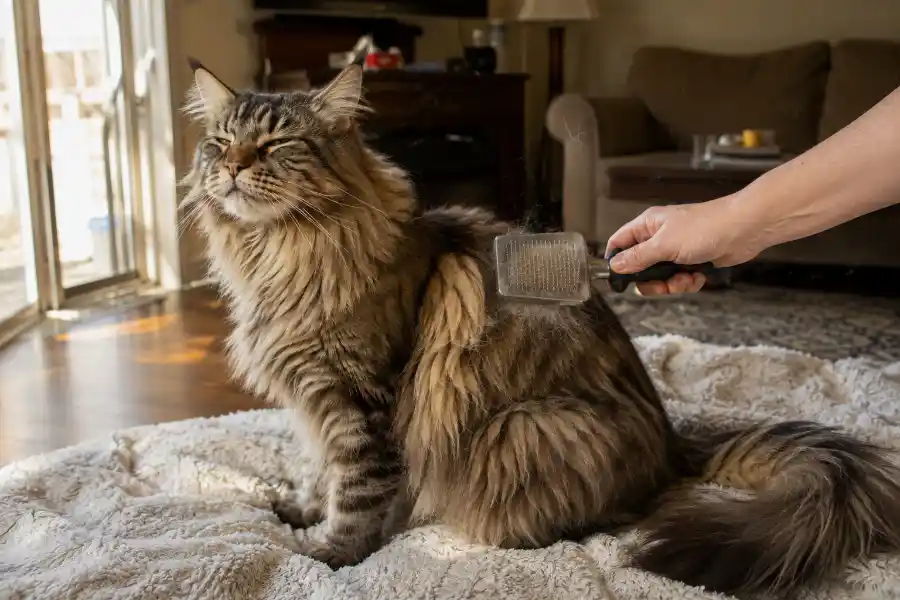
- Brush on a set schedule, rather than whenever you happen to think of it. Removing loose undercoat before it falls out on its own is the single biggest difference-maker. A slicker brush or an undercoat comb works through the layers without hurting the skin.
- Feed a nutrient-rich diet. A coat is mostly made of protein, so a diet with quality protein and added omega-3 and omega-6 fatty acids supports stronger, healthier fur that sheds less excessively.
- Keep up with parasite prevention. Fleas and mites cause irritation that leads to extra shedding and scratching, even in indoor-only cats.
- Reduce stress at home. Big changes, like moving, a new pet, or a loud environment, can trigger stress shedding. A predictable routine and a quiet resting spot help.
- Schedule occasional baths. A bath every couple of months with a gentle cat shampoo loosens dead fur that brushing alone might miss.
A Simple Weekly Brushing Routine You Can Stick To
Consistency matters more than fancy tools. Here’s a routine that works for most Maine Coons without overwhelming you or your cat.
- Two to three short sessions a week for general shedding control, working up to daily during spring and fall shedding seasons.
- Start with a comb to check for tangles, especially behind the ears, under the arms, and around the belly, since these spots mat first.
- Follow with a slicker brush or undercoat rake to pull out loose fur before it ends up on your furniture.
- Use short, gentle strokes in the direction the fur grows, and stop if your cat gets fidgety or annoyed.
- End on a good note with a treat or playtime, so grooming stays something your cat tolerates instead of dreads.
Should You Shave a Maine Coon to Stop the Shedding?
Many owners consider this at some point, especially during a heavy shedding season, but it’s worth understanding first: shaving doesn’t stop shedding. It only shortens the hair that eventually falls out, so you end up with the same shedding process happening with shorter fur.
There’s also a real downside. A Maine Coon’s coat does far more than make the cat look good. It protects the skin from sunburn, regulates body temperature in both hot and cold weather, and guards against small scrapes and bug bites. Shaving removes that protection, and cats can genuinely struggle to regulate their temperature afterward.
Shaving does have legitimate medical uses, like clearing away a mat that’s too tight to brush out, treating a skin condition, or prepping for surgery. In those cases, it should be done by a vet or an experienced professional groomer, not as a first response to normal shedding.
Managing the Fur Around Your Home
Even with a great grooming routine, some fur is going to end up in your space. A few small habits make a big difference:
- Use a vacuum with a dedicated pet-hair attachment, and go over the couch and chairs, not only the floors
- Keep a lint roller near the couch and by the front door for quick touch-ups
- Wash cat beds and throw blankets weekly, since fur builds up fastest in your cat’s favorite napping spots
- Brush your cat in one designated spot, like a bathroom or laundry room, so loose fur doesn’t spread through the whole house
- Consider an air purifier if anyone in the home is sensitive to pet dander
Frequently Asked Questions
Do Maine Coons shed more than other cat breeds?
Not necessarily more, but it’s more visible. Their long, thick, layered coat makes normal shedding look bigger and more noticeable than it would on a short-haired cat.
At what age do Maine Coons start shedding heavily?
Kittens shed very little at first. Heavier shedding usually begins during the coat change between roughly six months and two years old, when the adult double coat comes in.
Does spaying or neutering affect shedding?
It can. Many owners notice their cat’s coat becomes softer and slightly more prone to matting after the procedure, which can make shedding seem more noticeable, even though the underlying process hasn’t changed.
Can changing my cat’s diet really reduce shedding?
A poor diet can absolutely make shedding worse, since the coat relies on protein and healthy fats to stay strong. Switching to a higher-quality food often improves coat condition within a few weeks, though it won’t eliminate normal seasonal shedding.
How often should I brush my Maine Coon?
Two to three times a week works for most cats during normal periods, increasing to daily brushing during spring and fall shedding seasons or during a kitten’s coat change.
Final Thoughts
Maine Coon shedding is mostly just the price of admission for owning one of the fluffiest, most impressive cats around. Once you understand the pattern, whether it’s a seasonal blowout, a kitten’s coat change, or steady low-grade shedding indoors, it stops feeling random and starts feeling manageable. A solid brushing routine, good nutrition, and a bit of house cleanup go a long way. And if something ever looks off, like bald patches or irritated skin, that’s your cue to check in with a vet rather than guess.