Orange Maine Coon Cats: Why This Color Turns Heads
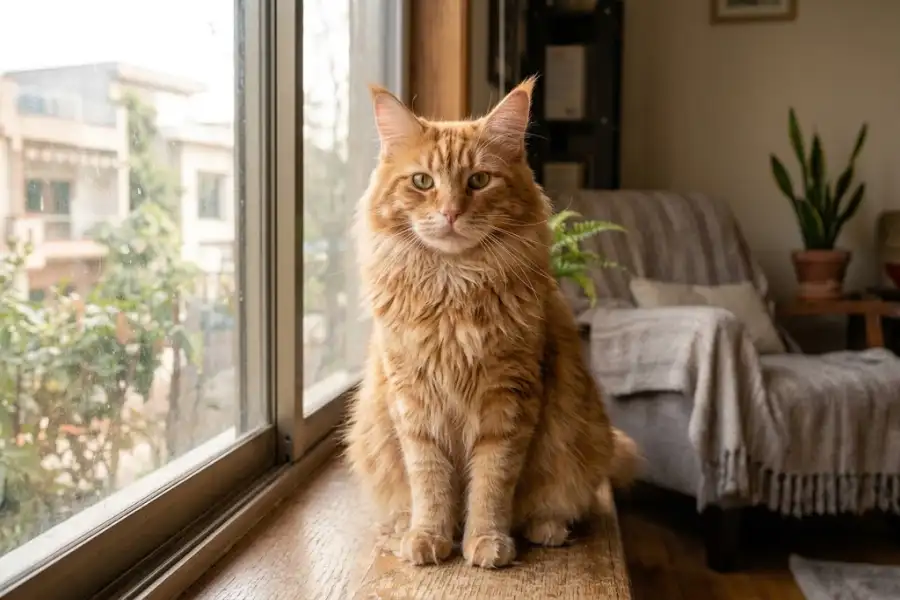
Have you ever seen a fluffy orange cat with tufted ears and a huge, fluffy tail? It may have been a Maine Coon. This cat is not a separate breed. It is a normal Maine Coon with a coat color that catches every eye in the room.
This color is rare. Many owners never see one in person before they meet their own kitten. Below, you will learn how the color happens. You will also learn what it means for your cat’s health and mood, and how to care for that bright, bold coat.
What Is an Orange Maine Coon, Really?
This cat is a Maine Coon with red fur instead of black or brown fur. Breeders call this color “red.” Most people just say “orange” or “ginger.” The name changes. The cat under that fur is still a full Maine Coon. It has a large body, long fur, tufted paws, and a warm, friendly nature.
Most cats with this color are not one flat shade. Look closely and you will often spot faint stripes or swirls under the bright color. That happens because the orange gene sits on top of the tabby pattern. Almost every cat carries that pattern. A cat with zero stripes at all is rare.
Why Do Some Maine Coons Turn Orange?
Coat color comes from genes. The orange gene works in its own special way. It sits on the X chromosome. Female cats have two X chromosomes. Male cats have only one X and one Y.
This one fact explains a pattern that breeders see all the time. Most orange cats are male. A male cat only needs one copy of the orange gene to show the color. A female cat needs two copies, one from each parent. That happens much less often. This is why about four out of five orange cats are male, in any breed.
Female cats with this color do exist too. This can happen when both parents carry the gene. It can also lead to a calico or tortoiseshell pattern, which mixes orange with black. If coat colors interest you, our piece on calico Maine Coon cats covers how those mixed patterns form.
The Different Looks of an Orange Maine Coon
Not every cat with this color looks the same. Here are the patterns you will likely see:
- Red tabby: Bold stripes across a warm orange base. This is the most common look.
- Red mackerel tabby: Thin, narrow stripes down the sides, like a fish bone.
- Red classic tabby: Wide, swirled markings on the sides, often called a “bullseye” look.
- Red and white: Orange patches mixed with white fur on the chest, paws, or face.
- Solid red: A rare, almost pattern-free orange coat. True solid red Maine Coons are hard to find.
Kitten fur can shift as a cat grows too. A kitten that looks pale peach at eight weeks old may turn a rich, rusty orange by age two.
Are Orange Maine Coons Friendlier Than Other Colors?
Cat lovers have long said that orange cats have bigger, bolder personalities. Coat color does not directly control mood or behavior. Those traits come from different genes. Still, there may be a small grain of truth in the idea.
Most orange cats are male. Male cats often act a bit more relaxed and social than female cats. This may be why orange cats seem to fit that friendly, easygoing image so often. Add in the Maine Coon’s warm nature toward people, and you get a cat that greets guests at the door and follows you from room to room.
Caring for This Bright Coat
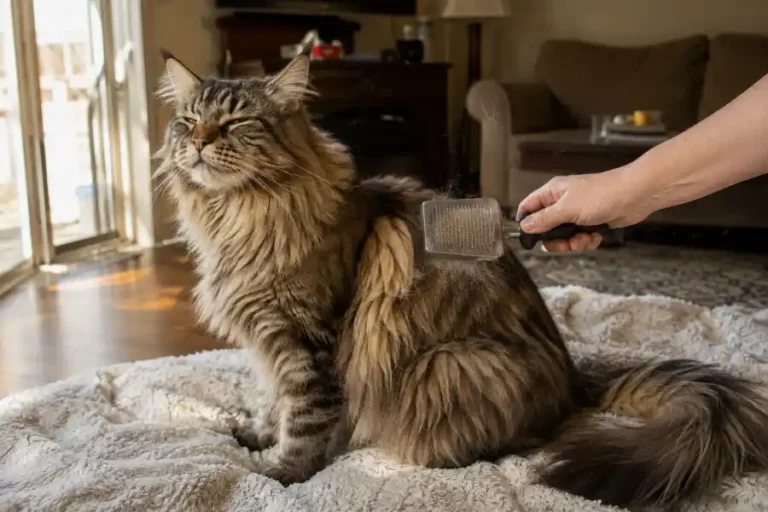
A Maine Coon’s coat needs regular care, no matter the color. But a bright orange coat shows dirt and mats faster than darker fur. A few simple habits will keep that coat looking its best:
- Brush your cat two or three times a week with a steel comb. This reaches the thick undercoat.
- Check behind the ears and under the legs for mats. These spots tangle first.
- Feed a diet rich in protein and healthy fats. This helps the coat stay shiny.
- Keep bath time rare, not frequent. Too many baths strip natural oils from the skin.
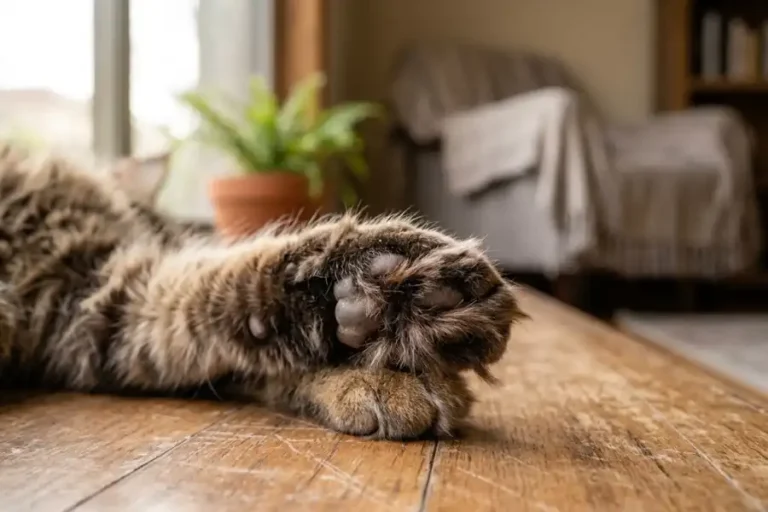
- Trim your cat’s claws every few weeks. This stops snags on fabric during play.
Shedding season can be tough for this breed. Want to know more about handling loose fur around your home? Check out our article on Maine Coon shedding.
Health Considerations for This Color
Coat color alone does not cause health problems. This cat faces the same health risks as any other Maine Coon. A few conditions are worth watching for:
- Hypertrophic cardiomyopathy, or HCM: This is a heart condition. It shows up more often in this breed than in cats as a whole. Regular vet checkups can catch it early.
- Hip dysplasia: Because of their large frame, some Maine Coons develop joint issues as they age.
- Spinal muscular atrophy, or SMA: This is a genetic condition. Good breeders test for it before they pair cats.
With good care, a Maine Coon of any color often lives twelve to fifteen years. Some cats live even longer. Want to know what shapes a long, healthy life for this breed? Our article on Maine Coon lifespan covers the key factors.
How Much Does an Orange Maine Coon Cost?
The orange color is less common than brown tabby or black. This means kittens with this coat often cost more. In the United States, a kitten with this coloring from a registered breeder usually costs between $1,200 and $2,800. The price depends on pedigree, location, and how rare the exact pattern is. Solid red kittens are the hardest color to produce. They tend to sit at the top of that price range.
Adoption is a lower-cost choice worth thinking about. Orange cats, including mixed-breed cats with Maine Coon features, show up in shelters and rescues fairly often. These cats usually cost far less than kittens from a breeder.
Finding a Responsible Breeder
If you plan to buy rather than adopt, look for a breeder who does the following:
- Tests both parent cats for HCM and SMA.
- Lets you visit and meet the kittens and their mother in person.
- Gives you registration papers from a real cat association.
- Gives clear, straight answers about temperament, health, and care needs.
A trustworthy breeder never rushes you into a choice. They also do not dodge basic health questions. If a seller avoids these topics, treat that as a warning sign.
Is this your first time bringing this breed home? Our full Maine Coon cat breed profile walks you through diet, grooming, and daily care for new owners.
Frequently Asked Questions
Is an orange Maine Coon a different breed?
No. Orange, or red, is just a coat color. The cat is still a purebred Maine Coon in every other way.
Are they always male?
Not always, but most are. About 80 percent of orange cats, in any breed, are male. This comes down to how the color gene passes from parent to kitten.
Do they cost more than other colors?
Often, yes. Rare colors and patterns, especially solid red, tend to come with a higher price from breeders.
Does orange fur mean a friendlier cat?
Not directly. Personality comes from genes and upbringing, not fur color. But the male-heavy tilt among orange cats may play a small part in the idea.
Final Thoughts
An orange Maine Coon brings together two things people love: a bright, sunset-colored coat and a warm, dog-like personality. Whether you find one through a breeder or a shelter, you are getting a cat that stands out in looks and in character.