Maine Coon Persian Mix: What This Fluffy Cat Is Really Like to Own
If you have ever seen a huge, round-faced cat with a soft, thick coat, you may have met a Maine Coon Persian mix. This cat is not an official breed. It comes from pairing a Maine Coon with a Persian, two of the most loved long-haired cats in the world. The result is often a large, gentle, fluffy companion whose face and body can lean toward either parent. This article covers the size, look, personality, grooming needs, health risks, and true cost of life with a Maine Coon Persian mix, so you know what to expect before you bring one home.
What Is a Maine Coon Persian Mix?
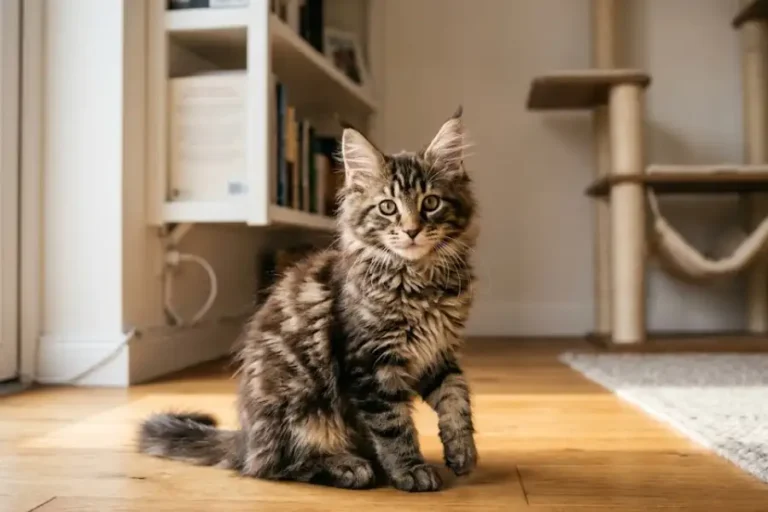
A Maine Coon Persian mix is a cat born from one Maine Coon parent and one Persian parent, or from cats that already carry both bloodlines. Breeders started pairing these two cats decades ago. Their goal was a cat with the calm, sweet nature of a Persian and the size and sturdy build of a Maine Coon. Because this cross is not a registered breed, no two kittens turn out the same. One kitten may look almost like a small Maine Coon with a slightly rounder face. Another may look more like a long-bodied Persian. For a closer look at the purebred side of this cross, our Maine Coon cat profile covers the traits this mix often picks up.
Size and Appearance
A Maine Coon Persian mix usually weighs between 9 and 20 pounds once fully grown, though weight can vary a lot from one kitten to the next. Females tend to land on the lighter end, while males often grow larger and heavier. The body shape can range from long and rectangular, like a Maine Coon, to short and stocky, like a Persian.
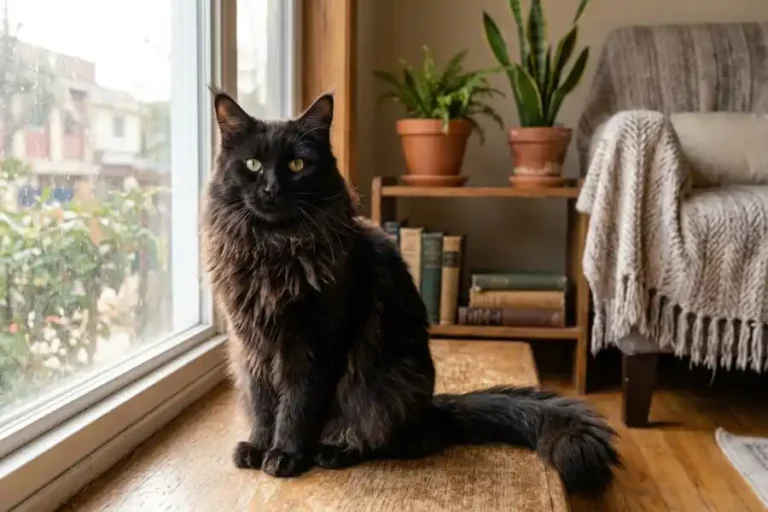
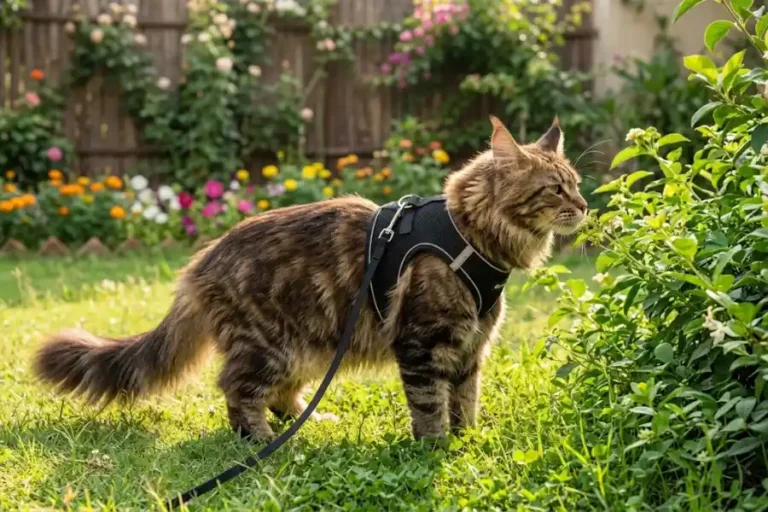
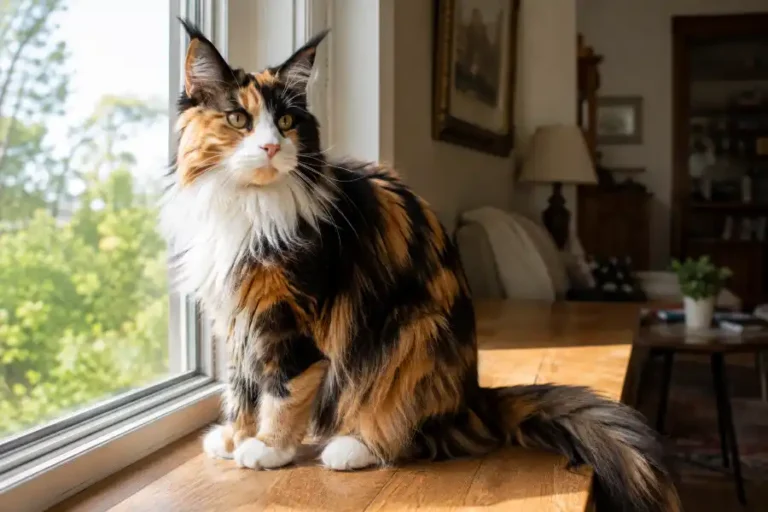
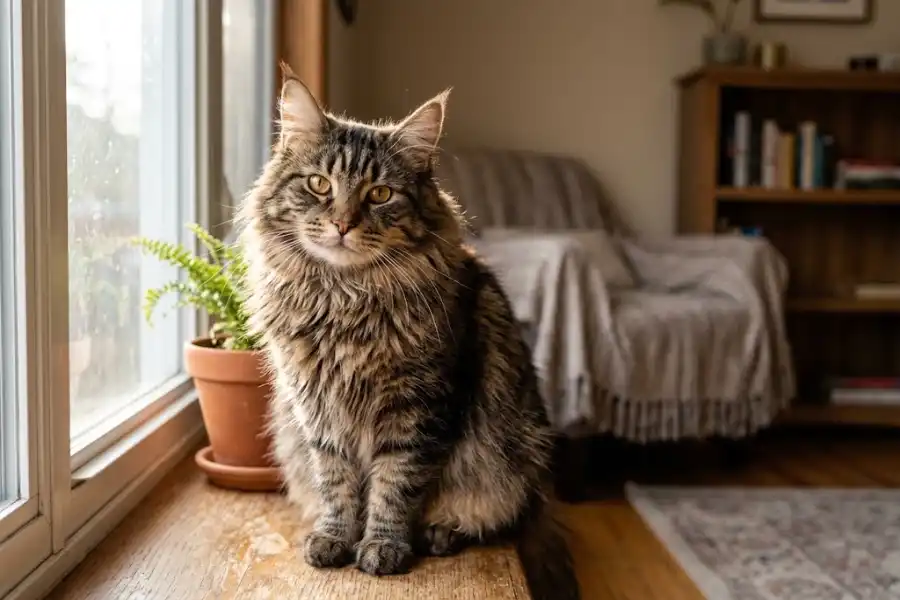
The coat is almost always long and thick, though the texture can be silky like a Persian’s or coarse and water-resistant like a Maine Coon’s. Face shape is one of the biggest surprises with this mix. Some kittens grow a flatter, rounder Persian-style face. Others keep the square muzzle and tall ears of a Maine Coon. Eyes can be round or slightly oval, and colors often match the coat.
Personality and Temperament
This mix tends to land somewhere between two very different personalities. Maine Coons are playful, curious, and known for following their owners around the house like a small dog. Persians are quieter, calmer, and happy to nap on a soft chair for hours. A Maine Coon Persian mix often blends both sides, staying gentle and easygoing while still enjoying short bursts of play with a wand toy or puzzle feeder.
Sound is another area where the two breeds differ. Maine Coons are known for soft chirps, trills, and frequent chatter, a trait covered in our piece on Maine Coon vocalizations. Persians rarely make a sound at all. A mix kitten may turn out talkative, silent, or somewhere in the middle, and there is no way to know for sure until the cat grows up.
Most cats from this pairing are patient with children and get along well with other pets, including calm dogs. They are not usually aggressive or high-strung, which makes them a solid pick for a busy household that still wants a cat who enjoys company.
Coat and Grooming Needs
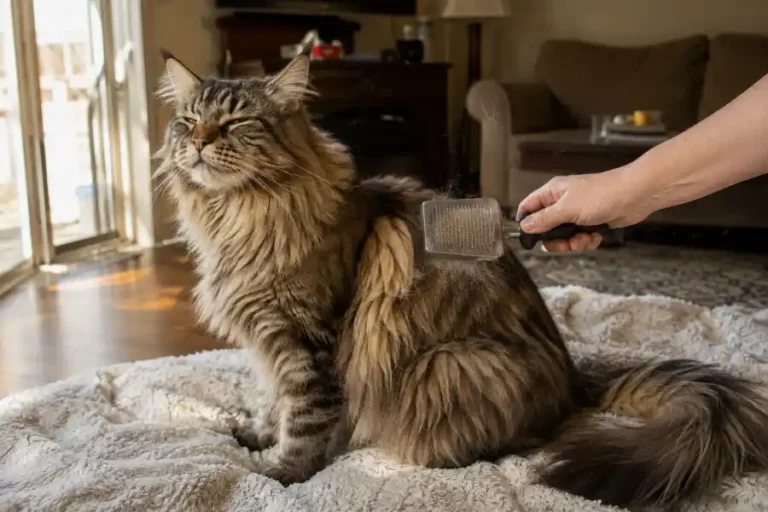
A thick, long coat is one of the biggest commitments that comes with a Maine Coon Persian mix. Brushing three to five times a week is the general rule, and daily brushing is safer if the coat leans toward the dense, Persian side. Skipping brush sessions for even a week or two can lead to painful mats, especially behind the ears, under the arms, and around the belly.
Shedding is steady year-round and heavier during seasonal coat changes. Because this mix often carries a dense double coat, owners deal with loose fur much like they would with a purebred Maine Coon. Our article on Maine Coon shedding walks through tools and habits that keep fur under control around the house.
Face and Eye Care
Cats that inherit a flatter Persian-style face often need daily eye wiping to prevent tear staining and buildup in the folds of skin near the nose. A soft, damp cloth or unscented pet wipe works well for this. Cats with a more Maine Coon-style face rarely need this extra step.
Health Considerations
Mixed-breed cats often benefit from a wider gene pool, but a Maine Coon Persian mix can still inherit health issues common to either parent. Hypertrophic cardiomyopathy, a thickening of the heart muscle, shows up in both Maine Coons and many other cat breeds. Persians are prone to polycystic kidney disease, a condition where fluid-filled cysts slowly affect the kidneys. Hip dysplasia and spinal muscular atrophy are also worth screening for on the Maine Coon side.
Ask any breeder for proof of genetic testing on both parent cats before bringing home a kitten. If you are adopting from a shelter, a full veterinary exam soon after adoption is the safer route. With good care and regular vet visits, many cats from this pairing live 12 to 16 years. Our breakdown of Maine Coon lifespan looks at the factors that shape a long, healthy life for cats with Maine Coon blood.
Daily Care and Living Space
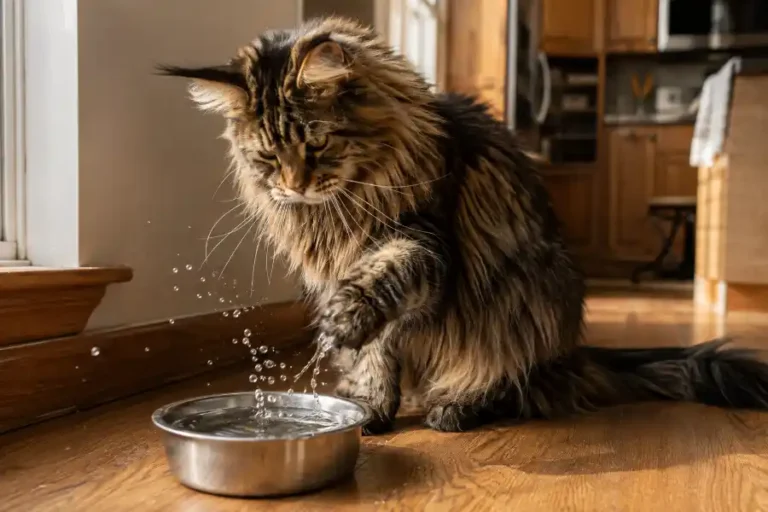
A Maine Coon Persian mix does well as an indoor cat, especially given its long coat and calm nature. Space to stretch out matters more than square footage. A tall cat tree, a few window perches, and a large litter box built for a big-bodied cat all help this mix feel settled. Fresh water, a scratching post, and short daily play sessions round out a simple care routine that keeps both body and mind active.
Cost of Owning a Maine Coon Persian Mix
Prices for a Maine Coon Persian mix kitten from a breeder usually fall between 500 and 2,500 dollars, depending on location, coat quality, and whether the parents have health testing on file. Adopting from a shelter or rescue is a far cheaper route, typically running 75 to 300 dollars, and often includes spay or neuter surgery, vaccines, and a microchip.
Yearly costs after the first year usually land between 700 and 2,000 dollars. That covers quality food, litter, routine vet visits, flea and parasite prevention, and grooming supplies. The first year tends to cost more once you add setup items like a large litter box, a cat tree, a carrier, and initial vaccines.
Is a Maine Coon Persian Mix Right for Your Home?
This mix suits owners who want a large, affectionate cat but are also ready for the grooming that comes with a long coat. It fits well with families, other pets, and homes with a bit of extra space to spare.
Good fit if you:
- Enjoy brushing your cat several times a week
- Have a calm home with children or other pets
- Can budget for routine vet care and possible health screening
- Want a cat that is affectionate without being overly demanding
Think twice if you:
- Cannot commit time to regular grooming
- Want a guaranteed size, coat, or personality, since mixed litters vary
- Are hoping for a low-shedding or allergy-friendly cat
Frequently Asked Questions
How big does a Maine Coon Persian mix get?
Most adults weigh between 9 and 20 pounds. Size depends heavily on which parent breed the kitten takes after more strongly.
Are Maine Coon Persian mixes hypoallergenic?
No. Like nearly all cats, they produce dander and shed fur, so people with cat allergies should spend time with one before bringing it home.
Do they get along with children and other pets?
Yes, in most cases. Both parent breeds are known for gentle, patient personalities, which tends to carry over into the mix.
How much grooming do they need each week?
Plan on brushing three to five times a week at minimum, with daily brushing for cats that have the denser Persian-style coat.
What health tests should I ask a breeder for?
Ask about heart screening for hypertrophic cardiomyopathy, kidney screening for polycystic kidney disease, and hip evaluations, since these conditions appear in one or both parent breeds.
Final Thoughts
A Maine Coon Persian mix brings together two of the gentlest, most family-friendly cat breeds around. Expect a large, affectionate cat with a coat that needs steady care and a personality that could lean playful, quiet, or somewhere in between. With routine grooming, health screening, and a bit of patience for the unpredictable traits of a mixed litter, this cat can make a loyal companion for well over a decade.