Maine Coon Litter Box Size: The Exact Measurements You Need
You bought the “extra large” litter box. The label said it would fit any cat. Then your Maine Coon grew into it, and now half of him hangs over the edge every time he uses it. If this sounds familiar, you are not alone, and you are not doing anything wrong. Most litter boxes are made for cats that weigh eight to ten pounds. Your Maine Coon may weigh twice that much, or more. Since most Maine Coons live as indoor cats, the litter box is their only bathroom, so getting the size right matters even more.
Here are the exact numbers you need. No guessing. No vague labels like “jumbo” or “cat-sized.” Just real measurements, based on how big Maine Coons really get and how their bodies really move.
Why Standard Litter Boxes Fail Maine Coons
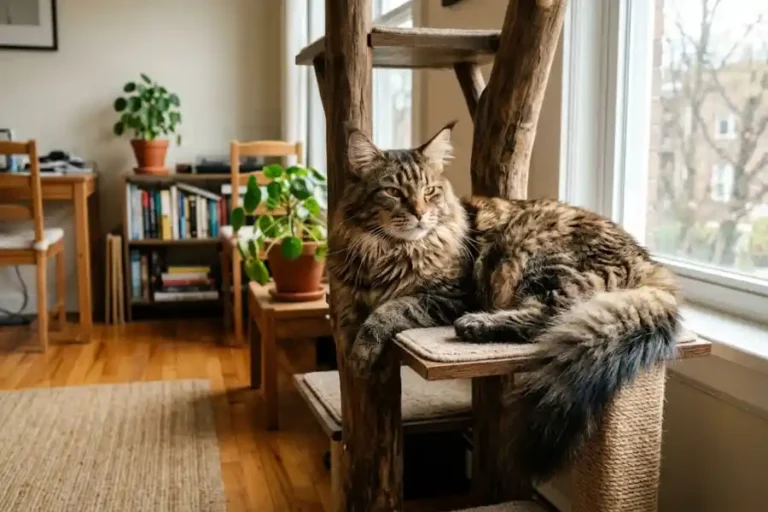
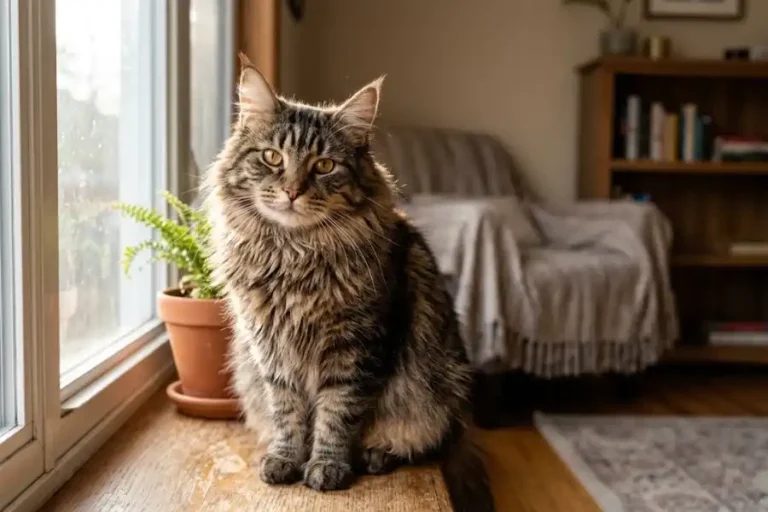
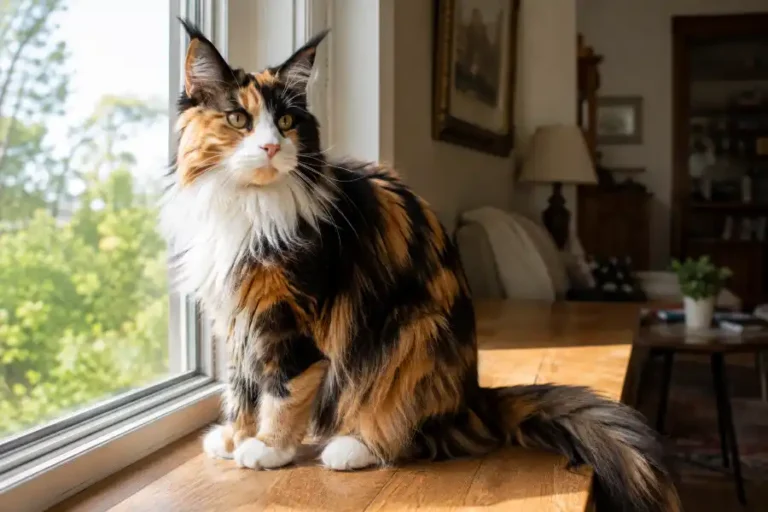
The Maine Coon cat is the largest common breed of house cat. A full-grown male often weighs between 15 and 25 pounds. Females usually land between 10 and 15 pounds. From nose to tail tip, an adult male can stretch past 30 inches, sometimes close to 40. That is not an exaggeration. It is simply the size of the breed.
Here is the part most owners miss: Maine Coons do not stop growing at one year old like most cats. They keep growing, slowly, for three to five years, one of the traits behind their long Maine Coon lifespan. This means the litter box that fit your Maine Coon perfectly at twelve months may already be too small by the time he turns two.
A litter box that worked for your Maine Coon kitten will almost never work for your Maine Coon adult. Plan to size up more than once.
The Simple Formula for Maine Coon Litter Box Size
You do not need to guess. There is a simple formula that vets, breeders, and long-time Maine Coon owners rely on.
Step 1: Measure Your Cat
Have your cat stand naturally. Measure from the tip of the nose to the base of the tail. Do not include the tail itself. This is called the body length.
Step 2: Multiply by 1.5
Take that number and multiply it by 1.5. This gives you the minimum internal length your litter box should have.
For example, if your Maine Coon measures 20 inches from nose to tail base, you need a box that is at least 30 inches long on the inside. Not the outside of the box. The inside, usable space.
Step 3: Check the Width
Width matters just as much as length. Your cat needs to turn around, squat, and dig without touching the walls. A good rule is to make the internal width about 65 to 75 percent of the length. So for a 30-inch-long box, aim for an internal width of roughly 20 to 22 inches.
Maine Coon Litter Box Size by Age
Because Maine Coons grow for years, not months, the right litter box size changes as your cat ages. Here is a simple timeline to follow.
- 2 to 4 months old: A small box with low sides, around 14 to 16 inches long, so your kitten can climb in easily.
- 4 to 8 months old: Move up to a medium box, roughly 18 to 20 inches long, as your kitten’s body length increases quickly during this stage.
- 8 to 12 months old: Switch to a large box, around 22 to 24 inches long. Your Maine Coon will look close to full grown, but this is only the halfway point.
- 1 to 3 years old: Upgrade again to an extra-large box, 26 to 30 inches long, since your cat is still adding muscle, bone, and body length.
- 3 to 5 years old: Your Maine Coon reaches full adult size. A box of 28 to 34 inches long, sized using the formula above, should be the final fit.
Skipping straight to a “final size” box while your cat is still a kitten is not a shortcut. Kittens feel unsafe in a box that is too big for them, and it can slow down litter training. Size up gradually instead.
Box Depth, Wall Height, and Litter Amount
Length and width get most of the attention, but depth matters too, for two different reasons.
Wall Height
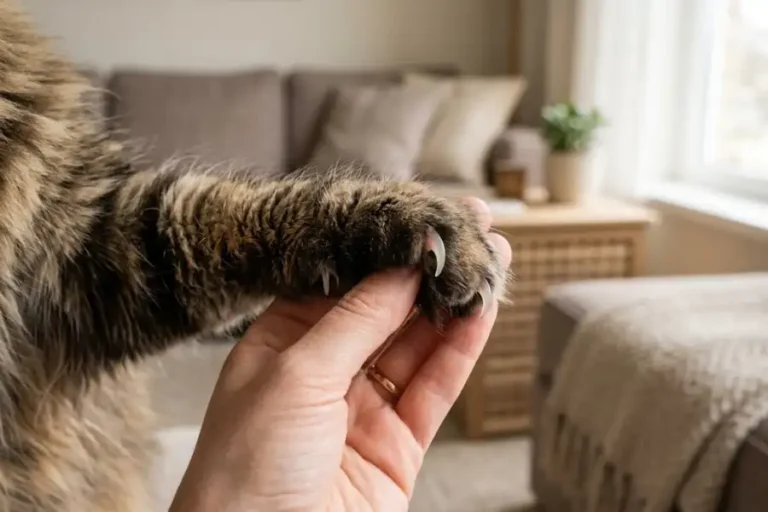
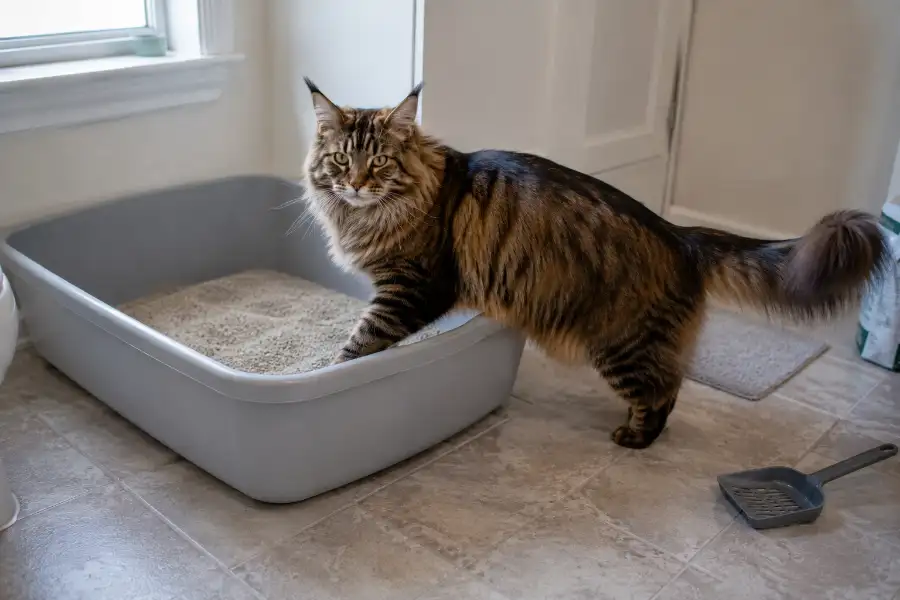
Maine Coons dig with enthusiasm. Their large paws move a lot of litter, and low walls mean that litter ends up on your floor. Look for walls at least 8 to 10 inches high on three sides. However, the entry side should stay lower, around 4 to 6 inches, so your cat can step in comfortably without jumping.
This low entry point matters more than most articles mention. Maine Coons are prone to joint issues like hip dysplasia as they get older, since their heavy frame puts extra strain on their hips. A box with a high wall on every side forces even a healthy adult Maine Coon to jump up and over, which is not comfortable and can become painful over time.
Litter Depth
A bigger box needs more litter, along with more floor space. Aim for 3 to 4 inches of litter depth, rather than the 2 inches often recommended for standard boxes. This gives your cat enough material to dig and bury waste properly, which matters for a breed that is famously particular about a clean box.
Open, Covered, or Top-Entry: What Works Best
Walk down any pet store aisle and you will see three main styles. For a Maine Coon, they are not equal.
- Open pan: The safest choice for most Maine Coons. No lid means no size restriction, and your cat can enter, turn, and exit freely.
- Covered box: Can work if the interior is large enough, but check that your cat’s tail and ears do not brush the roof while standing. A cramped covered box also traps odor, which a clean-conscious breed like the Maine Coon will notice immediately.
- Top-entry box: Usually a poor fit. Your cat has to jump onto the lid, squeeze through a narrow opening, and turn around inside a tight space. For a large-boned, sometimes joint-sensitive breed, this design works against comfort rather than for it.
The DIY Litter Box: A Budget-Friendly Fix
Many Maine Coon owners solve the size problem without buying a single “extra large” branded box at all. Instead, they build one from a plastic storage tote.
- Buy a large storage tote, roughly 24 inches long, 18 inches wide, and 16 inches tall. These typically hold about 40 gallons.
- On one of the short ends, cut a U-shaped opening for your cat to step through.
- Leave a 4 to 5 inch lip at the bottom of the cut opening. This keeps litter from spilling out the entry.
- Sand down the cut edge so there are no sharp corners.
- Fill with 3 to 4 inches of litter, and you have a box larger than almost anything sold in stores, for around ten dollars.
How Many Litter Boxes Does a Maine Coon Need?
Size is not the only number that matters, especially if you’re raising a Maine Coon in an apartment with limited floor space. The general rule for any cat is one litter box per cat, plus one extra. For a single Maine Coon, that means two boxes, not one.
There is also a breed-specific reason for this. Many Maine Coons prefer to urinate in one box and defecate in a separate one. Giving them two full-size boxes, placed in different spots, honors this preference and lowers the chance that your cat avoids a box because it feels “too dirty” to use.
Signs Your Litter Box Is Too Small
Sometimes the size problem is not obvious until you know what to look for. Watch for these signs:
- Your cat’s tail or back legs hang over the edge while inside the box.
- Waste ends up outside the box instead of buried inside it.
- Your cat seems to hesitate, circle outside the box, or avoid it entirely.
- Litter is scattered far beyond the box after each use.
- Your cat squats half in and half out of the box.
Any one of these is a signal that it is time to size up, even if the box still looks “big” to you.
Frequently Asked Questions
What litter box size does a Maine Coon kitten need?
A kitten under four months old does well with a small box around 14 to 16 inches long, with low walls it can step over easily. Plan to upgrade every few months as your kitten grows.
Is an extra-large box always enough for a Maine Coon?
Not always. Store-labeled “extra large” boxes vary a lot, and many still measure under 24 inches inside. Always check the internal length against your cat’s actual measurement, using the 1.5 times formula, rather than trusting the label alone.
What is the Maine Coon litter box size in centimeters?
For an average adult Maine Coon, aim for an internal length of about 65 to 75 centimeters, with a width of roughly 45 to 55 centimeters and side walls around 20 to 25 centimeters high.
Do Maine Coons need a special litter box?
Not a special product, but they do need larger dimensions than what most stores label as standard or even large. An open pan with high back walls, a low entry point, and enough internal space to turn around freely covers what most Maine Coons need.
When should I upgrade my Maine Coon’s litter box size?
Upgrade whenever your cat’s body length increases noticeably, roughly every few months during the first year, and again around ages two and three, since Maine Coons keep growing until three to five years old.
Final Thoughts
Getting the litter box size right is not about buying the biggest box on the shelf. It is about matching the box to your specific cat, at their current size, and adjusting as they grow. Measure your Maine Coon, apply the 1.5 times formula, keep the walls high on three sides and low at the entry, and add a second box. Do that, and litter box problems become one less thing you ever have to think about.