When Do Maine Coon Cats Stop Growing? Age, Size, and Signs
You bring home a fluffy kitten. A year later, it is still getting bigger. Friends say their cats stopped growing long ago. So you start to worry that something is off.
Nothing is wrong. Maine Coons simply take their time. So, when do Maine Coon cats stop growing? Most reach full size between 3 and 5 years old. Some finish near age 3. Others keep filling out until age 5.
This article walks you through each growth stage, normal weights, and the signs that your cat is done. You will also see what can slow growth and when a vet visit makes sense.
When Do Maine Coon Cats Stop Growing? The Short Answer
Most house cats stop growing at around 12 to 18 months. Large breeds take longer. Maine Coons can keep growing until about 3 to 5 years old, based on what vets and breed sources report.
Different parts of the body finish at different times:
- Height and length: often finish first, around age 2 to 3.
- Weight and muscle: keep building until about age 3 to 4.
- Chest, coat, and ruff: can keep getting fuller until age 4 or 5.
That is the short answer to when do Maine Coon cats stop growing. Keep in mind that it is a range. Your cat may finish a little early or a little late, and that can still be normal.
Maine Coon Growth Stages by Age
Here is what to expect as the months pass. The weights below are rough numbers. Every cat is different, and a healthy cat can sit above or below them.
Birth to 4 Months: Fast Growth
Kittens grow quickly in the first months. A one-month-old kitten often weighs about half a pound to one pound. After that, the numbers climb fast. Kittens at this age eat often and sleep a lot.
4 to 12 Months: Long Legs and Big Paws
Growth stays steady. Many Maine Coons weigh between 6 and 12 pounds at 6 months, with males on the heavier side. Around this time, the kitten may look lanky. It has long legs, big paws, and a thin body.
By 12 months, many weigh about 9 to 16 pounds. Many owners think the cat is nearly done at this point. It is not. Not even close.
1 to 2 Years: The Awkward Teen Phase
Your cat keeps getting longer. The tail stretches out, and the legs may seem too long for the body. Some Maine Coons look thin or gangly at this age. That is normal. Their bodies are still catching up with their frames.
2 to 3 Years: Filling Out
Now the body starts to catch up. The chest gets wider, and the muscles grow thicker. Many cats are close to their adult length by now.
3 to 5 Years: The Final Touches
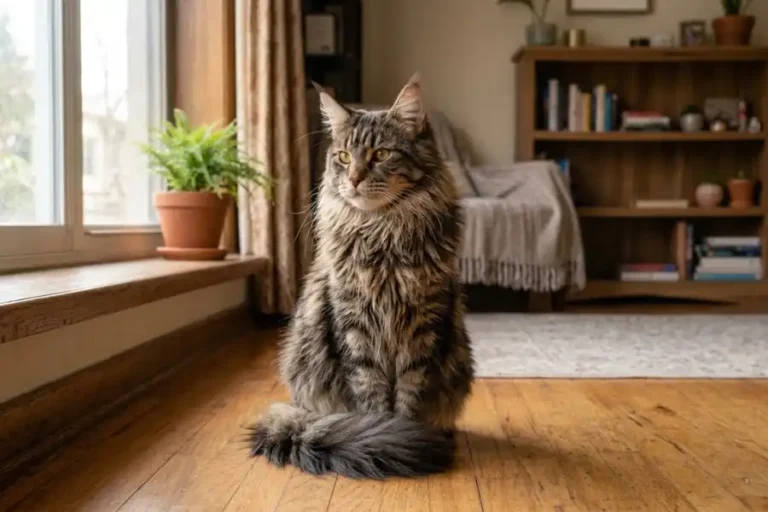
Gains slow down. Weight changes are small, and the coat and ruff get thicker. Adult males usually weigh 15 to 25 pounds. Adult females usually weigh 10 to 15 pounds. A few go past those numbers, and some healthy cats fall below them.
Many adults measure about 3 feet from nose to tail tip, and some reach close to 40 inches.
Why Maine Coons Grow So Slowly
Maine Coons are one of the largest house cat breeds. A big body takes more time to build. Their bones, muscles, and coat keep developing long after a smaller cat has stopped.
Genes play a big part too. Kittens from large parents often grow bigger and may take longer to reach full size. Lines bred for size tend to keep developing past age 3.
That long timeline is why the question of when do Maine Coon cats stop growing trips up so many new owners. A cat that looks done at one year is often only part of the way there.
Signs Your Maine Coon Has Finished Growing
Every owner asks the same thing: when do Maine Coon cats stop growing, and how can I tell? Watch for these signs:
- Weight stays about the same for 3 to 6 months on normal portions.
- Monthly measurements show no new gain in length or height.
- The body looks balanced, with the legs, body, and tail in good proportion.
- The coat and ruff look full and thick.
- Your vet says your cat has a healthy body condition.
One flat month does not prove that growth is over. Young cats can pause and then grow again. Look at the trend over several months, not just one weigh-in.
What Changes the Age When Growth Stops
Genes
The size of the parents is one of the best clues you have. Big parents often mean a bigger cat that grows for longer. If you can, ask the breeder or shelter what they know about the family line.
Food
A growing Maine Coon needs steady fuel. Too little protein can hold back muscle growth. Look for high-protein cat food made for kittens or large breeds, and check that real meat is high on the ingredient list.
Many vets move cats to adult food around the first birthday. Large, slow-growing breeds may need kitten food for longer. Ask your vet before you make the change.
Gender
Males usually grow bigger than females and may keep growing for longer. Females tend to finish nearer the early end of the range.
Neutering
Some sources say cats neutered early may keep growing a little longer and end up taller. Talk with your vet about the best timing for your cat.
Health and Exercise
Illness, worms, and a poor appetite can slow growth. A kitten that refuses food should be taken seriously. Play and climbing matter too. A cat with plenty of room to run, jump, and climb builds muscle and bone more fully than a cat that mostly sits.
How to Measure Your Maine Coon at Home
A simple monthly routine tells you more than any chart. Follow these steps:
- Weigh your cat once a month, at the same time of day. A baby scale works well. You can also weigh yourself, then weigh yourself holding the cat, and subtract.
- Measure the length from the nose to the base of the tail. Then measure the tail on its own.
- Measure the height at the shoulder while your cat stands.
- Write the numbers in a notebook or a phone note.
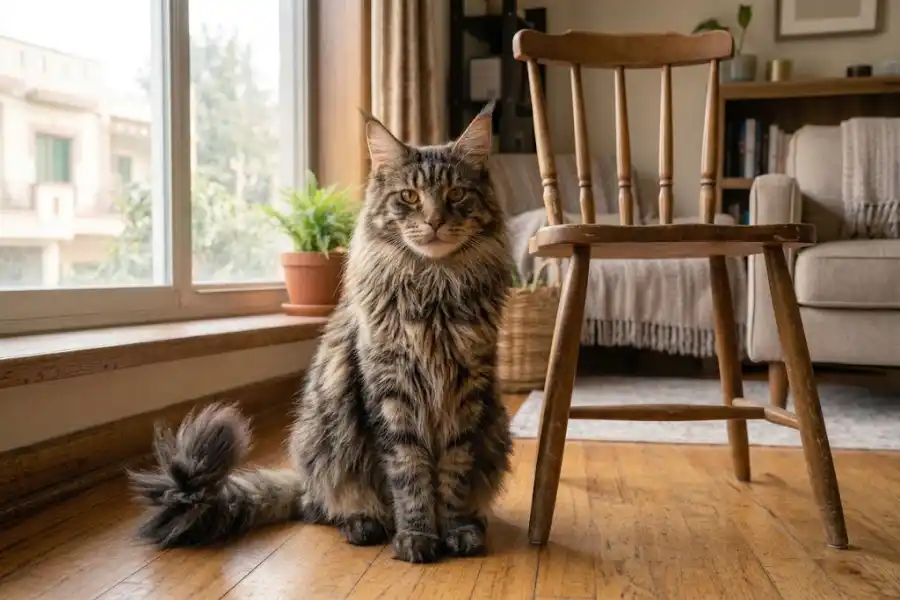
- Take a photo beside the same object each month, like a chair.
- Bring your record to the vet. It helps the vet see the pattern.
Is My Maine Coon Smaller Than Expected?
Not every Maine Coon becomes a giant. These are the most common reasons:
- Female cats are usually smaller than males.
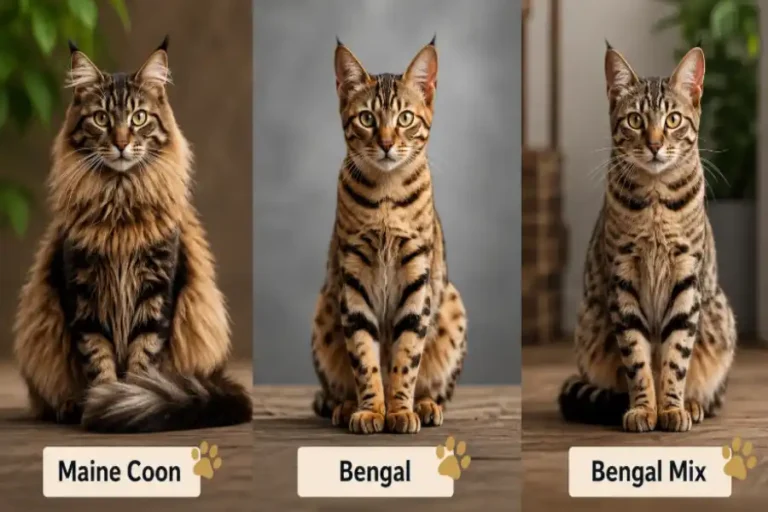
- Some cats sold as Maine Coons are mixes. Read about mixed breed Maine Coon cats to see how a mix can change adult size.
- Smaller parents often mean a smaller kitten.
- Poor food or illness early in life can hold growth back.
- Your cat may simply still be growing.
Some large house cats are close in size to a smaller Maine Coon. For a clear look at the differences, see this post on Maine Coon vs normal cat size.
Too Heavy or Still Growing?
Big cats can gain too much fat. Fast weight gain with no matching growth in bone and muscle can strain the joints and spine. A healthy Maine Coon has ribs you can feel under a thin layer of padding. The waist should tuck in when you look from above.
If you are unsure, ask your vet for a body condition score. It is one of the quickest ways to read a growth chart the right way.
When to Call the Vet
Contact your vet if you notice any of these:
- Weight stops rising or drops during the first year
- Your kitten is still very small at 6 months compared with typical charts
- Your cat refuses food for a day or more
- Limping or trouble jumping
- A swollen belly
- Sudden, fast weight gain
Maine Coons can also face heart and hip problems, so regular checkups matter even when your cat looks fine.
Caring for a Big Cat While It Grows
Knowing the answer to when do Maine Coon cats stop growing helps you plan ahead. Buy gear for the adult size, not the kitten size.
- Litter box: Your cat will outgrow its first one fast. Check the right Maine Coon litter box size before your kitten gets too big for it.
- Cat tree: Pick a sturdy, tall one with wide shelves.
- Food: Plan for bigger food bills as your cat grows.
- Play: Daily play keeps muscles strong and weight in check.
Frequently Asked Questions
How big is a Maine Coon at 1 year old?
Many weigh about 9 to 16 pounds at one year. They are not done yet. Most keep adding length, muscle, and coat for two more years or longer.
Do Maine Coons stop growing at 2 years old?
Most do not. Height and length may slow down, but muscle, chest, and coat often keep building until age 3 to 5.
When do Maine Coon cats stop growing in height and length?
Often around 2 to 3 years old. After that, weight and muscle may keep creeping up for a while.
Do male Maine Coons grow for longer than females?
Males usually get bigger and may take longer to finish. Females are smaller and tend to finish a little earlier.
Does neutering stop a Maine Coon from growing?
No, it does not stop growth. Some sources say early neutering may let a cat grow a bit longer. Ask your vet about the best timing.
Can paw size predict adult size?
Big paws look impressive on a kitten, but they are not a reliable guide. Parent size and your cat’s growth pattern tell you more.
How big can a Maine Coon get?
Most adults fall between 10 and 25 pounds. Record holders have measured close to 4 feet from nose to tail tip. Most cats are smaller, and that is perfectly healthy.
Final Thoughts
So, when do Maine Coon cats stop growing? Most finish between 3 and 5 years old, with height and length slowing first and muscle, chest, and coat filling in last. Be patient with your cat. Measure once a month, feed good food, keep your cat active, and visit the vet on a regular schedule. A healthy cat that follows its own steady curve is right on track.