Bengal Maine Coon Mix: Size, Cost, Health & Legal Facts
Picture a cat the size of a small dog. Now add leopard spots, tufted lynx-like ears, and eyes that seem to glow gold in the dark. That is the Bengal Maine Coon mix, and once you see one, you do not forget it.
This cat is not officially a breed. It is a cross between two of the most popular cats in America: the wild-looking Bengal and the gentle giant Maine Coon. The result is unpredictable, strikingly beautiful, and, in a few places, restricted by law. Most articles about this mix skip that part. We won’t.
This article covers what this cat really looks like, how big it gets, what it costs, what health problems to watch for, and yes, whether you are even allowed to own one where you live.
What Is a Bengal Maine Coon Mix?
A Bengal Maine Coon mix is what you get when a purebred Bengal cat breeds with a purebred Maine Coon. It is not recognized by TICA, CFA, or any major cat registry. That means there is no fixed “standard” for how one should look or act. Every kitten is a genetic surprise.
The Bengal side comes from crossing domestic cats with the Asian leopard cat decades ago, which is why Bengals have that wild, spotted coat. The Maine Coon side is one of the oldest natural cat breeds in North America, known for its huge size, thick fur, and easygoing nature.
Mix the two, and you get a cat that could lean more toward one parent or land somewhere in the middle, much like other Mixed Breed Maine Coon Cats you’ll come across. That unpredictability is part of the appeal, and part of the challenge.
What Does This Mix Look Like?
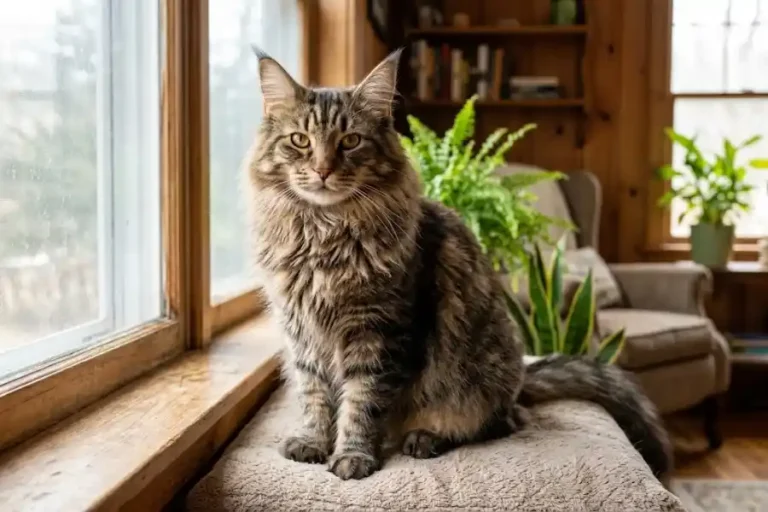
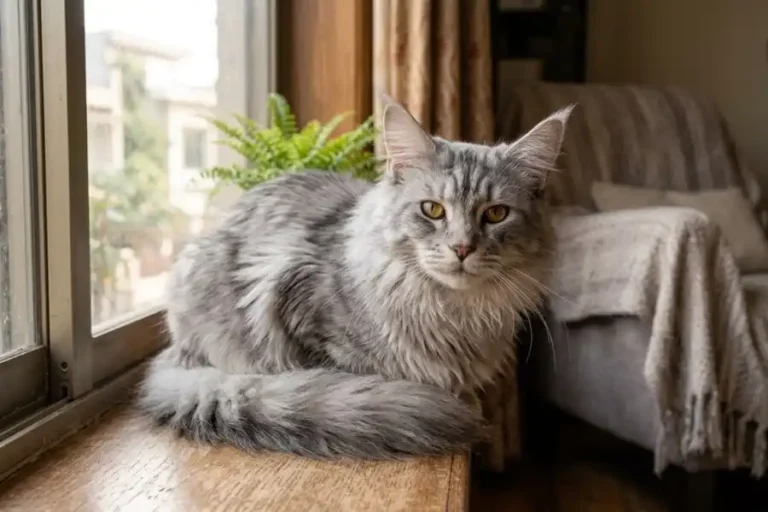
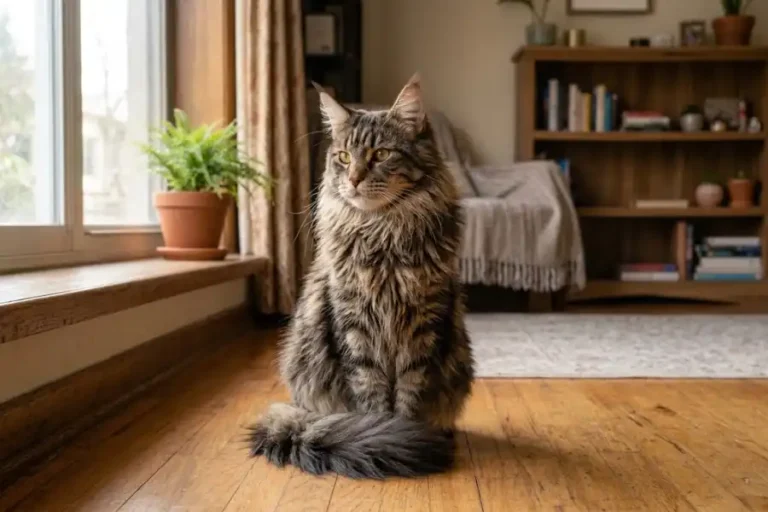
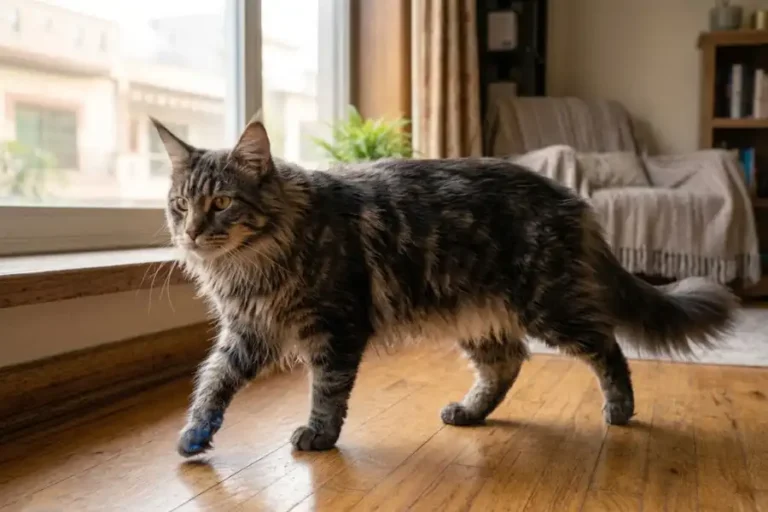
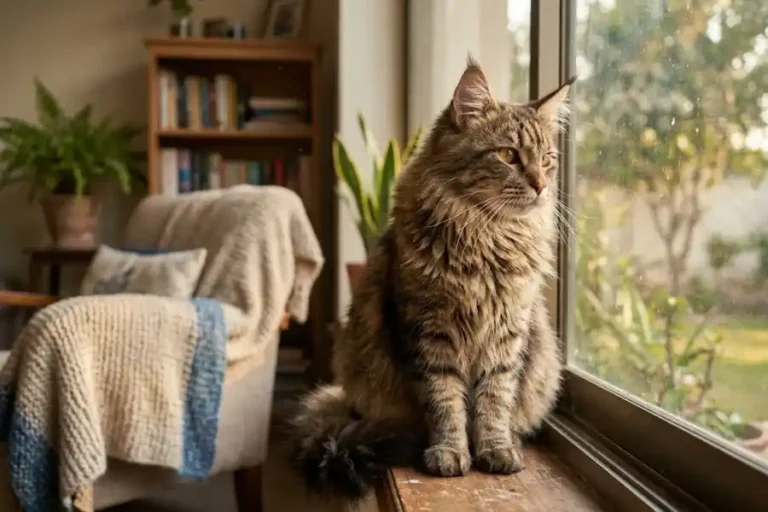
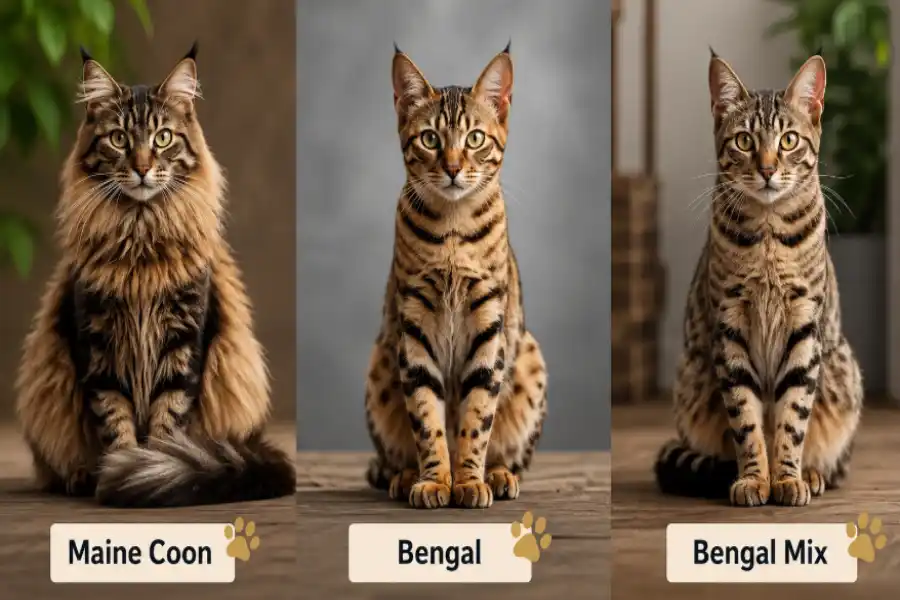
No two Bengal Maine Coon mix cats look alike. Some take after the Maine Coon, with a long, shaggy coat, a bushy tail, and a big, round face. Others favor the Bengal, with short, sleek fur, a leaner body, and a more angular head.
Common features include:
- Spotted or marbled coat patterns in brown, silver, or snow tones
- Tufted ears and toe fur inherited from the Maine Coon
- A muscular, athletic body shape from the Bengal side
- Gold, green, or aqua eyes
- A thick, fluffy tail that can look either bottle-brush or sleek
If you want a cat with a totally predictable look, this is not it. If you want a one-of-a-kind cat, that is the point.
How Big Do Bengal Maine Coon Mix Cats Get?
This mix is big, but usually a bit smaller than a purebred Maine Coon. Most adults land somewhere between 8 and 20 pounds, depending on which parent’s genes are stronger.
Roughly speaking:
- Males typically weigh 12 to 20 pounds
- Females typically weigh 8 to 16 pounds
- Full adult size is usually reached by 3 to 4 years old, similar to a Maine Coon’s slow growth pattern
Even on the smaller end, these cats tend to feel solid and muscular rather than soft and round. That athletic build comes straight from the Bengal parent.
Personality: Affectionate Companion or Wild Child?
This is where the mix really shines, and where it can also catch new owners off guard. Both parent breeds are smart, active, and social, but they show it in different ways.
Maine Coons are famous for being gentle, chatty, and dog-like in how closely they follow their owners around the house. Bengals are famous for their intense energy, sharp intelligence, and love of climbing, jumping, and problem-solving. A Bengal Maine Coon mix usually inherits a blend of both.
Expect a cat that:
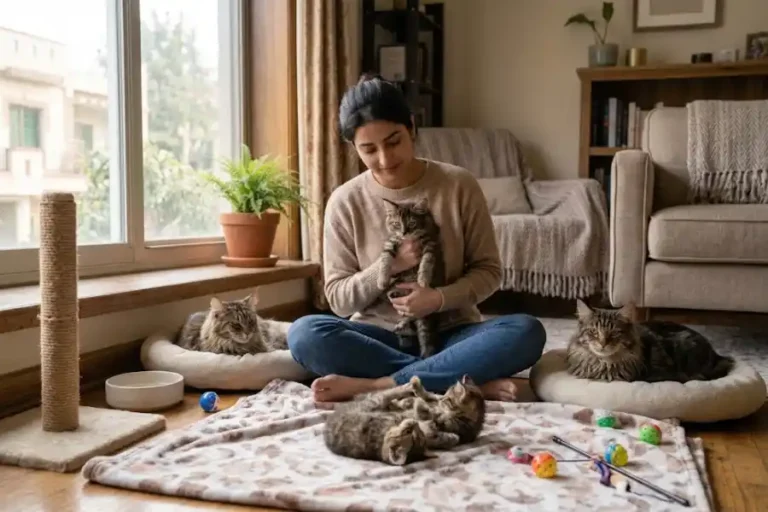
- Bonds closely with its family, sometimes with one favorite person
- Talks a lot, using chirps, trills, and meows
- Needs daily play, not just a nap on the couch
- Can learn tricks, walk on a leash, and open cabinets you thought were cat-proof
- Loves water more than a typical cat, including dipping paws in the sink or bathtub
That vocal streak usually comes from the Maine Coon side, a breed known for an unusual range of chirps and trills, which our guide to Maine Coon Vocalizations breaks down in detail.
A common mistake new owners make is treating this mix like a low-energy lap cat. Without enough play and mental stimulation, that same intelligence can turn into scratched furniture and opened cabinets. Give this cat a job, whether that’s puzzle feeders, climbing shelves, or trick training, and its energy becomes a joy instead of a problem.
Wait, Is It Even Legal to Own One?
This is the part almost nobody talks about, and it matters. Bengal cats are not fully domestic in the way a typical house cat is. Early generations still carry a meaningful amount of Asian leopard cat DNA, and several U.S. states regulate or restrict them based on that generation.
Bengal generations are labeled F1 through F4 (closer to the wild leopard cat ancestor), and then SBT or F5 and beyond (considered fully domestic by most registries). This matters for a mix for a few reasons:
- States including Connecticut, Delaware, Hawaii, and Georgia restrict or ban early-generation Bengals (F1 to F4)
- New York City and Seattle have local bans that apply within city limits, even though the surrounding state allows Bengals
- Most pet-quality Bengals sold today are SBT or F5+, meaning they are legally treated as domestic cats almost everywhere
- If your mix’s Bengal parent was an early generation, the kitten could legally fall under the same restrictions in some states
The good news: most Bengal Maine Coon mixes come from later-generation, fully domestic Bengal parents, so they are legal to own in the vast majority of the country. But if you are buying from a breeder, it is worth asking directly what generation the Bengal parent was, and checking your state and city rules before you fall in love with a kitten you might not be able to keep.
Health Risks to Know Before You Bring One Home
Mixed breeds are sometimes healthier than purebreds because of genetic diversity, but that does not mean a Bengal Maine Coon mix is risk-free. It can inherit health conditions from either parent.
Conditions to ask breeders or vets about include:
- Hypertrophic cardiomyopathy (HCM): a heart disease found in both Bengals and Maine Coons; ask for cardiac screening on the parent cats
- Hip dysplasia: more common in larger cats, especially those with strong Maine Coon genetics
- Progressive retinal atrophy (PRA): an inherited eye condition linked to the Bengal side that can lead to vision loss
- Pyruvate kinase deficiency (PK-Def): a genetic form of anemia seen in Bengals
- Polycystic kidney disease (PKD): more often seen in Maine Coon lines
With good care, a Bengal Maine Coon mix typically lives 12 to 16 years, a range similar to the average Maine Coon Lifespan. A responsible breeder should be able to show you genetic test results or health certificates for both parent cats. If they cannot, that is a red flag worth taking seriously.
How Much Does a Bengal Maine Coon Mix Cost?
Because this is a rare, unofficial cross, pricing varies a lot depending on the breeder, location, and how closely the kitten resembles a purebred Bengal or Maine Coon.
Rough price ranges:
- Breeder price: $500 to $2,500, depending on coat pattern, lineage, and demand
- Adoption fee through a shelter or rescue: $75 to $500
- Initial setup costs (supplies, vet exam, vaccines): $500 to $800
- Ongoing yearly costs (food, litter, vet care, toys): $800 to $1,500
Because both parent breeds are large, active cats, budget for sturdy cat trees, tougher toys, and higher-quality food than you might for an average-sized housecat.
Grooming, Diet, and Exercise: Daily Life With This Mix
Living with a Bengal Maine Coon mix means committing to real daily interaction beyond food and a litter box.
Grooming: Coat length varies a lot. If your cat takes after the Maine Coon, brush it two to three times a week to prevent mats. If it takes after the Bengal, a quick weekly brush is usually enough. Cats that lean more toward the Maine Coon side also tend to blow their coat during seasonal changes, so it helps to read up on Maine Coon Shedding before it catches you off guard.
Diet: Both parent breeds do best on high-protein food with minimal filler ingredients like corn or soy. Bengals in particular can have sensitive stomachs, so introduce new foods slowly.
Exercise: This is not a cat that will be happy sleeping all day. Plan on two 20 to 30 minute play sessions daily, plus climbing space like cat trees or wall shelves. A bored Bengal Maine Coon mix will find its own entertainment, and you may not like what it chooses.
Where Can You Find One? Breeder vs. Rescue
Finding this exact mix is not easy. It is not bred intentionally very often, so most kittens come from accidental litters or small hobby breeders.
Tips for finding one responsibly:
- Ask specialty Bengal or Maine Coon breeders if they know of any planned or accidental litters
- Check breed-specific rescues, since Bengal and Maine Coon rescues occasionally take in mixes
- Always ask to see health testing results and, if possible, meet at least one parent cat
- Confirm the Bengal parent’s generation if you live in a state with restrictions
- Be patient. Waitlists for planned litters can run several months
Adoption is usually the more affordable and ethical route, and shelters sometimes surprise you with this kind of unique mix.
Is a Bengal Maine Coon Mix Right for You?
This cat is not the right fit for every household. Here is a straightforward breakdown.
This mix may be a great fit if you:
- Have time for daily play and enrichment
- Want a cat that bonds closely and follows you around
- Have space for climbing furniture and a large litter box
- Do not mind a vocal, chatty cat
- Can handle occasional shedding and regular brushing
This mix may not be a good fit if you:
- Work long hours away from home with no other pets for company
- Want a quiet, low-maintenance lap cat
- Live somewhere with strict pet size or breed restrictions
- Have a tight budget for food, vet care, and supplies
Frequently Asked Questions
Is a Bengal Maine Coon mix hypoallergenic?
No. No cat breed or mix is truly hypoallergenic. Bengals shed less than Maine Coons, so a mix may shed less than a purebred Maine Coon, but allergy sufferers should still spend time with the cat before committing.
Are Bengal Maine Coon mixes good with kids and other pets?
Usually, yes, especially when socialized early. Their playful, social nature tends to make them good companions for active households, though supervision is still important with very young children.
How long do Bengal Maine Coon mixes live?
With good care, most live between 12 and 16 years, similar to both parent breeds.
Do they need a lot of space?
They do best with room to climb and wander. Vertical space, like cat trees or shelves, matters more than square footage.
Can I find one at a shelter instead of a breeder?
It is possible but uncommon, since this specific mix is rare. Checking breed-specific rescues and local shelters regularly gives you the best chance.
Final Thoughts
A Bengal Maine Coon mix is more than a pretty face. It is a large, sharp, high-energy cat that needs real commitment, and in a handful of places, it comes with legal questions most buyers never think to ask. If you have the time, space, and patience this mix asks for, you will end up with one of the most striking and loyal cats you could own. If you are looking for a quiet, hands-off pet, this probably is not it, and that is okay too.