Maine Coon vs Normal Cat: Real Differences in Size, Cost & Care
You walk into a friend’s house and see a cat sitting on the couch like a small lion. Big paws. Thick fur. Ears with little tufts poking out the top. Then you go home and look at your own cat curled up on a chair, and suddenly it looks… tiny. Is that a Maine Coon you just saw? And what makes it so different from a normal cat anyway?
This question comes up more than you’d think. Cat lovers, first-time adopters, and even longtime owners often wonder what actually separates a Maine Coon from a regular house cat. Is it just size? Or is there more going on under that fluffy coat?
Below, we’ll break down the Maine Coon vs normal cat comparison in plain, simple terms. No confusing jargon. Just the real differences in size, growth, health, cost, and personality, plus a few things most articles on this topic tend to skip.
Quick Answer: The Main Differences at a Glance
If you’re in a hurry, here’s the short version. Each point gets more detail further down.
- Size: Maine Coons are much bigger, often 15 to 25 pounds, compared to 8 to 10 pounds for a normal cat.
- Growth: Maine Coons take 3 to 4 years to fully grow up. Normal cats are done growing by their first birthday.
- Coat: Maine Coons have a thick, water-resistant double coat that needs regular brushing. Most normal cats have shorter, easier-to-manage fur.
- Personality: Maine Coons are known for being gentle, social, and almost dog-like. Normal cats vary a lot depending on breed mix and upbringing.
- Health: Maine Coons are prone to a few specific health issues, including a heart condition called HCM. Normal cats tend to have fewer breed-specific risks.
- Cost: Maine Coons usually cost more to buy and more to feed and care for over time.
Size and Weight: Just How Big Is a Maine Coon?
Let’s start with the most obvious difference. Maine Coons are one of the largest domestic cat breeds in the world, and it shows.
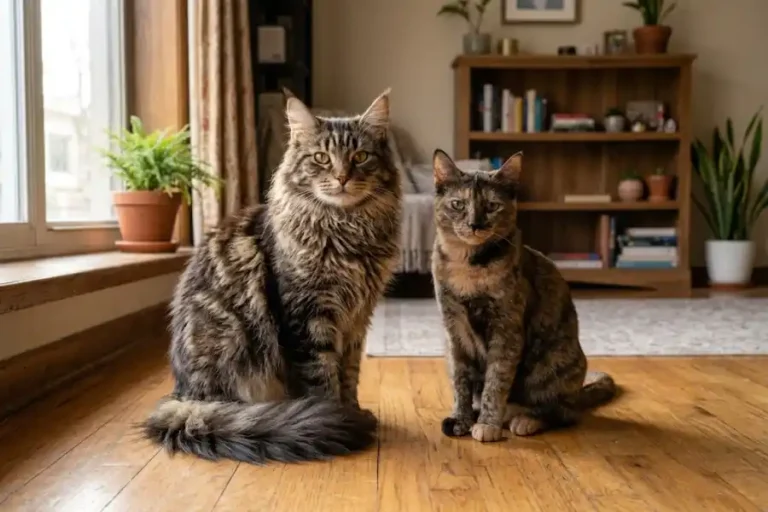
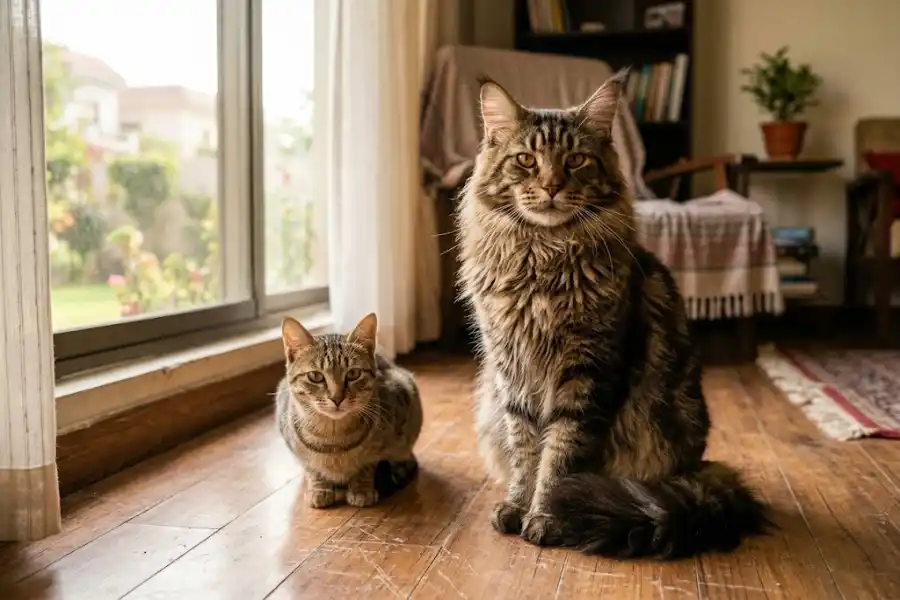
A male Maine Coon typically weighs between 15 and 25 pounds. Some especially large males have been recorded even heavier. Females are a bit smaller, usually landing between 10 and 15 pounds. Compare that to a normal house cat, which usually weighs somewhere between 8 and 10 pounds no matter the gender.
Weight isn’t the only measure that stands out. Maine Coons are also longer. Nose to tail, some Maine Coons stretch past 3 feet, thanks to their long bodies and famously fluffy tails. A normal cat’s body, by comparison, looks almost compact next to that.
If you’ve ever picked up a Maine Coon expecting it to feel like your average cat, the weight difference alone can catch you off guard. It’s less like holding a cat and more like holding a small, friendly dog.
How Long Do They Take to Grow Up?
Here’s something a lot of new owners don’t expect. Maine Coons grow up slowly. Very slowly.
Most normal cats reach their full adult size by the time they’re 12 months old. Maine Coons, on the other hand, keep growing for 3 to 4 years. That means your Maine Coon kitten will still look and act like a kitten, playful, clumsy, and a little goofy, well past the age when other cats have already settled into adult behavior.
This slow growth also means Maine Coon kittens need extra care during their early years. Their bones and joints are developing over a much longer window, so proper nutrition during kittenhood matters more than it does for a normal cat.
Coat and Grooming: The Real Time Commitment
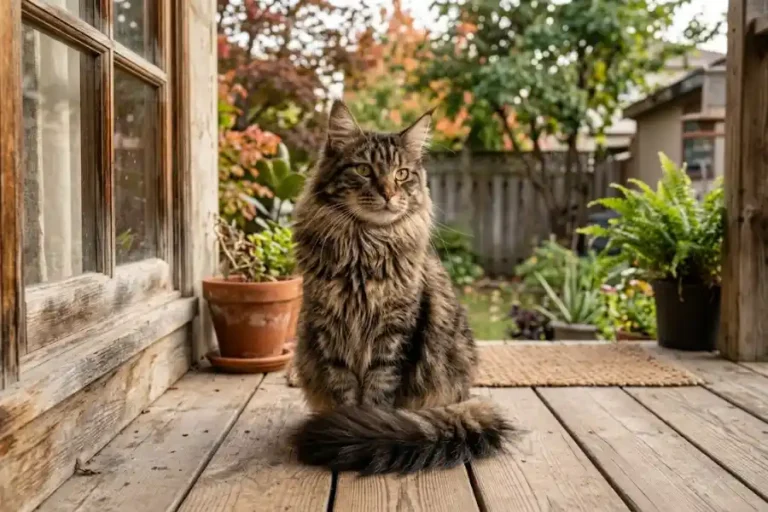
A Maine Coon’s coat is one of its most famous features. It’s thick, silky, and water-resistant, built originally to survive cold New England winters. The fur is longer around the neck, belly, and legs, giving them that regal, lion-like look.
But here’s what most articles don’t tell you clearly: that beautiful coat takes real effort to maintain. Plan on brushing a Maine Coon at least two to three times a week to prevent mats and tangles, especially around the belly and behind the legs where fur tends to knot up. During shedding season, you may need to brush daily. If you want a closer look at what triggers heavier shedding and how to manage it, Maine Coon Shedding covers it in detail.
A normal cat with short fur usually needs much less. A quick brush once a week is often enough to keep shedding under control.
If you don’t have much time for grooming, this is one of the biggest everyday differences to think about before choosing a Maine Coon.
Face, Body, and Physical Features
Beyond size, Maine Coons have a distinct look that sets them apart from a typical house cat.
- Face shape: Maine Coons have a squared muzzle and high cheekbones. Normal cats usually have a more rounded or triangular face.
- Ears: Large ears with pointed, lynx-like tufts at the tips are a Maine Coon trademark. Normal cats have smaller, plainer ears.
- Paws: Maine Coons often have tufts of fur between their toes, almost like built-in snowshoes.
- Eyes: Large, oval-shaped eyes in gold, green, or amber shades are common in Maine Coons.
- Tail: A long, extremely bushy tail, often used to wrap around themselves for warmth.
If you’re trying to figure out whether a cat you’ve seen is a purebred Maine Coon or just a big, fluffy mixed breed, these features are usually the easiest way to tell.
Personality and Temperament
Size and looks aside, personality is often what really wins people over.
Maine Coons have a reputation for being unusually gentle and easygoing, which is why breeders and owners often call them “gentle giants.” They tend to be social without being clingy. They enjoy being around their humans but don’t usually demand constant attention the way some other breeds do.
They’re also known for being surprisingly vocal, though not in the typical meowing sense. Instead of a standard meow, many Maine Coons communicate with soft chirps, trills, and short, high-pitched sounds that feel almost conversational. For a closer look at what these sounds mean, Maine Coon Vocalizations breaks down the most common ones.
Normal cats, since they’re often a mix of breeds or simply domestic shorthairs, don’t follow one set personality pattern. Some are affectionate lap cats. Others are independent and aloof. It really depends on the individual cat, its background, and how it was raised.
Health Differences You Need to Know
This is the part most comparison articles skim over, but it matters a lot if you’re deciding between the two.
Common Health Concerns in Maine Coons
Because of their size and genetics, Maine Coons are more prone to a few specific conditions:
- Hypertrophic cardiomyopathy (HCM): A thickening of the heart muscle that is more common in Maine Coons than in many other breeds. Regular vet checkups, including heart screenings, are strongly recommended.
- Hip dysplasia: Their large frame puts extra strain on joints, which can lead to hip problems as they age.
- Spinal muscular atrophy (SMA): A genetic condition that some Maine Coon lines carry. Reputable breeders usually test for this.
None of this means a Maine Coon is guaranteed to develop these issues. It simply means that if you’re adopting one, it’s worth asking the breeder about health testing and staying on top of regular vet visits.
Common Health Concerns in Normal Cats
Normal cats, being more genetically mixed, generally face fewer breed-specific health risks. Their concerns tend to be more general, such as dental disease, obesity from overfeeding, or age-related kidney issues, the kind of things that can affect any cat regardless of breed.
In terms of lifespan, both types of cats can live long, healthy lives with good care, often reaching 12 to 15 years or more. Maine Coons, when properly screened for HCM and given regular checkups, frequently live just as long as any well cared for house cat. For a closer breakdown of what shapes those numbers, Maine Coon Lifespan covers the factors that matter most.
The Real Cost of Owning Each Cat
Here’s a part that often gets overlooked. The cost difference between a Maine Coon and a normal cat goes well beyond the adoption price.
- Upfront cost: A Maine Coon from a reputable breeder typically costs between $800 and $2,000 or more. A normal cat can often be adopted from a shelter for a small fee, sometimes under $100.
- Food costs: Because of their size, Maine Coons eat noticeably more than a normal cat, which adds up over months and years.
- Grooming supplies: Regular brushes, de-matting tools, and possibly professional grooming sessions add extra cost for Maine Coon owners.
- Vet care: Given their higher risk for conditions like HCM, Maine Coon owners often budget for more frequent screenings, which can mean higher long-term vet bills.
- Furniture and space: Larger cat trees, bigger litter boxes, and sturdier scratching posts are often needed to comfortably fit a Maine Coon’s size.
None of this means a Maine Coon isn’t worth it. For many owners, they absolutely are. But going in with realistic expectations about the full cost, beyond the sticker price, will save you from surprises later.
Food and Feeding Needs
Given their size and slow growth, Maine Coons need a diet that supports steady muscle and bone development over several years, rather than a few months. High-protein food is usually recommended, especially during kittenhood, to keep up with their unusually long growth period.
Portion sizes also tend to be larger simply because Maine Coons are bigger animals with bigger appetites. A normal cat, having reached full size much earlier, generally settles into a more predictable, smaller feeding routine by the time it’s a year old.
If you’re switching from a normal cat to a Maine Coon, it’s worth talking to your vet about adjusting portion sizes and food type, rather than assuming the same feeding routine will work for both.
Which One Fits Your Home and Lifestyle?
This is really the question behind the question. Numbers and facts are helpful, but what matters most is which cat fits your life.
A Maine Coon might be the better choice if:
- You have space for a larger cat tree, bigger litter box, and roomier living area.
- You don’t mind spending time brushing your cat a few times a week.
- You want a social, easygoing companion that isn’t overly demanding.
- You’re comfortable with a higher upfront and ongoing cost.
A normal cat might be the better fit if:
- You live in a smaller space, like an apartment.
- You prefer lower grooming needs.
- You want a lower-cost option to adopt and maintain.
- You’re open to a wider range of personalities, since every normal cat is a little different.
That said, a smaller space doesn’t rule out a Maine Coon entirely. Maine Coon Apartment Living has tips on making that work.
Does Your Cat Have Maine Coon in Them? How to Tell
A lot of people search this comparison because they’re staring at their own big, fluffy cat and wondering if it’s part Maine Coon. Here are a few signs worth checking:
- Noticeably larger size compared to other cats in the litter or neighborhood.
- A square-shaped muzzle instead of a rounded face.
- Ear tufts or extra-long whiskers.
- A thick, longer coat, especially around the neck and belly.
- A calm, social personality that seems unusually dog-like.
Keep in mind that having a few of these traits doesn’t confirm a Maine Coon bloodline. Many mixed-breed cats share similar features by coincidence. If you want a definitive answer, a cat DNA test is the only way to know for sure.
Frequently Asked Questions
Is a Maine Coon just a bigger version of a normal cat?
Not exactly. While size is the most obvious difference, Maine Coons also differ in growth rate, coat type, personality tendencies, and specific health risks like HCM. It’s a distinct breed with its own traits, not simply a larger version of any cat.
Are Maine Coons harder to take care of than normal cats?
They require more grooming and generally cost more to feed and maintain, but their care isn’t dramatically harder, just different. Regular brushing and health screenings go a long way.
Do Maine Coons get along well with normal cats?
Yes, in most cases. Maine Coons are known for their easygoing nature and often adapt well to living with other cats, including normal domestic breeds.
Why are Maine Coons so much more expensive than normal cats?
Their price reflects breeding costs, health testing, and their status as a recognized purebred. Normal cats, especially shelter cats, don’t carry the same breeding and certification expenses.
How can I tell if my cat is a purebred Maine Coon?
Physical traits can offer clues, but the only reliable way to confirm a purebred Maine Coon is through breed registration papers or a cat DNA test.
Final Thoughts
When you line up a Maine Coon vs normal cat side by side, the differences go far beyond size. Growth rate, coat care, personality, health risks, and total cost all play a role in shaping what life with each of these cats really looks like.
Neither one is objectively “better.” A Maine Coon offers a big, social, gentle presence for owners ready to handle the grooming and cost that comes with it. A normal cat offers flexibility, lower costs, and just as much love, wrapped in a smaller, easier-to-manage package.
The right choice really comes down to your space, your budget, and the kind of companion you’re hoping to bring home. Whichever one you choose, you’re getting a loyal companion that’s going to make your home a little louder, a little furrier, and a lot more fun.