Maine Coon Water Habit: Why It Happens and When to Worry
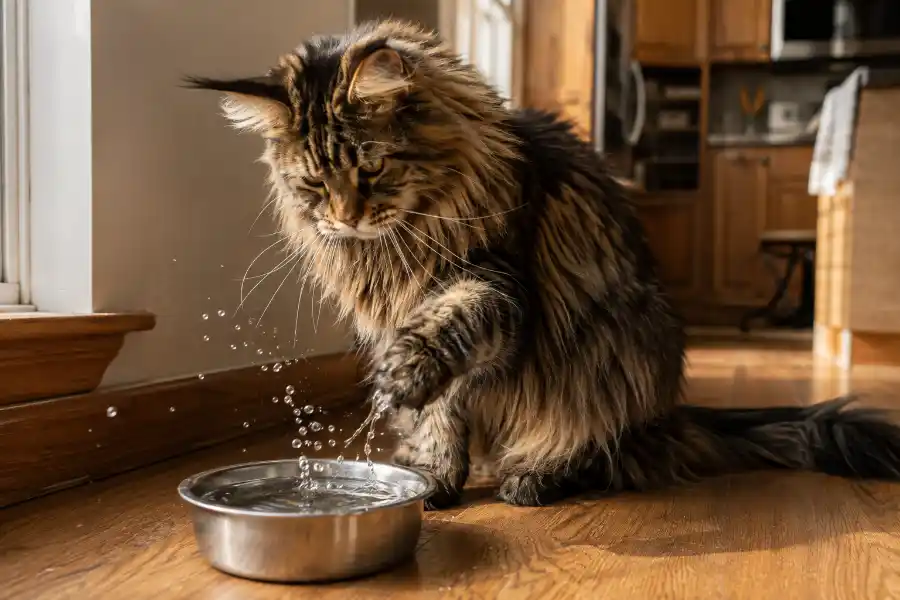
Your Maine Coon just stuck a paw in the water bowl again. Water is all over the floor. The cat looks proud. You are not.
If this sounds familiar, you already know that Maine Coons have a strange relationship with water. Most cats run from a dripping faucet. Maine Coons chase it. This odd water habit is one of the most talked-about traits of the breed, and it raises real questions. Why do they do it? Is it normal? And could it ever mean something is wrong?
This article answers all of that in simple, everyday words. It covers where the water habit comes from, how much water your cat needs, when playful splashing turns into a health concern, and how to keep both your cat and your floors happy.
Why Do Maine Coons Have Such a Strong Water Habit?
The Maine Coon cat did not just wake up one day and decide to love water. Several traits work together to create this famous habit.
A Water-Resistant Coat
Maine Coons grew up in the cold, wet climate of New England. Over time, they developed a thick, shaggy coat with a slightly oily texture, the same coat responsible for their well-known Maine Coon shedding. This coat sheds light moisture instead of soaking it up right away. That means a splash of water does not feel as uncomfortable to a Maine Coon as it does to a short-haired cat. Their fur gives them a head start on staying dry, so they are simply more willing to get close to water in the first place.
Instinct to Check Freshness
Cats in the wild could not trust still water. Standing water often carries bacteria, while moving water is usually safer to drink. Many experts believe Maine Coons kept this instinct. When your cat paws at the water bowl or taps the surface before drinking, it may be testing the water the same way its ancestors tested a stream.
High Curiosity and Hunting Drive
Maine Coons are known for being smart, playful, and endlessly curious. Water moves, ripples, and reflects light, which makes it an easy target for a cat that likes to chase things. The pawing motion at a water bowl looks a lot like the paw-swipe cats use to catch prey. For a Maine Coon, splashing water might simply feel like a mini hunting game.
The Viking Legend (Fun, But Unproven)
You may have read that Maine Coons love water because they descend from ship cats brought over by Vikings or European sailors. It is a fun story, and it shows up on almost every Maine Coon website. The truth is that there is no solid historical proof of this claim. It is a popular legend, not a confirmed fact. The coat and instinct explanations above are far better supported by what we know about the breed.
Signs Your Cat Has a True Maine Coon Water Habit
Not sure if your cat’s behavior counts as a real water habit? Here are the most common signs owners report.
- Dipping a paw into the water bowl before or during a drink
- Following you into the bathroom to watch the faucet or shower
- Trying to drink straight from a running tap instead of a bowl
- Splashing water out of the bowl just to watch it move
- Playing with ice cubes, dripping water, or wet toys
- Sitting on the edge of the tub or sink for long periods
- Getting into an empty tub or shallow water without fear
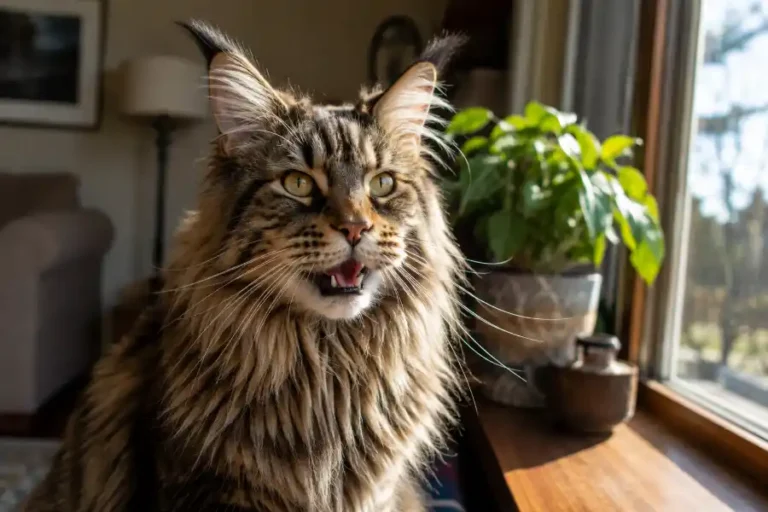
Many owners also notice extra chirps, trills, or chatty sounds during water play, since this kind of excitement often lines up with typical Maine Coon vocalizations.
If your cat shows several of these signs, congratulations. You have a full-blown water lover on your hands.
Is It Normal, or Could It Be a Health Sign?
Here is something most articles about the Maine Coon water habit skip over completely. Playful splashing is normal. But a sudden increase in thirst or water-seeking behavior is not always about fun. Sometimes it is your cat’s body sending a warning.
Watch for the difference between playing with water and needing water. A cat that plays with the bowl for a minute and then walks away is likely just enjoying the game. A cat that seems to drink constantly, empties the water bowl faster than usual, or seems desperate for water may be dealing with something else.
A simple rule to follow: playful water habits come and go throughout the day. A sudden, ongoing increase in actual drinking, paired with more trips to the litter box, is worth a vet visit.
Increased thirst, known as polydipsia, can be linked to a few health conditions that are more common in older cats:
- Kidney disease, which reduces the body’s ability to hold onto water
- Diabetes, which can cause excess thirst and more frequent urination
- Hyperthyroidism, which can speed up metabolism and increase thirst
- Urinary tract issues, which are worth watching for in Maine Coons since larger breeds can be prone to bladder concerns
This does not mean every splash session is a red flag. Most of the time, it is not. But if you notice weight loss, more frequent urination, tiredness, or a big change in how much your cat drinks, do not just assume it is the famous water habit. Book a visit with your vet to rule out anything serious.
How Much Water Does a Maine Coon Need Each Day?
Since Maine Coons are one of the largest domestic cat breeds, their water needs are higher than an average house cat’s. A general guide used by vets is around 3.5 to 4.5 ounces of water for every 5 pounds of body weight per day, including moisture from wet food.
A typical adult Maine Coon weighs between 13 and 18 pounds, which usually works out to roughly 9 to 16 ounces of total water per day. Cats eating mostly dry food will drink more from the bowl, since their food supplies less moisture on its own.
These numbers are only a general guide, not a strict rule. Activity level, diet, and the weather all change how much your cat needs. If you are ever unsure, your vet can give you a number based on your cat’s exact weight and health.
How to Safely Enjoy Your Maine Coon’s Love of Water
Instead of fighting the water habit, most owners find it easier to work with it. Here are simple, safe ways to do that.
Get a Cat Water Fountain
A fountain keeps water moving, which matches your cat’s natural pull toward flowing water. It also keeps the water fresher for longer and often leads to better hydration overall.
Set Up a Supervised Water Play Spot
A shallow tray with an inch of water, a few floating toys, or an ice cube can give your cat a safe outlet for splashing that is not your kitchen sink.
Know What to Avoid
- Never let your cat drink from a toilet bowl, since cleaning chemicals can be harmful
- Avoid letting your cat drink soapy bathwater
- Keep water play away from candles, essential oil diffusers, and electrical outlets
- Never leave a kitten alone and unsupervised near a full tub or deep water
How to Manage the Mess (Without Ending the Fun)
You do not have to choose between a happy cat and a dry floor. Try these simple fixes.
- Place a large silicone mat under and around the water bowl to catch spills
- Choose a wide, heavy, non-tip bowl so it is harder to knock over
- Keep the water level slightly lower to reduce splash-out during play
- Move the water station away from carpet and onto tile, vinyl, or the mat itself
- Give your cat a designated play tray so the main water bowl stays untouched
Common Myths About the Maine Coon Water Habit
- Myth: All Maine Coons love water. Fact: Many do, but some individual Maine Coons show little to no interest in it. Personality still plays a big role.
- Myth: Maine Coons are waterproof. Fact: Their coat is water-resistant, not waterproof. They still get wet, just more slowly than other cats.
- Myth: Every Maine Coon can swim well. Fact: Most cats, including Maine Coons, can paddle if they need to, but that does not mean they enjoy or seek out deep water.
- Myth: A cat that plays with water is always thirsty. Fact: Most water play is about instinct and curiosity, not actual thirst.
Frequently Asked Questions
Do all Maine Coon cats like water?
No. Most Maine Coons show some interest in water, but the level of interest varies a lot from cat to cat. Some are obsessed, while others barely notice a dripping tap.
Why does my Maine Coon dip its paw in the water before drinking?
This is usually an instinct left over from the wild, where cats tested water for freshness and depth before drinking. It is completely normal behavior.
Can Maine Coons really swim?
Yes, most cats, including Maine Coons, are able to swim if needed. However, choosing to swim for fun is much less common and depends on the individual cat.
Is it bad if my Maine Coon does not like water at all?
Not at all. A Maine Coon that avoids water is still perfectly normal. The water-loving trait is common in the breed, but it is not required or guaranteed.
Why does my cat prefer drinking from the faucet instead of its bowl?
Running water often looks and smells fresher to a cat than still water sitting in a bowl. A pet fountain can often solve this by mimicking that same moving water at home.
Final Thoughts
The Maine Coon water habit is one of the most charming parts of owning this breed. It comes from a mix of a water-friendly coat, sharp instincts, and natural curiosity. Most of the time, it is nothing more than a fun quirk that makes your cat even more entertaining to live with.
Still, it is worth knowing the difference between playful splashing and a sudden jump in real thirst. Keep an eye on the signs, give your cat safe ways to enjoy the water they love, and check in with your vet if anything about their drinking habits changes suddenly. That way, you get to enjoy the splash without missing anything important.