Albino Maine Coon Cat: What Owners Should Really Know
If you have searched for an albino Maine Coon cat, you are probably trying to answer one simple question: does this cat really exist, or is it just a very pale color? That question matters more than it looks, because the answer changes how you shop for a kitten, what health checks you ask for, and what you should expect from your vet.
This article breaks down what an albino Maine Coon cat actually is, why so many people confuse it with a plain white Maine Coon, and what you need to know before you bring one home.
What People Mean by “Albino Maine Coon Cat”
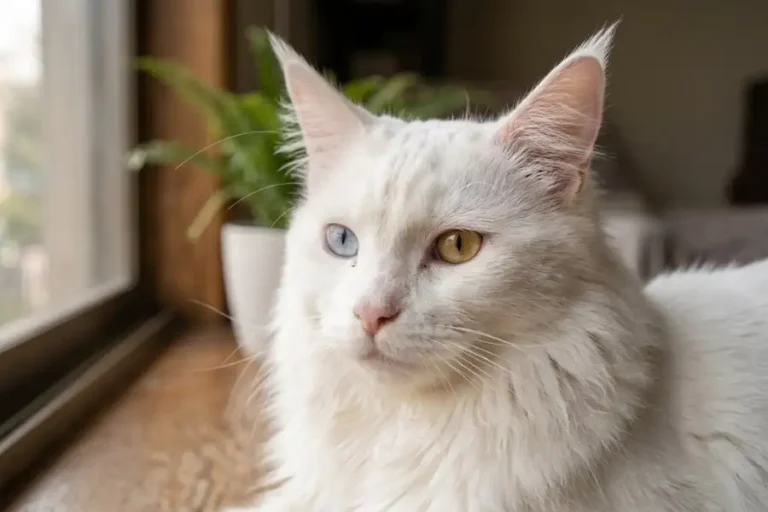
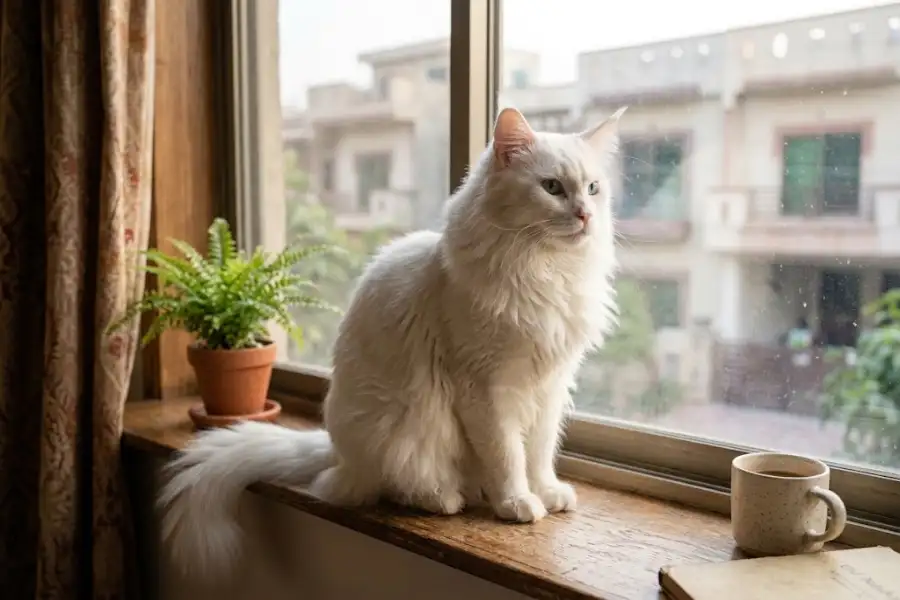
Most people who type this phrase into Google are not picturing a scientific term. They are picturing a Maine Coon with snow-white fur and light, glassy eyes. In everyday language, “albino” has become a stand-in word for “very pale” or “colorless.”
The problem is that true albinism is a specific genetic condition, and it works very differently from a plain white coat. Knowing the difference helps you talk to breeders and vets with confidence, and it helps you spot a cat that might have extra health needs.
Can a Maine Coon Really Be Albino?
True albinism in cats is caused by a change in the gene that controls an enzyme called tyrosinase. This enzyme is needed to make melanin, the pigment that colors fur, skin, and eyes. When the enzyme does not work at all, an animal is born with no pigment anywhere on its body. This condition comes from a completely different genetic pathway than the one that creates a plain white coat, and it removes melanin production everywhere.
A true albino cat has pink or very pale eyes, and its skin looks pink because you can see blood vessels through the thin, colorless fur. Reliable records of true albino Maine Coons are extremely rare, and this trait has not been well documented in the breed.
So when someone shows a photo of a bright white Maine Coon and calls it albino, they are almost always looking at something else: a white-coated Maine Coon with a different genetic cause.
Why White Maine Coons Get Mistaken for Albino
A white Maine Coon gets its coat from a dominant gene known as the White (W) gene, and this gene hides, rather than removes, the cat’s real color. The cat is still genetically black, red, tabby, or another shade underneath. The coat you see on the outside is a mask, not the true color.
Because the pigment is only hidden and not gone, white Maine Coons keep normal pigmentation in their eyes, which is why they can show blue, gold, green, or odd-colored eyes. That range of eye colors is one of the clearest signs you are looking at a white Maine Coon and not a true albino cat.
How to Tell an Albino Cat From a White Maine Coon
Here is a simple side-by-side you can use when checking photos or meeting a kitten in person:
- Eye color: True albino cats usually have pink or very pale blue eyes. A white Maine Coon can have blue, gold, green, or odd eyes, all with normal color.
- Skin tone: Albino cats show pink skin because there is no pigment to hide the blood vessels underneath. A white Maine Coon’s skin keeps a normal tone under the fur.
- How common they are: Genuine albino Maine Coons are almost never confirmed, while a plain white coat is considered the rarest of the standard Maine Coon colors, though it is not albinism.
- Genetic cause: Albinism disables pigment production everywhere. A white coat only hides pigment that is still fully active underneath.
The Genetics Behind a White Maine Coon’s Coat
The white coat gene is dominant, so it only takes one copy, passed from one parent, to make a kitten pure white. That also means at least one parent in the litter has to carry that same white gene.
Breeders often watch newborn kittens closely, because a small colored spot sometimes shows up on the head of a white kitten before it fades away as the kitten grows into its adult coat. That spot is a small clue to the color hiding underneath the white mask.
If you are curious about how Maine Coon coat colors work more broadly, our article on the calico Maine Coon color pattern walks through a different set of coat genetics in the same breed.
Eye Color and the Hearing Connection
This part matters for anyone shopping for a white or pale Maine Coon kitten. Blue-eyed and odd-eyed white cats carry a higher chance of congenital deafness in one or both ears, linked to changes in the inner ear tied to the White gene.
This does not mean every blue-eyed white Maine Coon is deaf. It means you should ask the breeder for a hearing test result, often called a BAER test, before you commit to a kitten, especially if the kitten has blue or odd-colored eyes. A responsible breeder will already have this information ready for you.
Are White or Pale Maine Coons Rare?
Yes, and that rarity is part of why the “albino” search term is so popular. Among all Maine Coon colors, solid white is widely seen as the rarest, which is exactly why people notice these cats and start asking questions about them.
A true albino Maine Coon, if one exists at all, would be rarer still, since the breed has no well-documented albino bloodline. If a seller tells you they have a confirmed albino Maine Coon kitten, ask for proof, such as a vet exam that checks eye and skin pigment, and treat big claims with caution.
Caring for a White Maine Coon
Whether your cat is a true albino or, far more likely, a white-coated Maine Coon, a very pale cat needs a few extra layers of care:
- Sun protection: Light-colored skin sunburns more easily, especially on the ears and nose. Keep outdoor time short during peak sun hours, or use a vet-approved pet sunscreen.
- Hearing checks: If your cat has blue or odd eyes, ask your vet about a BAER hearing test, and set up your home so your cat can feel vibrations or see you approaching, since a deaf cat relies more on sight and touch.
- Regular eye exams: Pale-eyed cats can be more sensitive to bright light, so a vet visit if you notice squinting or watery eyes is a good habit.
- Coat care: Like every Maine Coon, a white coat still needs regular brushing to stop mats from forming in that long, thick fur.
If you want a wider look at how this breed’s health needs change over time, our article on Maine Coon lifespan covers what to expect at each life stage.
How a White Maine Coon Compares to a Regular Cat
New owners often want to know if a white or pale Maine Coon behaves any differently from other cats. The short answer is no. Coat color does not change personality. What does change things is the breed itself: Maine Coons keep the same large, muscular body, long fur, tufted ears, and easygoing personality no matter what color sits on top.
If you are weighing a Maine Coon against a shorthaired housecat, our comparison on Maine Coon vs normal cat lays out the size, grooming, and cost differences you should plan for.
Buying Tips: What to Ask a Breeder
Before you put down a deposit on a kitten sold as an “albino Maine Coon,” ask the breeder these questions:
- Has this kitten had an eye and skin pigment check from a vet?
- Does the kitten have a BAER hearing test on file?
- Can you show me the parents, and do either of them carry the white gene?
- What is the kitten’s true genetic color underneath the white coat, if known?
A breeder who answers these clearly, and who is not bothered by the questions, is more likely to be raising healthy kittens the right way. For a broader look at the breed’s traits before you buy, our Maine Coon cat overview is a solid starting point.
Frequently Asked Questions
Is there really such a thing as an albino Maine Coon cat?
True albinism has not been well documented in this breed. Most cats called “albino Maine Coon” online are white-coated Maine Coons with a dominant white gene, not true albino cats.
How can I tell if my Maine Coon is albino or just white?
Check the eyes and skin. Pink eyes and pink, blood-vessel-visible skin point to albinism. Blue, gold, green, or odd-colored eyes with normal skin tone point to a plain white coat.
Are white Maine Coons more likely to be deaf?
Blue-eyed and odd-eyed white Maine Coons carry a higher chance of hearing loss in one or both ears. A BAER hearing test can confirm this before you bring a kitten home.
Do albino or white Maine Coons cost more?
White Maine Coons often carry a higher price because of their rarity and demand, not because a cat labeled “albino” is a separate, more special breed.
Is a white Maine Coon’s personality different from other colors?
No. Coat color has no link to temperament. A white Maine Coon is just as friendly, playful, and people-focused as any other color in the breed.
Final Thoughts
An albino Maine Coon cat is, in almost every real-world case, a white Maine Coon wearing a dominant white gene like a mask over its true color. Genuine albinism is a separate, extremely rare condition that has not been reliably confirmed in this breed. Once you know the difference between the two, you can ask better questions, pick a healthier kitten, and give your cat the specific care a pale coat and light eyes really call for.