Maine Coon Indoor or Outdoor? What Every Owner Should Know
You just brought home a Maine Coon. Or maybe you’re still deciding. Either way, you’ve probably searched “Maine Coon indoor or outdoor” more than once, and gotten the same vague answer every time: “it depends.”
That answer isn’t wrong. But it’s not very helpful either. This article lays out the real risks, the real numbers, and a real plan, so you can make this choice with confidence instead of guesswork.
The Quick Answer
Most vets and Maine Coon breeders recommend keeping this breed indoors, or giving them outdoor access only in a safe, controlled way. That means a catio, a harness, or a fenced yard, not free roaming.
Why? Because a Maine Coon that roams freely faces real dangers every single day. We’ll walk through what those dangers are, and how to give your cat a rich, happy life without them.
Why This Question Is Trickier for Maine Coons Than Other Cats
Maine Coons aren’t your average house cat, and that’s why this decision feels harder. This breed started as a working farm cat in New England. They hunted rodents in barns. They handled brutal winters. Their thick, water-resistant coat still shows that history today, along with a famous love of water that we cover in more detail in our Maine Coon Water Habit article.
Because of that background, a lot of owners assume Maine Coons “need” to be outside. But that’s mixing up two different things: being physically tough enough to survive outdoors, and needing outdoor time to be happy. Modern Maine Coons are bred as companion cats. They bond closely with their families. Many act more like dogs than cats, following you room to room and greeting you at the door, one of several personality traits we cover in our full Maine Coon Cat overview.
Their size adds another layer. A full grown Maine Coon can weigh 15 to 25 pounds and stretch over 3 feet long, nose to tail. That size, paired with strong hunting instincts, makes them confident wanderers once they’re outside. Confidence is great in your living room. Outdoors, it can get them into trouble fast.
What Really Happens to Maine Coons Outside
This is the part most articles gloss over. They mention “risks” in one vague sentence and move on. Let’s be specific, especially for owners in the United States, where outdoor conditions vary a lot by region.
- Cars. Traffic is the single biggest killer of outdoor cats in the US, especially in suburban and urban areas.
- Coyotes and large birds of prey. In many parts of the country, coyotes, hawks, and owls actively hunt cats. A Maine Coon kitten or smaller adult is not too big to be targeted.
- Poison and chemicals. Rat poison, antifreeze, and lawn treatments are common in yards and can be deadly if a cat walks through them or licks their paws afterward.
- Disease. Outdoor cats can catch FeLV (feline leukemia) and FIV from other cats through fights or close contact. Both are serious, lifelong illnesses.
- Theft. Purebred Maine Coons can sell for thousands of dollars. Free roaming cats of valuable breeds are sometimes targeted by people looking to resell them.
- Getting lost. Maine Coons love to explore. That same trait means they can wander further than expected and struggle to find their way home.
None of this means the outdoors is “bad.” It means unsupervised, unrestricted outdoor access carries real risks that most owners underestimate until something goes wrong.
The Lifespan Numbers Don’t Lie
If you only remember one section of this article, make it this one.
Indoor Maine Coons typically live 12 to 15 years, with many reaching their late teens. Cats who roam outdoors, regardless of breed, often live only 2 to 5 years on average.
That gap is huge. It’s not a small statistical difference. It’s the difference between a cat who grows old with your family and one who doesn’t make it past kittenhood age in cat years.
There’s one more reason this matters extra for Maine Coons specifically. About 30 percent of the breed carries a gene linked to hypertrophic cardiomyopathy, a heart condition that can cause sudden collapse. A cat with undiagnosed HCM is safer at home, close to help, than roaming blocks away when a health emergency hits. For a closer look at what shapes a Maine Coon’s life expectancy, genetics included, our Maine Coon Lifespan article breaks it down in more detail.
The Part Most Articles Skip: Indoor Cats Can Struggle Too
Here’s where a lot of “just keep them inside” advice falls short. Simply locking the door isn’t enough. Maine Coons are smart, active, and easily bored. Without the right setup, an indoor Maine Coon can become just as unhappy as an outdoor cat is unsafe.
Watch for these signs that your indoor Maine Coon needs more stimulation:
- Overeating or rapid weight gain
- Over grooming, sometimes leading to bald patches
- Scratching furniture aggressively, even with posts available
- Yowling or pacing at night, often a sign of disrupted rest, something we cover in our Maine Coon Sleep Habits article
- Sudden aggression toward you or other pets
These aren’t signs your cat “needs” to go outside. They’re signs your cat needs a better indoor environment. Let’s fix that next.
How to Make Indoor Life Genuinely Good for a Maine Coon
A bored Maine Coon and a happy Maine Coon often live in the exact same house. The difference is setup, not square footage.
- Build vertical space. Tall cat trees, wall shelves, and climbing towers let your cat use their natural urge to perch up high.
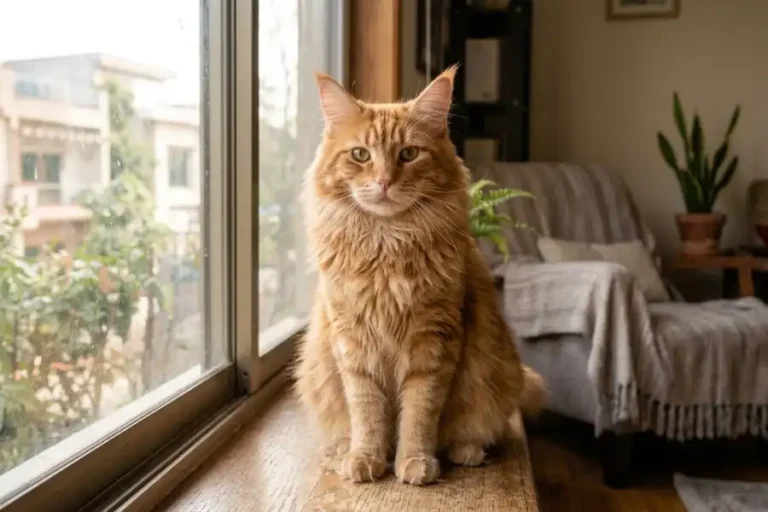
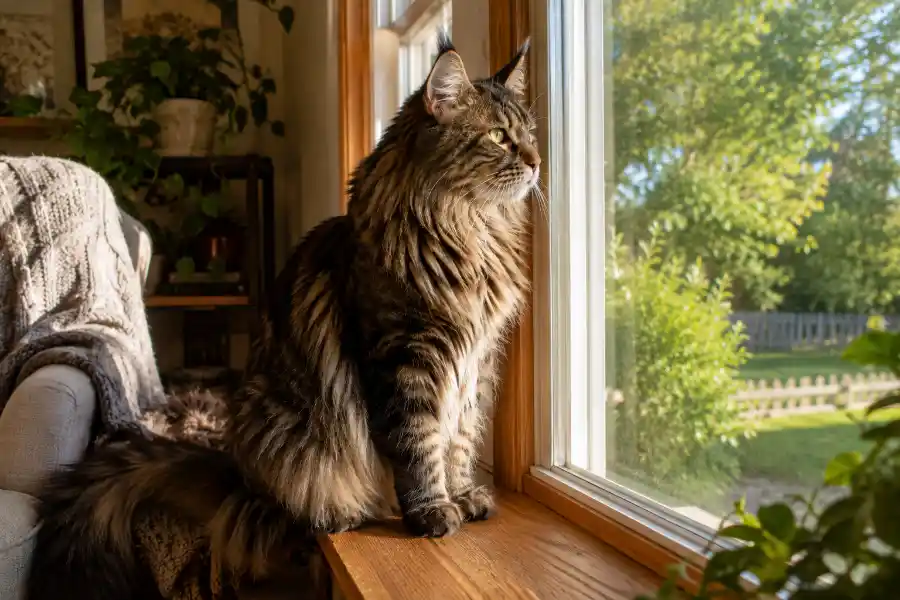
- Add a window perch. A sunny spot to watch birds and squirrels covers a surprising amount of their need for “outdoor” stimulation.
- Use puzzle feeders. These slow down eating and give your cat a mental workout at mealtime.
- Play twice a day. Two 15 minute sessions with a wand toy burn energy and prevent boredom far better than one long session.
- Rotate toys weekly. Cats lose interest in toys that never change. Swapping them out keeps things fresh.
- Consider a second cat. Maine Coons are social. A companion, human or feline, matters more to this breed than it does to many other cats.
Do this well, and most Maine Coons never show the “I need to go outside” behaviors at all.
The Middle Ground Nobody Talks About Enough
Indoor only and free roaming aren’t your only two options. A growing number of owners choose a middle path that gives their cat fresh air without the risks.
A Catio
A catio is an enclosed outdoor space, like a screened porch just for cats. Costs vary widely. A simple DIY window box catio can run under $300. A larger, professionally built catio attached to your house can cost $1,500 to $3,000 or more. Either way, your cat gets sun, fresh air, and bugs to watch, with zero access to traffic, predators, or poison.
Harness and Leash Walks
Yes, Maine Coons can be leash trained, and many take to it better than other breeds. Start indoors. Let your cat wear the harness alone for short stretches, then add the leash, then finally step outside together in a quiet spot. This process usually takes a few weeks of short, patient sessions. Never leave a cat unattended in a harness, and never let them off leash outdoors.
Supervised Yard Time
If you have a secure, fenced yard, sitting outside with your cat while they explore can work well. You stay close enough to step in if a threat appears, and your cat still gets a change of scenery.
How to Move an Outdoor Cat Back Indoors, Without a Fight
Maybe your Maine Coon already has outdoor habits and you want to change that safely. Rushing this can cause stress for both of you. Go slow instead.
- Get a full vet check first. Rule out parasites, injuries, or illness picked up outdoors before starting the switch.
- Add enrichment before removing outdoor time. Set up the cat tree, window perch, and toys a week or two before you cut back outdoor access.
- Shrink outdoor time gradually. Reduce it by 20 to 30 minutes every few days instead of stopping all at once.
- Replace the habit itself. If your cat used to go out after breakfast, swap that slot for a play session instead.
- Expect a few rough days. Some meowing at the door is normal. It usually fades within one to two weeks as new habits form.
Questions to Ask Before You Decide
Every home is different. Before you settle on indoor, outdoor, or a middle ground, think through these:
- Do you live near a busy road or in a rural area with wildlife?
- Does your area have a lot of outdoor cats or a history of feline disease outbreaks?
- Could you realistically build or buy a catio, even a small one?
- Do you have the time and patience for leash training?
- Did your breeder’s contract require indoor only living? Many reputable Maine Coon breeders include this clause.
Your real answers to these questions matter more than any general rule you’ll find online.
Frequently Asked Questions
Are Maine Coons happy as indoor only cats?
Yes, as long as their environment includes climbing space, play, and mental stimulation. Their happiness depends far more on enrichment than on outdoor access.
Do Maine Coons need to go outside to be healthy?
No. Physical health and outdoor access aren’t the same thing. Indoor Maine Coons with good care are typically healthier and longer lived.
How much longer do indoor Maine Coons live compared to outdoor ones?
Indoor cats often live 8 to 10 years longer on average, based on typical indoor lifespans of 12 to 15 years versus 2 to 5 years for free roaming cats.
Can a Maine Coon be trained to walk on a leash?
Yes. Many Maine Coons adapt well to leash walking because of their calm, dog like temperament, though it takes a few weeks of gradual training.
Is a catio really worth the cost?
For most owners, yes. It gives your cat real outdoor sensory experience, sunlight, and fresh air, without the dangers of free roaming.
Final Thoughts
The Maine Coon indoor or outdoor debate isn’t really about which side “wins.” It’s about giving a smart, active, deeply bonded cat a life that’s both safe and genuinely enriched. For most owners, that means indoor living built around real stimulation, with a catio, harness walks, or supervised yard time filling in the outdoor experience your cat still craves.
Choose that path, and you do more than protect your Maine Coon’s safety. You give them the best shot at the long, full life this remarkable breed deserves.