Maine Coon Lifespan: How Long They Live (Plus 7 Tips)
You just brought home a fluffy Maine Coon kitten. Or maybe you are still thinking about it. Either way, one question keeps popping into your head: how long will my cat live?
It is a fair question to ask. Maine Coons are big, bold, and full of personality. You want as many years with them as you can get. Here is the good news. Maine Coons are one of the healthiest large cat breeds around. The average Maine Coon lifespan is 12 to 15 years, and many live well past that with the right care.
Below, we’ll break down what really affects your cat’s lifespan, which health problems to watch for, and the small daily habits that can add real years to your cat’s life. No fluff. Just the facts you need.
How Long Do Maine Coons Live? The Quick Answer
Most Maine Coons live between 12 and 15 years. A large study of insured cats in Sweden found that most Maine Coons live past age 10, and over half live past 12 and a half years. That gives a solid picture of a typical Maine Coon lifespan.
But averages only tell part of the story. Plenty of Maine Coons live into their late teens or early twenties when they get good food, regular vet visits, and a safe home. A well cared for, indoor Maine Coon has a real shot at 15 to 18 years.
Compare that to the average house cat, which lives 10 to 15 years. A healthy Maine Coon lifespan sits right at, or slightly above, the average for all domestic cats. That is impressive for such a large breed. In most animals, bigger bodies mean shorter lives. Maine Coons are an exception to that rule.
Maine Coon Life Stages, From Kitten to Senior
Maine Coons grow slowly. While most cats reach full size by age one, a Maine Coon keeps growing until it is three to five years old. Knowing their life stages helps you give the right care at the right time.
- Kitten (birth to 12 months): Fast growth, lots of play, and a growing appetite. Maine Coon kittens are usually ready to leave their mother around 12 weeks old.
- Young adult (1 to 4 years): Still filling out. This is when your cat reaches its full size and grows its thick adult coat.
- Adult (5 to 10 years): Your cat is fully grown and in its prime. This is a great window to lock in healthy habits.
- Senior (11 to 14 years): Metabolism slows down. Your cat may sleep more and play less.
- Geriatric (15 years and up): Extra care matters more than ever here.
A simple way to picture cat years versus human years: a 1 year old Maine Coon is about 15 in human years. A 5 year old cat is close to 36. By age 10, your cat is roughly 56 in human terms. And a 15 year old Maine Coon is about 76 human years old.
The Oldest Maine Coon Ever Recorded
Want proof that a Maine Coon can live a long life? Meet Corduroy.
Corduroy, a Maine Coon from Oregon, holds the official Guinness World Record for the oldest living cat. He was born in August 1989 and lived to be 26 years old before he went missing in 2016.
Corduroy’s owner said he was never declawed and spent time outdoors hunting and exploring, which she believed kept him active and sharp well into old age.
There is also an unofficial claim about a Maine Coon named Rubble from England, said to have lived to 31 years old before passing away in 2020. This record was never verified by Guinness, so Corduroy remains the official title holder. Either way, both stories prove that a typical Maine Coon lifespan of 12 to 15 years is far from a hard ceiling. With the right mix of genetics, diet, and care, these cats can live remarkably long lives.
What Affects a Maine Coon’s Lifespan?
Genetics
Some Maine Coons inherit health conditions from their parents. This is why buying from a responsible breeder matters so much. Good breeders test their cats for genetic diseases before breeding, which lowers the risk of passing problems on to kittens. If you are new to the breed and want the full picture beyond health, our Maine Coon cat guide covers temperament, size, and everyday care in more detail.
Diet and Weight
Extra weight is one of the biggest threats to a long Maine Coon lifespan. Overweight cats are more likely to develop diabetes, joint pain, and heart strain. Since Maine Coons are already a large breed, it can be hard to spot when they are carrying extra pounds. Ask your vet to check your cat’s body condition at every visit, not just the number on the scale. A sudden change in Maine Coon shedding or a coat that looks dull can also be an early clue that something in their diet or health needs attention.
Indoor Versus Outdoor Living
Indoor cats live longer, on average, than cats who roam outside. Outdoor cats face real dangers such as cars, predators, disease, and fights with other animals. If you want to give your cat some outdoor time, consider a secure, enclosed patio, sometimes called a “catio,” or leash training. This gives your cat fresh air without the risks.
Preventive Veterinary Care
Cats are experts at hiding pain. By the time symptoms show up, a disease may already be advanced. Annual vet checkups, or twice a year once your cat hits senior age, catch problems early when they are easier to treat.
Spaying and Neutering
Spayed and neutered cats tend to live longer than intact cats. Fixing your cat also lowers the risk of certain cancers and reduces the urge to roam, which keeps them safer overall.
Health Problems That Can Shorten a Maine Coon’s Life
Maine Coons are generally healthy, but the breed is prone to a few specific conditions. Knowing about them early gives you the best chance of catching problems before they turn serious.
Hypertrophic Cardiomyopathy (HCM)
HCM is the most common heart disease in cats, and Maine Coons are one of the breeds most likely to develop it. The disease causes the walls of the heart to thicken, which makes it harder for the heart to pump blood. Researchers have linked HCM in Maine Coons to a specific gene mutation, and many cats show no symptoms until the disease is advanced. An annual heart ultrasound, called an echocardiogram, is the best way to catch it early. DNA tests can also screen for the gene mutations linked to HCM in this breed.
Spinal Muscular Atrophy (SMA)
SMA is a genetic condition specific to Maine Coons. It affects the nerves that control the back legs, causing a wobbly walk and muscle loss in the hindquarters. Symptoms usually appear by 3 to 4 months of age. The good news is that SMA is not painful and not fatal. Cats with SMA can still live a long, happy life as indoor pets.
Hip Dysplasia
Because Maine Coons are such a large breed, their hip joints carry extra weight. Hip dysplasia happens when the hip joint does not form correctly, which can lead to arthritis and pain over time. Keeping your cat at a healthy weight takes pressure off the joints and can delay or reduce symptoms.
Polycystic Kidney Disease (PKD)
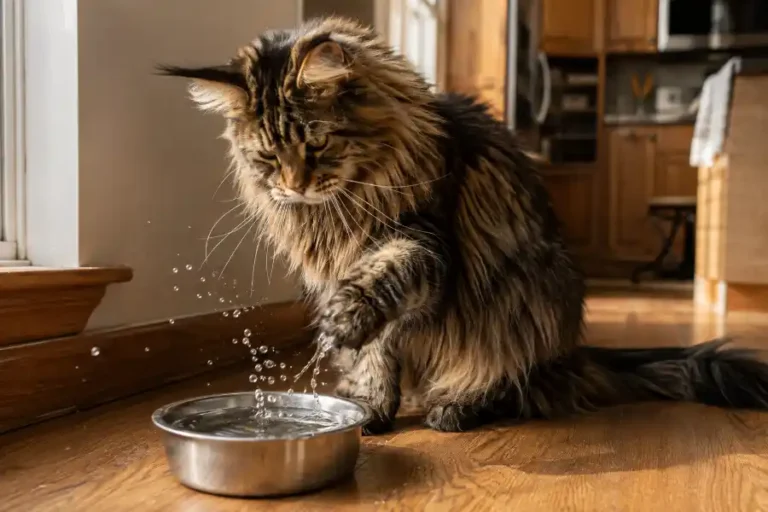
PKD causes fluid filled cysts to form in the kidneys, which can eventually lead to kidney failure. Like HCM, it can be screened for with a simple DNA test before symptoms ever appear. Since good hydration supports kidney health, it helps to lean into your cat’s natural Maine Coon water habit, many enjoy drinking from a fountain or a running tap, which can make it easier to keep them well hydrated.
If you are adopting a Maine Coon kitten, ask the breeder whether the parents were tested for these conditions. It is one of the simplest ways to protect your future cat’s lifespan before you even bring them home.
Signs Your Maine Coon Is Getting Older
Maine Coons age gracefully, but here are signs to watch for as your cat moves into its senior years:
- Sleeping more than usual
- Slower to jump onto furniture or hesitant on stairs
- Cloudy eyes or noticeable changes in vision
- Weight loss, even with a normal appetite
- Less interest in play
- Bad breath or visible dental issues
Some owners also notice a shift in their cat’s Maine Coon vocalizations, like more frequent meowing or yowling, especially at night. This is common in senior cats and worth mentioning at your next vet visit. None of these signs mean your cat’s life is ending soon. They simply mean it is time to adjust your care routine, perhaps with softer food, ramps to favorite spots, and more frequent vet visits.
7 Ways to Help Your Maine Coon Live a Longer Life
- Feed a high quality diet. Look for cat food with real meat as the first ingredient and avoid overfeeding.
- Keep your cat at a healthy weight. Ask your vet what your cat’s ideal weight should be and check in regularly.
- Schedule regular vet visits. Once a year for younger cats, twice a year once they reach senior age.
- Consider DNA testing. This helps you catch inherited conditions like HCM and PKD before symptoms appear.
- Keep your cat mostly indoors. Or set up a secure outdoor space if your cat loves the outside world.
- Care for their teeth. Dental disease can affect more than the mouth. It can strain the heart and kidneys too.
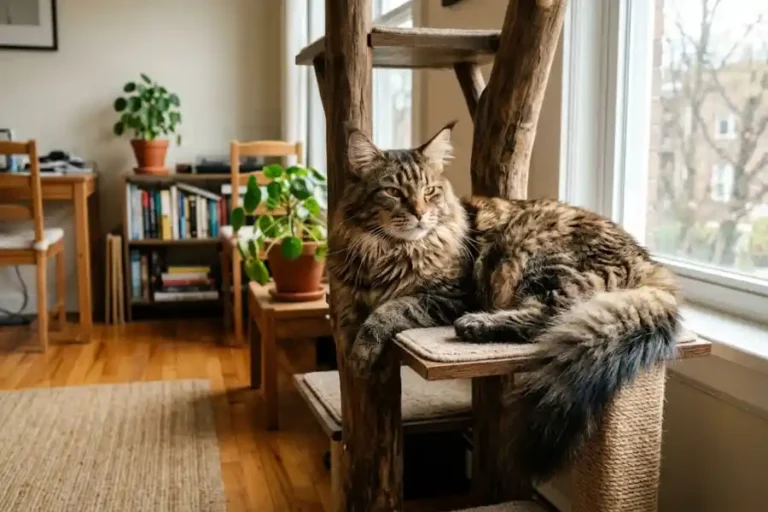
- Give them mental and physical enrichment. Cat trees, puzzle feeders, and daily play keep your cat’s body and brain active.
None of these steps guarantee extra years. But together, they stack the odds in your cat’s favor.
Frequently Asked Questions
What is the average Maine Coon lifespan?
Most Maine Coons live between 12 and 15 years, with many reaching their late teens when they receive good care.
Do male or female Maine Coons live longer?
There is no strong evidence that sex alone changes lifespan in Maine Coons. Weight, genetics, and overall care matter far more than whether your cat is male or female.
What is the oldest a Maine Coon has ever lived?
The official Guinness World Record belongs to Corduroy, who lived to 26 years old. An unverified claim from England says a Maine Coon named Rubble lived to 31.
Can indoor Maine Coons live longer than outdoor ones?
Yes. Indoor cats avoid many of the dangers that shorten a cat’s life, such as traffic, predators, and disease from other animals.
What health problems should I watch for in a Maine Coon?
The most common concerns are hypertrophic cardiomyopathy, spinal muscular atrophy, hip dysplasia, and polycystic kidney disease. Regular vet checkups and genetic testing can catch most of these early.
Final Thoughts
The typical Maine Coon lifespan is 12 to 15 years, but that number is not fixed. Genetics, weight, diet, and how closely you watch for health issues all play a role in how long your cat stays by your side. Some Maine Coons, like Corduroy, prove that with the right mix of care and luck, a cat can live decades beyond the average.
You cannot control everything. But you can control the food you serve, the vet visits you schedule, and the home environment you build. Those choices add up. And for a cat as loyal and affectionate as a Maine Coon, every extra year is worth having.