Maine Coon Cat Diet: What to Feed and How Much by Age
A full-grown Maine Coon can weigh as much as a small dog. A body that big needs the right fuel. The wrong food can cause trouble fast. Too much food adds weight and puts stress on the joints. Too little can leave a growing kitten weak. Getting the Maine Coon cat diet right is one of the best things you can do for your cat.
This article gives you clear answers. You will see what to feed, how much to give, and what to keep out of the bowl. Each life stage is covered, from kitten to senior. The advice follows nutrition standards from AAFCO and the American Veterinary Medical Association (AVMA). Every cat is different, though. Please check with your vet before you make big changes.
Maine Coon Cat Diet at a Glance
- Pick a food labeled “complete and balanced” for your cat’s life stage.
- Look for a named meat, like chicken or turkey, as the first ingredient.
- Feed wet food for at least part of the day so your cat gets enough water.
- Start with about 20 to 30 calories per pound of healthy body weight each day, then adjust.
- Feed kittens 3 to 4 meals a day and adults 2 meals a day.
- Keep treats under 10 percent of daily calories.
- Weigh your cat once a month.
Why the Maine Coon Cat Diet Is Different
Maine Coons are one of the biggest pet cat breeds. Males often weigh 13 to 18 pounds. Females often weigh 8 to 12 pounds. They also grow slowly. Many do not reach full size until they are 3 to 5 years old.
That slow growth matters. A kitten that eats too much, too fast, can put extra stress on young joints. The breed is also prone to hip problems and a heart disease called HCM. Food cannot cure these issues. But the right food helps you keep your cat lean. A lean cat has less strain on the joints and heart.
Then there is the coat. A thick double coat needs good fats and protein to stay healthy. For all these reasons, the Maine Coon cat diet takes more thought than a simple “any cat food will do” plan.
What Should a Maine Coon Cat Diet Include?
Cats are obligate carnivores. That means their bodies need nutrients found in animal tissue. A plant-heavy menu will not meet their needs. Here are the building blocks.
Protein
Protein builds and repairs muscle, and a big cat has a lot of muscle to keep. Choose a food that lists a named meat first, like chicken, turkey, salmon, or beef. If you want ideas, see this post on high protein cat food for Maine Coon cats.
Healthy Fats
Fat gives your cat energy and helps the body use vitamins. Omega-3 and omega-6 fatty acids help skin and coat. Fish oil and chicken fat are common sources. If your cat sheds a lot, this is worth a look. Our post on Maine Coon shedding has more coat care tips.
Carbs
Cats need very little. Foods packed with corn, wheat, or potato fillers add calories without much value. In a large cat, that can lead to weight gain fast.
Taurine
Cats cannot make enough taurine on their own. It supports the heart, eyes, and digestion. Any “complete and balanced” cat food already has it added. HCM in Maine Coons is mostly passed down in families, so taurine does not cause it or cure it. Ask your vet about a DNA test and heart scans, especially for kittens from a breeder.
Vitamins and Minerals
Kittens need a careful balance of calcium and phosphorus. Too much or too little can harm bone growth. So do not add calcium or vitamin pills unless your vet asks you to.
Wet Food, Dry Food, or Both?
Many owners ask which one is best. Each has strengths.
Wet food:
- Holds about 75 to 80 percent water
- Is often lower in carbs
- Helps urinary health and weight control
- Costs more and spoils quickly once opened
Dry food:
- Holds only about 10 percent water
- Is easy to store and costs less
- Works well in puzzle feeders
- Is easy to overfeed
A mix is a smart pick for a Maine Coon cat diet. Wet food at breakfast and dinner, plus a small dry portion in a puzzle feeder, gives a nice balance.
If your cat eats any dry food, water matters even more. Use wide, shallow bowls so whiskers do not rub the sides. Place a few bowls around the house. A fountain can also help. For more tips, read about Maine Coon water needs.
How Much Should a Maine Coon Eat?
Calorie needs depend on weight, age, and activity. A good starting point for an adult is 20 to 30 calories per pound of healthy body weight each day. A calm, neutered cat sits near 20. A very active cat may sit closer to 30.
Here are two examples:
- A neutered male at a healthy 15 pounds may need about 300 to 400 calories a day.
- A female at a healthy 10 pounds may need about 200 to 300 calories a day.
Next, turn calories into food. Check the label for calories per can or per cup. Many 3 ounce cans have around 70 to 100 calories. Many dry foods have 300 to 500 calories per cup.
Here is a sample day for a calm 15 pound male. It is only an example, so check your own labels:
- Breakfast: one 3 ounce can of wet food (about 80 calories)
- Dinner: one 3 ounce can of wet food (about 80 calories)
- Puzzle feeder: one third of a cup of dry food (about 130 calories at 400 calories per cup)
That adds up to about 290 calories. Add a few treats, but keep them under 10 percent of the day’s total.
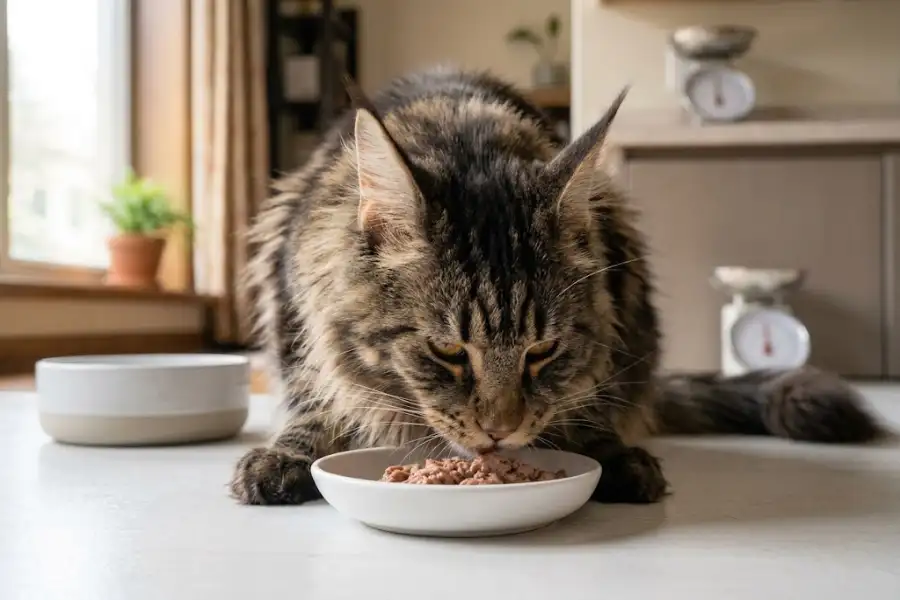
Quick tip: Use a kitchen scale. A cup of dry food can change a lot depending on how you scoop. Weighing in grams is far more accurate.
Maine Coon Cat Diet by Age
Kittens (Birth to About 12 Months)
A kitten needs more calories per pound than an adult. Choose a food made for kittens or for all life stages, and follow the label. Many kittens do well with 4 meals a day until about 12 weeks, 3 meals a day until about 6 months, and 2 to 3 meals after that. Kitten food is the base of the Maine Coon cat diet in the first year.
Do not rush growth. A round kitten is not always a healthy kitten. Run your hand along the ribs. You should feel them under a thin layer of padding. Also, do not use tuna as a main food at any age. It lacks key nutrients and can carry mercury.
Young Adults (1 to 3 Years)
Many Maine Coons are still filling out at one year old. Some vets keep them on kitten or all life stage food until 12 months or longer. Others switch somewhere between 12 and 24 months. Ask your vet when to switch, based on your cat’s body shape.
When you do switch, go slowly over 7 to 10 days:
- Days 1 to 3: 25 percent new food, 75 percent old food.
- Days 4 to 6: half and half.
- Days 7 to 9: 75 percent new food, 25 percent old food.
- Day 10: 100 percent new food.
Adults (3 to 8 Years)
Most adult Maine Coons do well on 2 meals a day. Match calories to a healthy weight, not to appetite. Maine Coons love to eat, and many will beg for more. Spayed and neutered cats often need fewer calories, so watch the scale in the months after surgery.
Seniors (8 Years and Up)
Around age 8 to 10, many vets start talking about senior care. Some seniors slow down and gain weight. Others lose weight and muscle. So do not cut calories just because of age. Watch the body, and book vet checkups twice a year if you can. Cats with kidney or heart trouble may need a special food prescribed by a vet.
How to Tell If Your Maine Coon Is at a Healthy Weight
The number on the scale does not tell the whole story. Maine Coons come in many frame sizes. Use your hands and eyes too.
- Ribs: You should feel them easily under a thin layer of fat.
- Waist: Look from above. You should see a gentle waist behind the ribs.
- Belly: From the side, the belly should tuck up a little.
Many Maine Coons have a loose flap of skin on the lower belly. It is called a primordial pouch. It is normal and does not mean your cat is fat. A heavy cat has a pouch plus a thick layer of fat over the ribs and back.
To weigh your cat at home, step on a bathroom scale holding your cat. Then subtract your own weight. Do this once a month and write it down. A lean body is the goal of any Maine Coon cat diet, and it may also help your cat live longer. You can read more about the Maine Coon lifespan. If your cat gains steadily or loses weight without a change in food, call your vet.
Maine Coon Cat Diet and Common Health Concerns
Food will not fix every problem. Still, it plays a part in several common ones.
- Joints: Hip dysplasia and arthritis can affect large cats. Keeping weight in check is the best food-based step. Ask your vet if fish oil makes sense for your cat.
- Heart: HCM is mostly genetic. A healthy weight lowers strain, and regular vet checks catch problems early.
- Urinary health: Wet food and fresh water help flush the urinary tract. Male cats face a higher risk of blockages. If your cat strains in the litter box and passes little or no urine, go to an emergency vet right away.
- Hairballs: Regular brushing helps most. Some foods add fiber to move hair through the gut.
- Weight gain: This is the most common food-related problem. Measure meals and limit treats.
Foods to Avoid in a Maine Coon Cat Diet
Some human foods are risky. Keep these away from your cat:
- Onions, garlic, and chives
- Chocolate, coffee, and tea
- Grapes and raisins
- Alcohol and raw bread dough
- Xylitol, a sweetener found in gum and some baked goods
- Cow’s milk, since many cats cannot digest it well
- Cooked bones, which can splinter
- Dog food as a regular meal, since it lacks nutrients cats need
If your cat eats something on this list, call your vet or an animal poison hotline right away.
Raw and Homemade Maine Coon Cat Diet Plans
Some owners want to feed raw or homemade meals. This takes care. Raw meat can carry germs like Salmonella and Listeria. These can make cats and people in the home sick. The AVMA discourages feeding raw animal-source protein.
Homemade food has another risk. Many recipes online miss key nutrients, including taurine. If you want to cook for your cat, ask a board-certified veterinary nutritionist for a tested recipe. Do not guess.
Smart Feeding Habits
Small habits make a Maine Coon cat diet easier to follow.
- Set meal times. Free feeding makes it hard to track how much your cat eats.
- Use slow feeders. Puzzle feeders and snuffle mats add play and slow fast eaters.
- Wash bowls daily. Dirty bowls can turn a cat away from food.
- Feed cats apart. In a home with more than one cat, separate bowls stop food stealing.
- Warm wet food a little. A few seconds in the microwave brings out the smell for a picky eater.
- Watch for missed meals. If your cat skips food for more than a day, call your vet. Cats can get very sick when they stop eating.
Frequently Asked Questions
How many times a day should I feed my Maine Coon?
Adults do well on 2 meals a day. Kittens need 3 to 4 smaller meals. Seniors may do better with 3 small meals if they have a weak appetite.
Can a Maine Coon eat only dry food?
Yes, a cat can live on a complete dry food. But wet food adds water, which helps the urinary tract. If you feed only dry food, add extra water bowls and a fountain.
When should a Maine Coon switch from kitten food to adult food?
There is no single date. Many switch between 12 and 24 months because the breed grows slowly. Your vet can look at your cat’s body shape and tell you when it is time.
Is grain-free food better for a Maine Coon?
Not by default. Most cats do fine with or without grains. True grain allergies are rare in cats. Protein quality, balance, and calories matter more than the grain label.
Do Maine Coons need a special Maine Coon cat diet?
They need good food, not a magic formula. Some breed-specific foods are fine, but they are not required. A complete and balanced food that fits your cat’s age, weight, and health can serve a Maine Coon cat diet very well.
Final Thoughts
A good Maine Coon cat diet is simple. Pick a complete and balanced food with real meat. Mix in wet food for water. Measure meals, limit treats, and weigh your cat each month. Change the plan as your cat moves from kitten to senior.
Your vet is your best partner here. Share your cat’s weight, food, and habits at each visit. This article is for general information and does not replace advice from your vet.