Mini Maine Coon: What It Really Means, Size, Price, and Health
You search for “mini Maine Coon” online. Photos pop up of tiny, fluffy cats with huge ears and big eyes. You want one right now.
Wait. Before you fall for a listing, you need to know one thing. A mini Maine Coon is not an official breed. No major cat registry lists it. The name is only a label, and sellers use it in very different ways.
That is not bad news. It just means you need to know what you are looking at. This article covers the four cats people call a mini Maine Coon, how big they get, what they cost, and which health checks matter most.
Quick answer: A mini Maine Coon is a small Maine Coon, a young Maine Coon kitten, or a Maine Coon mixed with a short-legged breed. It is not its own breed, and no one can promise a kitten will stay tiny.
What Is a Mini Maine Coon?
The term “mini Maine Coon” is a catch-all. The Maine Coon is one of the biggest pet cat breeds, so any Maine Coon that looks small gets the “mini” tag. Some sellers also use it as a sales word to make a kitten sound rare.
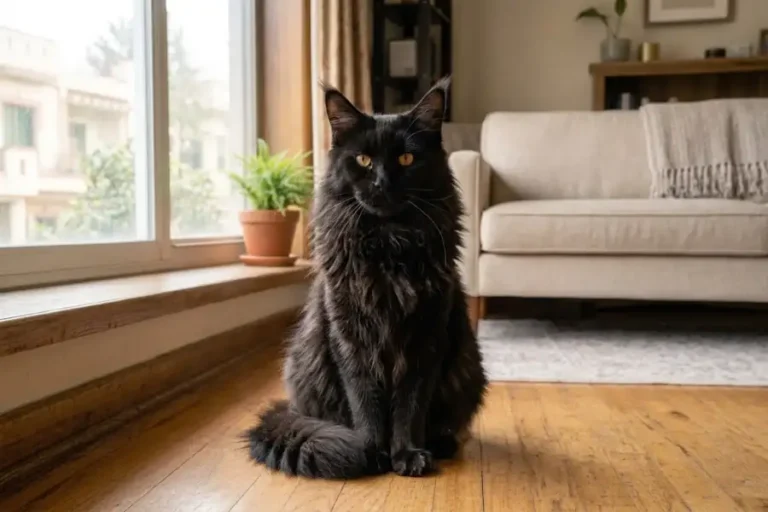
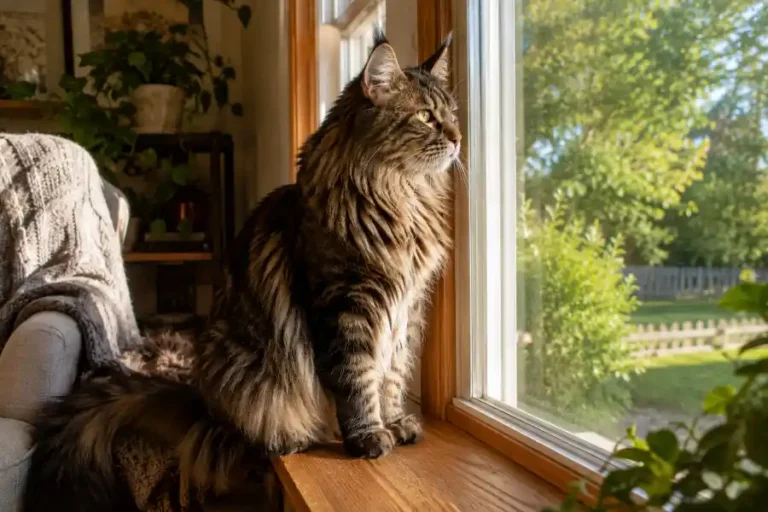
The breed itself is easy to describe. If you are new here, start with our page on the Maine Coon cat. It covers the big paws, tufted ears, and friendly nature that make the breed so loved.
Coat color does not decide size either. A calico Maine Coon has a bold three-color coat, but its size still follows its parents, not its color.
The Four Cats People Call a Mini Maine Coon
Ask any seller which one they mean. The answer changes everything.
1. A Small Purebred Maine Coon
Some purebred Maine Coons simply grow smaller than average. Females are most often the smaller ones. A healthy female usually weighs 10 to 15 pounds, and some stay near 8 pounds. A few males stay around 11 pounds, which is small for a male.
This is the healthiest kind of “mini.” The cat has the normal Maine Coon body, just in a lighter frame.
2. A Young Kitten
Many cats sold as a mini Maine Coon are only kittens. Maine Coons grow slowly. Most reach full size between 3 and 5 years old. The International Cat Association (TICA) says they often do not fully mature until about age 4.
A 5-month-old kitten can look tiny in a photo. Give it time. It may end up at 18 pounds.
3. A Maine Coon Munchkin Mix
The Munchkin is a cat with very short legs. When it is crossed with a Maine Coon, the kitten often gets the Maine Coon ears, coat, and friendly nature, but on short legs. This is the cat many people picture when they say mini Maine Coon.
4. A Minuet Mix
The Minuet (once called the Napoleon) is a mix of Persian and Munchkin. It is small and compact. Some sellers cross it with a Maine Coon. The kitten can end up with short legs and a flatter face, so it can inherit health worries from both sides. Only TICA registers the Minuet.
How Big Does a Mini Maine Coon Get?
It depends on which type you have. Here are the usual ranges:
- Purebred Maine Coon males: about 15 to 25 pounds
- Purebred Maine Coon females: about 10 to 15 pounds
- Small purebreds: the low end of those ranges, or a little under
- Munchkin mixes: shorter legs, with weight that depends on the parents
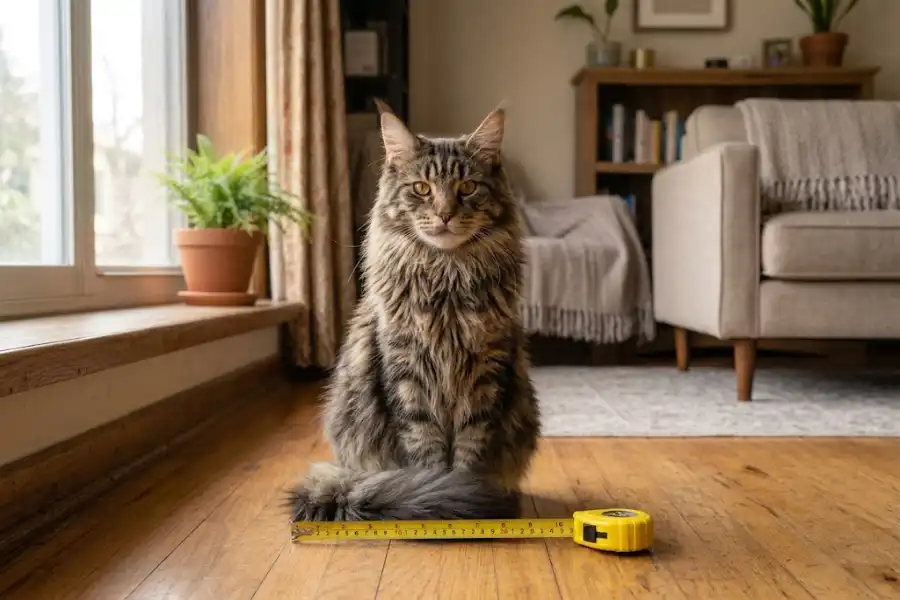
Full size shows up late, at 3 to 5 years. Do not judge a cat by pounds alone. A Maine Coon’s size shows in the length of the body and the bones, and not only on the scale.
One more warning. Feeding less will not keep a kitten small. Genes set the size. A kitten that gets too little food can end up with health problems, not a smaller frame.
How to Tell if a Kitten Will Stay Small
No one can be sure. But these clues help:
- Look at the parents. Size comes mostly from genes. If both parents and their parents are small, the kitten is more likely to be small too.
- Ask for weight records. A good breeder tracks weights from birth.
- Check the paws and ears. A kitten with very large paws and ears often grows into a large adult.
- Wait for the answer. True adult size only shows at 3 to 5 years.
Mini Maine Coon Health: What to Check Before You Buy
Small size is not a health test. Each type has its own risks.
Small Purebred Maine Coons
Maine Coons can carry a few inherited problems. The main ones are hypertrophic cardiomyopathy (HCM, a heart disease), hip dysplasia, and spinal muscular atrophy (SMA). Good breeders test their cats. Ask to see heart scan results and DNA test results for both parents, and show them to your vet.
Munchkin and Minuet Mixes
The Munchkin’s short legs come from a gene change that causes a form of dwarfism. Vets link short-legged cats to lordosis (a spine that dips down into the chest), pectus excavatum (a sunken chest bone), and early joint wear. How common these problems are is still debated, and many Munchkin cats live happy lives.
But the cat world is split on this cross. TICA recognizes the Munchkin. The Governing Council of the Cat Fancy (GCCF) and the Cat Fanciers’ Association (CFA) do not, and FIFe refuses too. Some countries ban breeding these cats. A kitten that gets two copies of the short-leg gene does not survive.
The choice is yours, but make it with the facts. Talk with a vet before you buy. Ask the breeder for a vet check of the kitten’s spine and chest.
Mini Maine Coon Price: What to Expect
Prices vary a lot. One U.S. seller lists Maine Coon kittens from $650 to $8,000, depending on pet or show quality, color, and bloodline. The word “mini” does not justify a higher price by itself. A small cat is not a rare cat.
Pay for health tests, clear records, and a written health guarantee. Do not pay extra for a label.
Also plan for daily costs. Maine Coons eat more than an average cat. They need a bigger litter box, a bigger carrier, and a sturdy cat tree. Their breed health risks may also mean more vet visits.
Red Flags When Buying a “Mini” Kitten
Sadly, the “mini” tag attracts bad sellers. Walk away if you see any of these:
- The seller promises the kitten will “stay tiny forever.”
- The listing says “teacup” or “micro,” which are not real size classes.
- The seller will not show you the parents or share their details.
- There are no heart scan or DNA test results.
- The kitten is under 12 weeks old.
- There is no written contract or health guarantee, or you are pushed to pay fast.
Caring for a Small Maine Coon
A small Maine Coon still has the full Maine Coon coat and paws. Care looks like this:
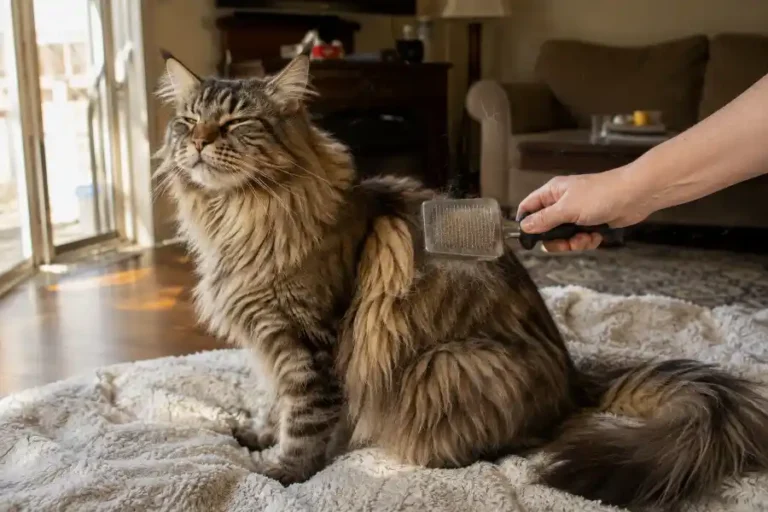
- Brushing: Brush two to three times a week to stop mats, especially behind the legs and under the belly.
- Baths: Most indoor cats do well with a bath every six to eight weeks. Our tips on how often to bathe a Maine Coon list the supplies and steps.
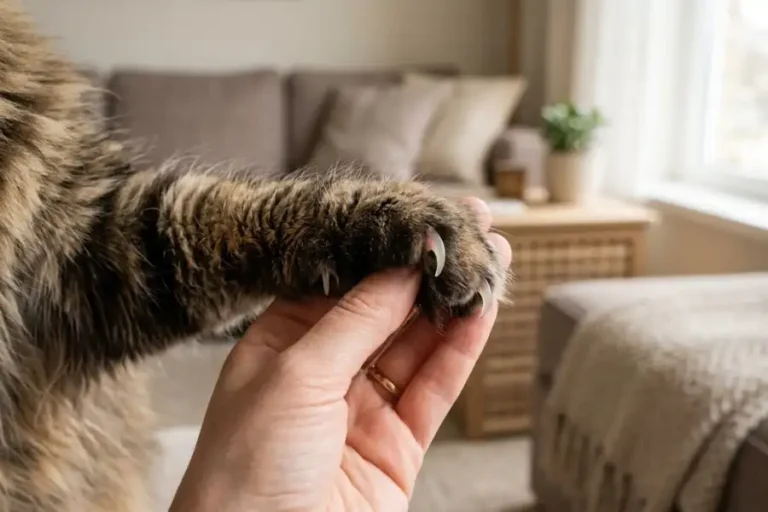
- Nails: Big paws mean thick claws that grow fast. Read about Maine Coon claws and nails before your first trim.
- Weight: Weigh your cat every month. You should see a slight waist from above. Extra weight is hard on small frames and short legs.
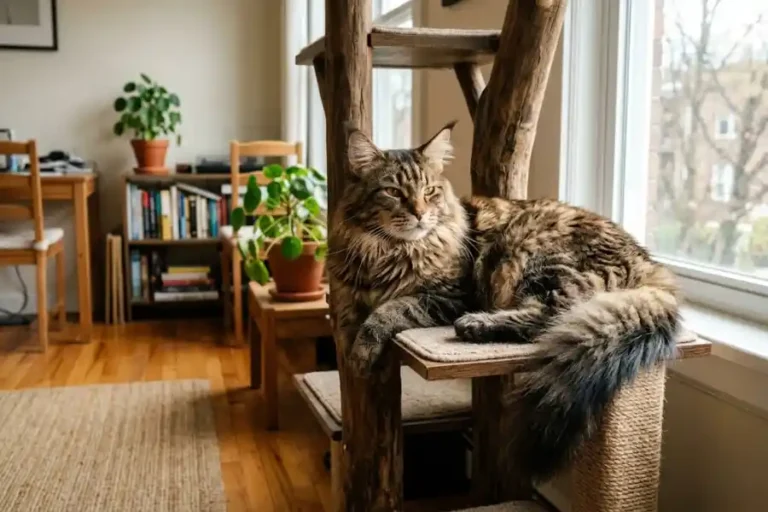
- Play: Give your cat a sturdy cat tree. For short-legged mixes, add low steps or ramps so jumping does not strain the back.
- Vet visits: Book a check each year, and ask about heart screening.
Is a Mini Maine Coon Right for You?
A small Maine Coon can be a great pet if you love the breed’s friendly, dog-like nature and want a cat that is easier to carry or fits a smaller home. It is a poor fit if you need a guaranteed tiny cat, because nobody can promise that. It is also a hard choice if you cannot afford extra vet care for a short-legged mix.
Frequently Asked Questions
Is a mini Maine Coon a real breed?
No. It is a label for small Maine Coons, young kittens, or mixes. No major registry lists it as a breed.
Do mini Maine Coons stay small?
Only if their genes say so. Kittens grow for 3 to 5 years, so early photos can fool you. A short-legged mix stays low to the ground, but it can still gain length and weight.
How long does a mini Maine Coon live?
A healthy Maine Coon often lives 12 to 15 years, and some live longer. Short-legged mixes may face more spine and joint problems, so regular vet care matters.
Are Maine Coon Munchkin mixes healthy?
Many live normal lives, but they face a higher risk of spine, chest, and joint problems. Ask for a vet exam before you buy.
Can a small Maine Coon live in an apartment?
Yes, if it gets daily play, a tall cat tree, and company. These cats are social and get bored fast.
Final Thoughts
A mini Maine Coon is a label, not a breed. It can mean a small purebred, a young kitten, or a mix with short legs. Each one has different size, health, and cost.
So ask questions. Ask for parent records, heart scans, and DNA tests. Choose the healthiest cat, not the smallest one. A healthy Maine Coon of any size will fill your home with love.