Maine Coon vs Lynx: The Real Differences Between These Two Big Cats
Have you ever seen a huge, fluffy cat with pointy ear tufts and thought, “That looks like a wild lynx”? You are not alone. Maine Coons are famous for their bold, wild look, and many people wonder if there is a real family link between the two. The short answer is no, but the reasons why are worth knowing, whether you are comparing the two cats or you just spotted a big one in your yard.
In this article, we look at how a Maine Coon vs lynx really compare. We cover size, sounds, where each one lives, and if you could ever own a lynx as a pet.
Maine Coon vs Lynx: The Quick Answer
A Maine Coon is a house cat breed, while a lynx is a wild cat species. They share a few looks, like tufted ears and a strong, muscular body, but they come from very different branches of the cat family. A Maine Coon can live on your couch. A lynx needs miles of wild forest and should never be kept as a house pet.
Why People Mix Up a Maine Coon and a Lynx
Here are the traits that make people pause and wonder:
- Tufted, pointed ears
- A large, strong frame
- Thick, wild looking fur
- Tabby coat patterns
- Big paws that look built for snow
These shared traits are why the mix up sticks around, even though the two animals are not related at all.
Are Maine Coons Part Lynx?
This idea is a myth, plain and simple. Maine Coons belong to the species Felis catus, the same species as every house cat. Lynxes belong to a different group called the Lynx genus. These two groups cannot breed with each other, so no Maine Coon carries lynx genes.
The myth likely started for a simple reason. Maine Coons come from cold, snowy Maine, where wild bobcats and lynxes also live. Early settlers saw a big, tufted eared cat in the wild and guessed there was a family link. It made a good story, but it was never true. The Maine Coon breed page covers where these cats really came from.
Maine Coon vs Lynx Size: Which One Is Bigger?
Maine Coons have a big reputation among house cats, but they are still much smaller than lynxes.
- Maine Coon males: 13 to 25 pounds
- Maine Coon females: 9 to 18 pounds
- Eurasian lynx (the largest lynx type): 40 to 66 pounds
- Smaller lynx types: 20 to 44 pounds
Even the biggest Maine Coon on record looks small next to a big lynx. Lynxes stand taller too, often reaching 20 to 30 inches at the shoulder, while a Maine Coon usually stands 10 to 16 inches tall.
Body Shape, Tail, and Paws
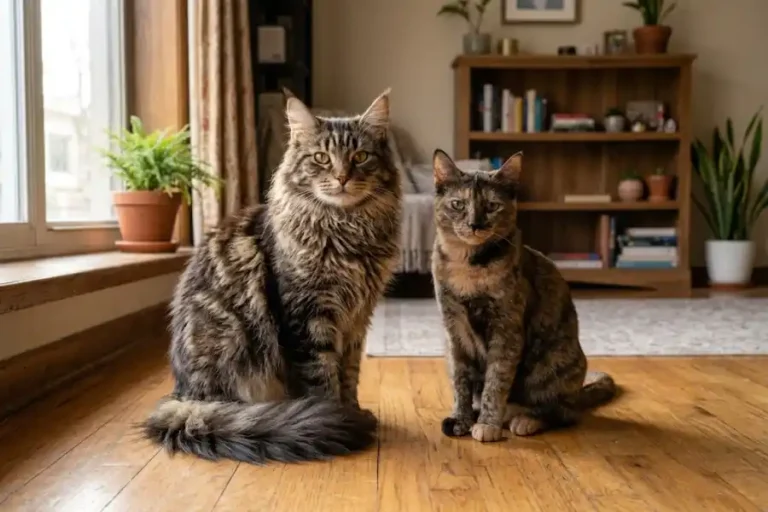
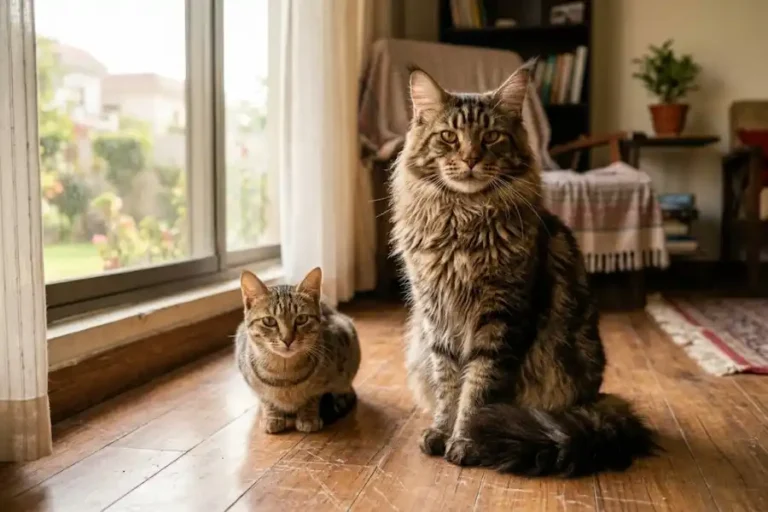
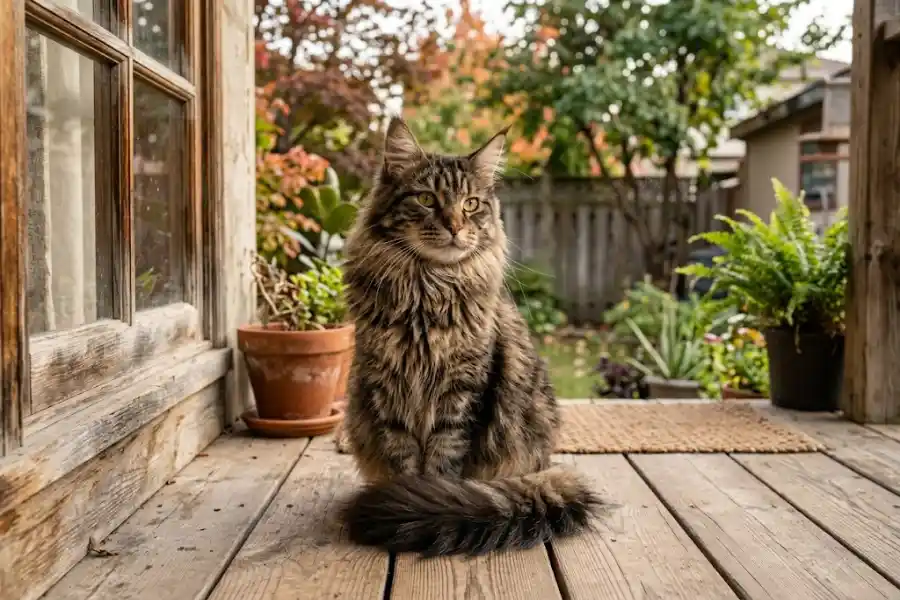
The easiest way to tell them apart is the tail. A Maine Coon has a long, bushy tail that can be as long as its body. A lynx has a short, bobbed tail, usually less than 5 inches long.
Paws tell a story too. Lynx paws are wide and covered in thick fur, working like natural snowshoes that help a lynx walk on top of heavy snow. Maine Coon paws are large for a house cat, and some even have extra toes, but they are not built the same way as a lynx.
Ear tufts look similar, but they serve very different jobs. On a lynx, the tufts help pick up faint sounds while hunting. On a Maine Coon, the tufts are just a trait that breeders like, with no hunting reason behind them at all.
Coat and Fur
Maine Coons come in dozens of colors and patterns, from solid white to classic brown tabby. Lynxes stick to a small range of natural colors, mostly tan, gray, or brown with light spots, which helps them blend into their forest home.
Maine Coons also shed a lot with the seasons, and their thick double coat needs regular brushing. The Maine Coon shedding page has tips that can help.
Sounds They Make
Maine Coons are known for a soft, chirping trill instead of a typical meow, one of the most charming traits of the breed. Lynxes make very different sounds: low growls, sharp hisses, and loud yowls, mostly heard during mating season or when a lynx defends its space. A wild lynx will not chirp at you for breakfast.
Personality and Daily Life
A Maine Coon is friendly, curious, and social. Many follow their owners from room to room and get along well with kids, dogs, and other pets. A lynx is the opposite in almost every way. It is quiet, shy, and avoids people, and it needs a wide hunting space to feel safe. Years of breeding softened the Maine Coon’s wild side, while a lynx still keeps its full wild instincts.
Where Each One Lives
Maine Coons live indoors with their families, though some owners let them roam outside for short, watched periods. The page on whether Maine Coons should live indoors or outdoors covers the pros and cons.
Lynxes live in cold forests across North America, Europe, and parts of Asia. They need wide stretches of wild land to hunt rabbits, birds, and small animals, and many lynx groups are protected today as their wild habitat keeps shrinking.
How Long Do They Live?
A healthy Maine Coon often lives 12 to 15 years, and some live even longer with good care. The Maine Coon lifespan page covers this topic in more detail. A wild lynx usually lives 10 to 15 years in the wild, though lynxes in safe, protected spaces can live longer since they face fewer threats there.
Can You Own a Lynx as a Pet?
In most places, the answer is no. Lynxes are wild animals, and laws protect them in many countries. Owning one often needs a special wildlife permit, if it is allowed at all. Even where it is legal, a lynx keeps its wild instincts for life, and it needs a lot of space, a special diet, and expert care that most homes cannot give.
A Maine Coon gives you that same wild look, with tufted ears, big paws, and a bold presence, but none of the legal trouble or safety worries. This is part of why the breed stays so popular with people who love the look of a wild cat but want a gentle friend instead.
If you ever spot what looks like a lynx near your home, keep your distance and call your local wildlife office. Wild lynxes should only be handled by trained professionals, never by pet owners.
How to Tell Them Apart If You Spot One Outside
Do you ever spot a large, tufted eared cat outside? Check these clues:
- Tail length: long and bushy points to Maine Coon, short and bobbed points to lynx
- Behavior: curious and friendly points to Maine Coon, shy and running away points to lynx
- Place: a snowy, far off forest points to lynx, while a neighborhood street points to Maine Coon
- Paw size: very large, fur covered paws point to lynx
Frequently Asked Questions
Can a Maine Coon breed with a lynx?
No, they cannot. Maine Coons and lynxes belong to different genetic groups and cannot have babies together. Any likeness between the two comes from shared looks, not shared family roots.
Why do Maine Coons have tufted ears like a lynx?
Breeders have long liked the tufted ear look, since it adds to the breed’s bold, wild style. It is a look passed down over many years, not a sign of wild blood.
Is a Maine Coon bigger than a bobcat?
Not usually. A bobcat is a close cousin of the lynx and weighs between 11 and 30 pounds, close to the weight of a large Maine Coon, though bobcats stand taller and look more muscular.
Are Maine Coons dangerous like wild lynxes?
No, they are not. Maine Coons are fully tame and bred for a gentle, social nature. Wild lynxes keep their natural hunting drive, and trained wildlife workers should be the only ones who handle them.
Final Thoughts
A Maine Coon vs lynx comparison always circles back to one truth: they share a few striking looks, but they live very different lives. One naps on your couch and greets you at the door. The other roams quiet, snowy forests and stays far from people. Knowing the real differences helps you enjoy both animals for what they truly are: one a much loved family pet, the other a wild survivor built for a much harder world.