Maine Coon Kitten Biting: Why It Happens and How to Stop It
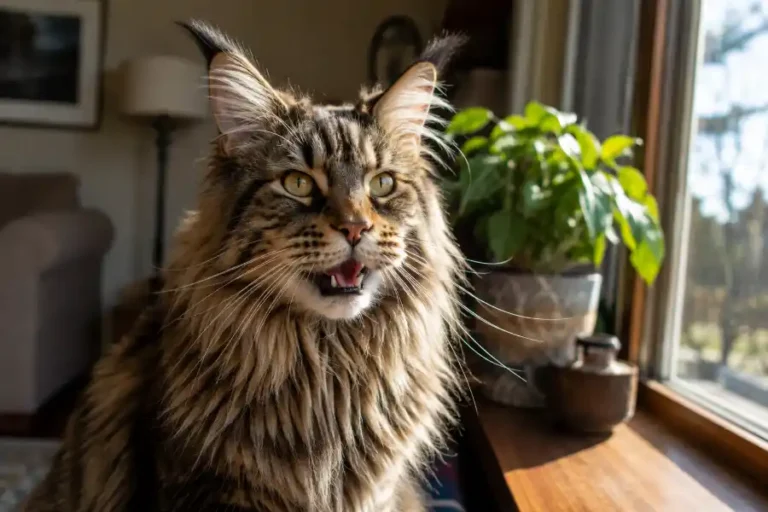
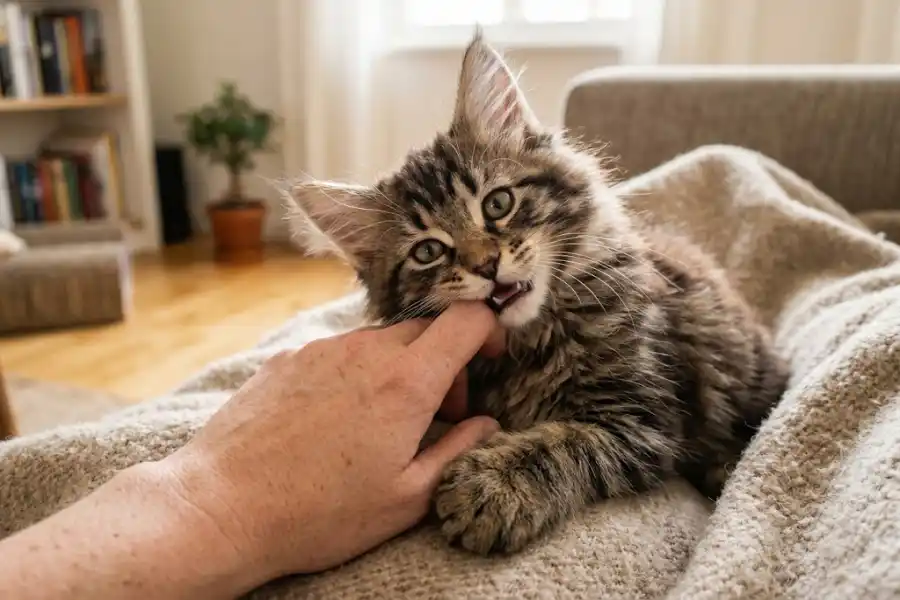
One minute your Maine Coon kitten is curled up on your lap purring like a tiny motor. The next, those needle-sharp teeth are sunk into your hand. If this sounds familiar, take a breath. You are not doing anything wrong, and your kitten is not turning mean. Maine Coon kittens are known for being extra bitey compared to other breeds, and there are real reasons behind it. This article covers why it happens, how long it usually lasts, and what to do to stop it, without yelling, without punishment, and without giving up on playtime.
Why Do Maine Coon Kittens Bite So Much?
Biting is not bad behavior on its own. It is how kittens are built. Here are the main reasons your Maine Coon kitten keeps going for your fingers, toes, and shoelaces.
- Teething. Sore gums make chewing feel good. Your hand is just an easy target.
- Play and hunting instinct. Pouncing, stalking, and biting are hardwired hunting moves, even in a cat that will never hunt a mouse in its life.
- Learning through the mouth. Kittens learn about new textures and objects with their teeth, the same way toddlers put everything in their mouths.
- Overstimulation. Too much petting can flip from “this feels nice” to “okay, that’s enough” in seconds, and a quick nip is the warning sign.
- Attention seeking. A kitten that has learned biting gets you to react, even if you react by pulling away, may keep doing it just to get a response. Biting is just one way kittens communicate. Many also rely on Maine Coon vocalizations, like chirps, trills, and meows, to get your attention.
Why Maine Coon Kittens Bite Harder Than Other Kittens
This is the part most articles skip. The Maine Coon cat is not like the average house cat. It is one of the largest domestic cat breeds, and its body grows on a much slower schedule. While a smaller breed kitten may look and act like an adult by eight or nine months, a Maine Coon is still very much a kitten at that age, both in body and in mind.
Their jaws and teeth are also larger and stronger from an early age, which is why a “gentle” nip from a Maine Coon kitten can feel a lot more intense than the same nip from a smaller breed. Add in a longer teething period and a longer overall kitten phase, and you get a cat that stays in “bitey mode” longer than most owners expect.
A Simple Timeline: When Maine Coon Kitten Biting Peaks (And When It Fades)
- 3 to 8 weeks old: Baby teeth come in. Kittens start play biting with littermates.
- 3 to 6 months old: This is peak biting season. Adult teeth are pushing through, gums are sore, and biting reaches its most intense point.
- 6 to 7 months old: Most of the adult teeth are in. Teething related biting usually starts to calm down.
- 8 months to 1 year and beyond: Play biting can still show up, especially during belly rubs or high energy play, simply because Maine Coons take longer to grow out of kitten behavior overall.
If your Maine Coon is still a bit bitey at ten or twelve months, that does not mean training failed. For this breed, it is often just part of a longer timeline.
Playful Bite Or Real Problem? How To Tell
Almost all Maine Coon kitten biting is completely normal. Still, it helps to know the difference between harmless play and a bite that needs more attention.
Signs It’s Just Play
- The bite is gentle and does not break skin
- Your kitten’s body is relaxed, maybe even purring
- It happens alongside pouncing, chasing, or batting at toys
- Your kitten backs off easily when you redirect them
Signs To Pay Closer Attention
- The bite is hard, fast, and repeated
- Ears are flat, tail is puffed, or your kitten is hissing
- Your kitten seems tense or is trying to get away from something, not toward play
- Biting happens the moment you touch a specific spot, like the belly or the base of the tail
Most of the time, you are looking at the first list, not the second. Kittens who bite while relaxed and playful are simply being kittens.
How To Stop A Maine Coon Kitten From Biting
You cannot fully stop the biting instinct, and you should not try to. What you can do is teach your kitten that human skin is off limits. Here is a simple plan that works with a kitten’s natural instincts instead of against them.
- Never use your hands as toys. If you let your kitten chase and bite your fingers now, they will not understand why it is suddenly not okay later.
- Swap your hand for a toy the moment biting starts. This teaches your kitten what is okay to bite, without any punishment involved.
- Freeze, don’t yank away. Pulling your hand back fast triggers the chase instinct and often makes biting worse. Go still and boring instead, then redirect.
- End playtime for a minute if biting gets too rough. Stand up, step back, and ignore your kitten briefly. This teaches them that hard biting makes the fun stop.
- Reward gentle play. Soft paws and gentle mouthing during play can get a calm word of praise or a small treat.
- Give daily play sessions with wand toys. A kitten that gets to hunt, pounce, and bite a toy for ten to fifteen minutes a few times a day has a lot less pent up energy left over for your hands. Burning off that energy also supports healthier Maine Coon sleep habits once playtime winds down.
- Stay consistent. Everyone in the house needs to follow the same rules, or your kitten will stay confused about what is allowed.
Mistakes That Make Biting Worse
- Yelling or tapping your kitten’s nose. This does not teach a lesson. It just makes your kitten afraid of your hands, which can lead to more defensive biting, not less.
- Rough hand play. Wiggling your fingers in front of your kitten’s face is basically an invitation to bite.
- Inconsistent rules. Letting biting slide when you are tired, then stopping it other times, only confuses your kitten.
- Ignoring teething discomfort. A kitten with sore gums and nothing appropriate to chew on will find something, and it might be you.
Best Types Of Toys For A Teething Maine Coon Kitten
Because Maine Coons have strong jaws even as kittens, flimsy toys tend to fall apart fast. Look for options built for bigger, more determined chewers.
- Sturdy rubber or silicone teething toys made for cats
- Long wand toys that keep biting away from your hands during play
- Soft plush toys sized for kicking and “bunny kicking,” which lets your kitten play out its hunting instinct safely
- Frozen wet washcloths for extra sore teething gums, which many kittens find soothing to chew
Will My Maine Coon Kitten Grow Out Of Biting?
Yes, almost always. Most owners see a clear drop in biting once the adult teeth are fully in and playtime needs are being met regularly. Because Maine Coons mature slowly, a trait tied to their notably long Maine Coon lifespan, the full transition out of “bitey kitten” mode can take longer than it does for other breeds, sometimes stretching toward the one year mark.
A kitten that bites during play is not a kitten with a behavior problem. It is a kitten doing what kittens are built to do.
With consistent redirection and enough outlets for play, biting almost always fades into the gentle, affectionate personality Maine Coons are famous for.
When To Talk To A Vet Or Cat Behaviorist
Most Maine Coon kitten biting is nothing to worry about. Still, reach out to your vet or a certified cat behaviorist if you notice any of the following.
- Biting is frequent, extremely hard, or regularly breaks skin
- Your kitten shows fear, aggression, or tries to avoid being touched at all
- Biting suddenly gets worse instead of better with age
- Biting continues to be intense well past a year old, with no signs of improvement
These cases are uncommon, but a vet visit can rule out pain, dental problems, or other health issues that could be driving the behavior.
Frequently Asked Questions
Is it normal for Maine Coon kittens to bite hard?
Yes. Maine Coons have larger jaws and teeth than most breeds, even as kittens, so their bites can feel more intense. This is normal and usually fades with consistent training.
At what age do Maine Coon kittens stop biting?
Most teething related biting eases by around six to seven months. Because Maine Coons mature slowly, some playful biting can continue until closer to a year old.
Why does my Maine Coon kitten bite me but not other people?
This is usually about habits, not preference. If you play rough with your hands or react strongly to bites, your kitten may learn that biting you gets an exciting response.
Should I hiss back at my kitten when it bites?
A short, calm “no” and immediate redirection to a toy works better. Sudden loud noises or physical corrections can make a kitten fearful rather than teaching them what to do instead.
Is biting a sign my Maine Coon kitten doesn’t like me?
Almost never. Most kitten biting happens during play, teething, or excitement, all of which are signs of comfort and trust, not dislike.
The Bottom Line
A biting Maine Coon kitten is not a broken kitten. It is a young, powerful, curious animal learning how to use its body and its mouth. With the right toys, consistent redirection, and a little patience for their slower growing timeline, your fierce little biter will grow into one of the gentlest, most affectionate cats you will ever share a home with.