Maine Coon Apartment Living: Setup Tips That Work
A full-grown Maine Coon can weigh as much as a bowling ball. It can stretch over three feet long, nose to tail. So people picture chaos in a small apartment. Broken lamps. Pacing at night. A cat that feels too big for four walls. But the real picture is much calmer than that. Maine Coons are one of the most easygoing cat breeds around. Many of them live happy lives in studios and one-bedroom apartments right now. The real question isn’t whether a Maine Coon can live in an apartment. It’s whether you know how to set one up the right way.
Can a Maine Coon Really Live in an Apartment?
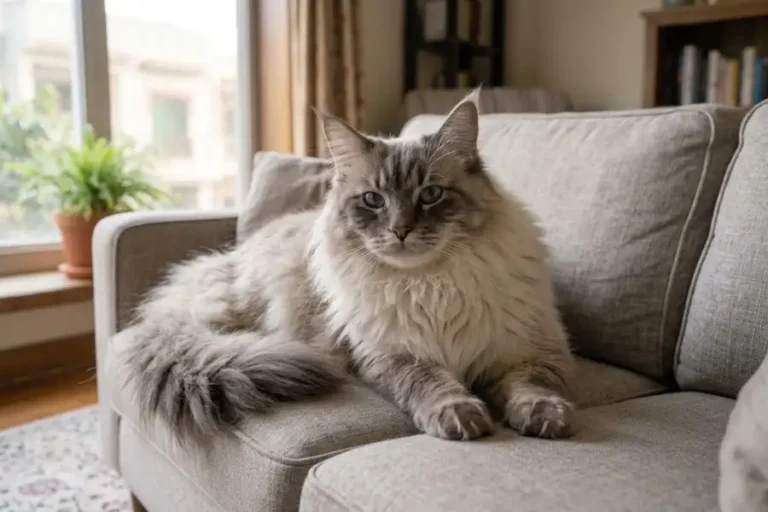
Yes, and quite easily. Size and space are not the same thing to a cat. Maine Coons are often called “gentle giants.” That name comes from their calm, easygoing nature. This calm temperament matters more than square footage does. A cat that feels relaxed indoors and bonds closely with you does not need to roam outside. That makes a Maine Coon a great fit for apartment life.
Here is another fact worth knowing. Indoor cats tend to live longer than outdoor cats. They often live a few years longer. There are fewer accidents. There is less risk of disease. There is no traffic to worry about. So keeping your Maine Coon indoors in an apartment is not a compromise, and looking at the full Maine Coon indoor or outdoor picture makes that even clearer. It is often the safer choice for your cat. Done right, Maine Coon apartment living can be healthier than a free-roaming setup.
The Pet Weight Limit Myth Every Maine Coon Owner Worries About
Many people who search “Maine Coon apartment living” worry about one thing first. It’s pet weight limits. That makes sense. Maine Coons often weigh 15 to 25 pounds. Many leases mention a weight limit for pets.
Here is the part few people explain. Most weight limits are written with dogs in mind, not cats. Property managers set weight limits for reasons like bite risk and jumping fences. None of that applies to an indoor cat. Most standard pet policies simply do not weigh cats against a pound limit the way they do dogs.
Still, do not assume. A small number of buildings do cap cat weight. Some charge extra pet rent past a certain size. So before you fall in love with a kitten, call your leasing office. Ask them directly: “Do you have a weight limit that applies to cats?” It only takes five minutes. It can save you a big headache later.
Think Vertical, Not Square Footage
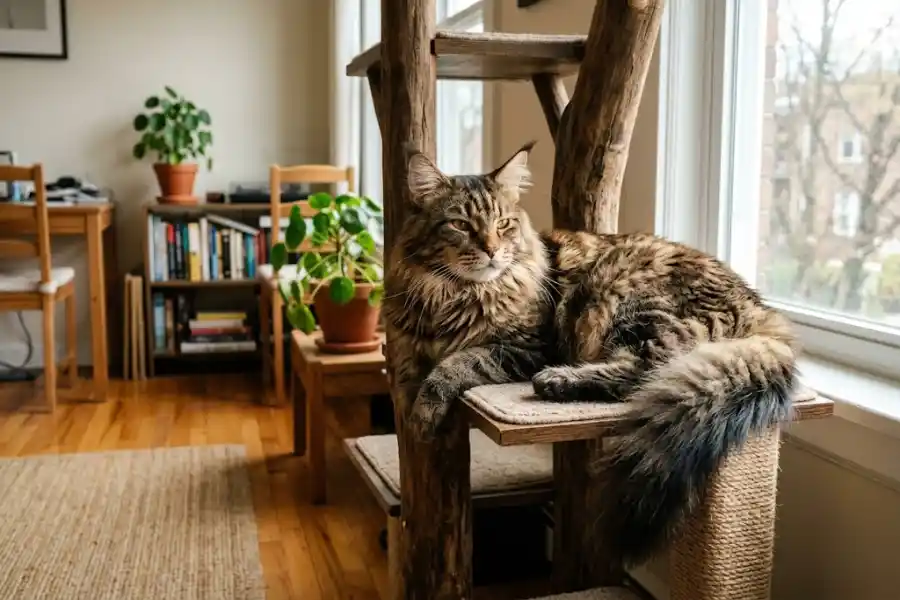
Cats do not measure their world in square feet. They measure it in height and pathways. Picture a 500-square-foot apartment with tall cat trees and window perches. It will feel bigger to a Maine Coon than a large house with empty, flat rooms.
Maine Coons are heavier than the average cat. So furniture strength really matters. A wobbly cat tree built for a 10-pound cat will not hold a 20-pound Maine Coon safely. Look for trees with a wide base. Choose ones with thick posts and sturdy platforms.
- Add at least one tall cat tree near a window.
- Install wall shelves or steps to build a walking path around a room.
- Give your cat one high spot in every room, even a cleared bookshelf works.
- Keep one low, quiet hideaway too, like a covered bed or a space under furniture.
The Litter Box Mistake Almost Every New Owner Makes
Most litter boxes are made for an average-sized cat. A Maine Coon is not an average-sized cat. Most vets and breeders give the same rule of thumb. The box should be at least 1.5 times your cat’s body length, measured from nose to the base of the tail. For most adult Maine Coons, that means a box around 28 to 34 inches long.
A cramped box causes real problems in an apartment. A cat that feels confined may stop covering its waste. It may avoid the box completely and go on the floor instead. That is a much bigger issue when you share thin walls with neighbors and have no yard to fall back on.
- Choose a box labeled “extra-large” or “jumbo,” rather than a regular “large” size
- Look for high sides, at least 6 inches, to hold in litter scatter.
- Keep at least two boxes if you live with one Maine Coon; add more per extra cat.
- Place boxes in a quiet corner, away from food and loud appliances.
Window and Balcony Safety in a High-Rise
Apartments often come with something most houses don’t have: a long drop. Falls from windows and balconies are a known risk for indoor cats. Being large does not make a Maine Coon safe from this. A cat chasing a bird can lean too far and lose its footing, just like any other breed.
- Install secure window screens on every window your cat can reach.
- Never leave a balcony door open without watching your cat, even for a minute.
- Think about a secured outdoor cat enclosure, often called a catio, if you use your balcony a lot.
- Check your screens for tears every few months, especially if your cat likes to claw at them.
Will Your Maine Coon’s Chirping Bother the Neighbors?
Maine Coons are known for their vocalizations, a soft chirp and trill sound that replaces a typical meow for most of them. It’s one of the most loved traits of the breed. Here is the good news for apartment life. That chirp is usually gentle and short. It is far less piercing than the loud yowl of some other breeds.
Sudden, nonstop loud meowing usually means something else is going on. It could be boredom. It could be hunger. It could be a need for attention. It’s not a normal trait of the breed. If your Maine Coon suddenly gets much louder than usual, treat it as a signal. Check in on your cat instead of tuning it out.
Indoor cats often live longer than outdoor cats, sometimes by a few years. For apartment owners, keeping a Maine Coon indoors offers more than convenience. It’s genuinely safer.
Keeping a Maine Coon Busy in a Small Space
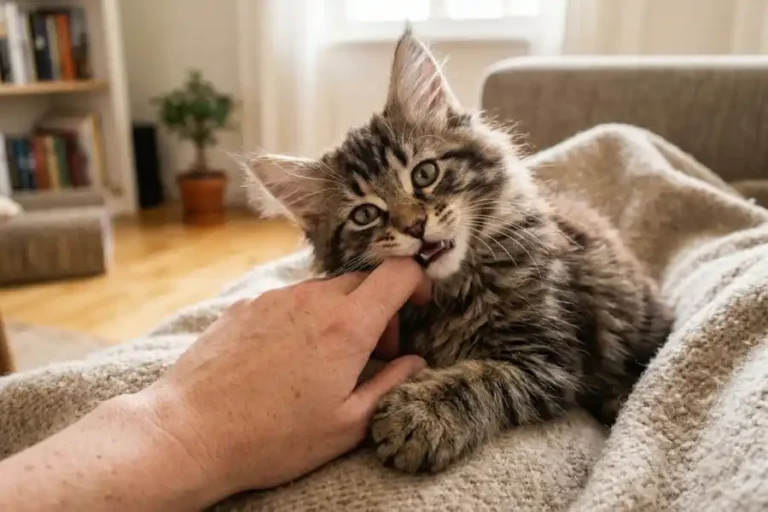
A bored Maine Coon in a small apartment can develop bad habits fast. A busy, stimulated cat rarely does. Playtime and mental activity matter more than floor space.
- Rotate toys every week so nothing gets boring.
- Use a puzzle feeder instead of a plain bowl at least once a day.
- Try harness and leash training for short hallway or outdoor walks.
- Set up a bird feeder outside a window for easy “cat TV”
- Try a pet water fountain. Many Maine Coons are drawn to running water, a quirky part of typical Maine Coon water habits.
- Run two short, active play sessions a day instead of one long one.
Should You Get a Second Cat?
Maine Coons are unusually social, even for a cat. Many bond closely with their owners. They can struggle with long stretches of alone time. That’s common in apartment living if you work full-time away from home.
A second cat is not required. But it often helps, especially if your Maine Coon is alone more than eight hours a day. If a second cat isn’t an option, extra playtime and a steady daily routine matter even more.
Signs Your Maine Coon Is Struggling With Apartment Life
Most Maine Coons adjust well. But it helps to know the early warning signs. That way, you can act fast.
- Overgrooming or bald patches from too much licking.
- Hiding more than usual, especially from you.
- Sudden litter box avoidance after using it just fine before.
- Pacing, restlessness, or knocking things over at night.
- Noticeable weight gain from too little activity.
These signs do not mean apartment living has failed. They usually mean something in the setup needs a change. Maybe your cat needs more vertical space, more play, or a vet visit to rule out a health issue.
A Quick Apartment Checklist for Maine Coon Owners
- Extra-large litter box, 28 inches or longer, two boxes minimum.
- Sturdy, wide-base cat tree near a window.
- Secure window screens on every reachable window.
- Daily puzzle feeder or food-based playtime.
- Two short play sessions per day.
- Wall shelves or a vertical path if floor space is tight.
- A confirmed, in-writing pet policy from your leasing office.
Frequently Asked Questions
Do Maine Coons need a yard?
No. Maine Coons are indoor cats by nature. They do not need outdoor access to stay healthy or happy. A leash walk or a secured catio can give them outdoor time, safely.
How much space does a Maine Coon really need?
There is no strict minimum square footage. A small, well-organized studio with vertical space usually works better than a large house with nothing to climb.
Are Maine Coons okay being left alone all day?
They handle alone time better than some breeds. But they are social by nature. Long, empty days are easier on them with a second cat, a steady routine, and daily playtime.
Do apartment weight limits apply to cats?
Usually not. Most weight limits are written for dogs. Still, check the exact terms with your leasing office before you move in, just to be safe.
Are Maine Coons destructive in small spaces?
Not usually, as long as they get enough exercise and play. Boredom, not size, is behind most scratched furniture or nighttime zoomies.
Final Thought
A Maine Coon does not need a mansion. It needs an owner who understands what “space” really means to a cat. It’s about height, layout, and things to do, not raw square footage. Get the setup right, and a Maine Coon can be just as happy in a 600-square-foot apartment as in a five-bedroom house. That’s really the whole story behind successful Maine Coon apartment living.