Maine Coon Vocalizations: What Every Chirp and Trill Means
Your Maine Coon just made a sound you’ve never heard before. It wasn’t a meow. It wasn’t a purr. It sounded almost like a bird, or maybe a tiny motor stuck in your cat’s throat. If you’ve ever stopped mid-step and thought, “Wait, what was that?”, you already know how strange and wonderful Maine Coon vocalizations can be.
This article breaks down every sound your Maine Coon makes, why they make it, and what it usually means. By the end, you’ll be able to “read” your cat’s voice almost like a second language.
Why Maine Coons Sound So Different From Other Cats
The Maine Coon cat is the largest domestic cat breed in the world. So you’d expect a big, booming voice to match, right? Not quite. Most Maine Coons have a small, soft voice that doesn’t match their size at all. Owners often call it a “tiny voice in a giant body.”
Experts believe this odd mix comes down to genetics. A Maine Coon’s vocal cords are shaped a little differently than a standard house cat’s. This may be why they rarely produce a loud, sharp meow. Instead, their sounds come out softer, rounder, and more musical.
Compare this to a breed like the Siamese, known for loud, demanding meows. A Maine Coon takes the opposite approach. It “talks” in a gentle chirp instead of shouting for attention. This is one of the clearest signs that Maine Coon vocalizations are truly unique among cat breeds.
The Full List of Maine Coon Sounds (And What They Mean)
Maine Coons rarely rely on a plain meow to communicate. Instead, they’ve built their own vocabulary. Here’s a look at the most common Maine Coon vocalizations, one sound at a time.
The Chirp
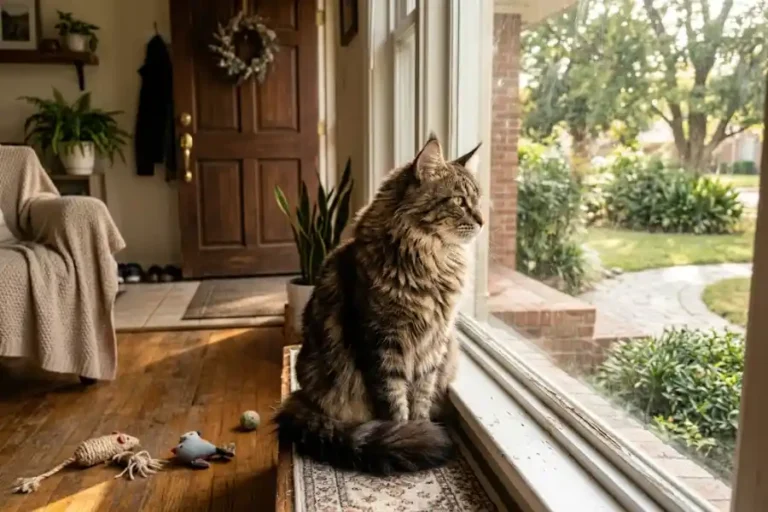
A chirp is short, high, and bird-like. Your cat repeats it two or three times in a row, almost like a tiny alarm going off. Maine Coons often chirp when they spot something moving, like a bird outside the window or a bug on the floor. It’s a mix of excitement and old hunting instinct.
You might also hear a chirp the moment you walk through the door. In that case, it usually means “You’re home! Follow me!”
The Trill
A trill sounds like a purr and a meow rolled into one smooth note. Your cat makes it with a closed mouth, and the sound rolls upward at the end, almost like a question. This is the sound most linked to Maine Coon vocalizations as a breed trait.
Trilling almost always means something positive. It’s a greeting, an invitation to play, or a simple “I’m happy you’re here.”
The Chatter
Chattering is a fast, clicking sound made with the jaw. It usually happens when your cat is watching prey it can’t reach, like a bird through a window. Some experts believe this sound is an old hunting instinct, left over from a cat’s wild ancestors. It’s not a sign of distress. It’s closer to frustrated excitement.
The Yowl
A yowl is long, low, and loud. It’s very different from a chirp or trill. Yowling often signals that something is wrong. Your cat might be in pain, feeling lost, stressed, or urgently asking for something, like food or a closed door to be opened. If yowling is new or happens often, it’s worth paying attention to.
The Almost-Silent Meow
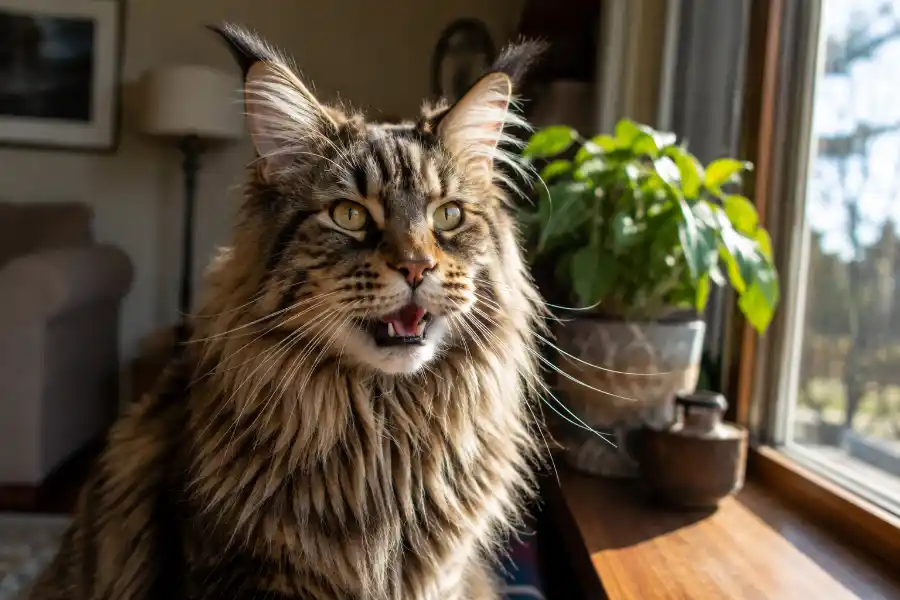
Some Maine Coons meow so softly it’s barely audible. You’ll see their mouth move, but the sound that comes out is tiny, almost a squeak. This is completely normal for the breed. It doesn’t mean anything is wrong. It’s just part of how understated their voice can be.
Why Some Maine Coons Barely Make a Sound
Not every Maine Coon is a chatterbox. Some are naturally quiet, and that’s perfectly normal too. Personality plays a huge role in how vocal a cat becomes. A confident, social Maine Coon may chirp all day long. A shy or independent one might stay mostly silent, only speaking up when it really wants something.
Early life shapes this as well. Kittens that got a lot of attention and were talked to often grow into more vocal adults. Kittens raised in a quieter home may simply never develop the habit. Neither pattern is better or worse. It’s just personality, the same way people are naturally chatty or reserved.
A quiet Maine Coon isn’t a broken Maine Coon. It’s simply a cat with its own voice, or its own choice to stay quiet.
How Maine Coon Vocalizations Change With Age
Kittens usually have high, squeaky voices. As their chest and airways grow, their sound naturally deepens. Around this same stage, their coat also fills out into the thick double layer adult Maine Coons are known for, which is usually when owners first notice Maine Coon shedding picking up too. This is why a two-year-old Maine Coon often sounds nothing like it did as a kitten.
Chirping and trilling often start early, sometimes within the first few weeks of life. Mother cats use these same sounds to call their kittens or guide them somewhere safe. Many Maine Coons never fully outgrow this “kitten language.” Instead, they carry it into adulthood and use it with their owners the same way they once used it with their mother.
What Your Maine Coon Might Be Trying to Tell You
Once you know the basic sounds, you can start connecting them to specific situations. Here’s a simple guide:
- Short chirp near a window: “I see something outside!”
- Trill when you walk in the door: “Welcome home. Follow me.”
- Trill near the food bowl: “It’s time to eat.”
- Chatter at a bird or bug: “I want that, but I can’t reach it.”
- Loud yowl at night: “I’m confused, uncomfortable, or I want something now.”
- Quiet squeak-meow: “I have a small request.”
Context matters just as much as the sound itself. The same chirp can mean different things depending on where your cat is, what’s happening around it, and what its body language looks like.
When Maine Coon Vocalizations Are a Warning Sign
Most Maine Coon sounds are completely normal. But sometimes, a change in vocalization is your cat’s way of asking for help. Watch for these warning signs:
- Sudden, loud yowling that’s new for your cat
- Vocal sounds paired with hiding or low energy
- Wheezing, raspy breathing, or open-mouth breathing while making sounds
- A normally quiet cat that suddenly won’t stop vocalizing
- A normally vocal cat that goes silent for no clear reason
Any of these changes are worth a call to your vet. Maine Coons are prone to a few breed-specific health issues, including a heart condition called hypertrophic cardiomyopathy. Breathing changes tied to vocal sounds should never be ignored. It’s always better to get checked and be safe than to wait and wonder.
How to Respond to Your Maine Coon’s Vocalizations
Maine Coons are smart. They quickly learn which sounds get a reaction from you. If you respond to every chirp with food, your cat will chirp for food constantly. If you respond to trills with affection, you’ll get a lot more trilling.
This isn’t a bad thing. It’s a great way to build a stronger bond. Try responding with calm, consistent reactions:
- Make eye contact and speak back in a soft tone.
- Move toward your cat instead of ignoring the sound.
- Reward calm trills and chirps with attention, not just treats.
- Notice patterns, like a specific chirp that always happens before mealtime.
Over time, you’ll build a kind of shared language with your Maine Coon, one built on sound, tone, and timing.
Frequently Asked Questions
Do all Maine Coons chirp and trill?
Most do, but not all. Some Maine Coons are naturally quieter and rely more on body language than sound.
Why does my Maine Coon trill instead of meow?
Trilling is believed to be linked to genetics and vocal cord shape. Many Maine Coons use it as their main greeting sound instead of a standard meow.
Is it normal for a Maine Coon to almost never make noise?
Yes. Personality plays a big role in vocalization. A quiet Maine Coon is not automatically a sign of a health problem.
Can Maine Coon vocalizations signal pain or illness?
Yes, especially if the sound is new, paired with breathing trouble, or very different from your cat’s normal pattern. When in doubt, contact your vet.
Do Maine Coons “talk” more than other cat breeds?
They often use a wider range of sounds than average, even if each individual sound is soft. This makes their vocalizations feel more expressive, even if they aren’t the loudest breed.
Maine Coon vocalizations are part of what makes this breed so special. Every chirp, trill, and quiet meow is a small window into what your cat is thinking and feeling. The more you listen, the more fluent you’ll become in your own cat’s language.
Visit the rest of the site Maine Coon Pet Guide for more interesting and useful articles. Thank you!