White Maine Coon: Blue Eyes, Hearing Risk, Price, and Care
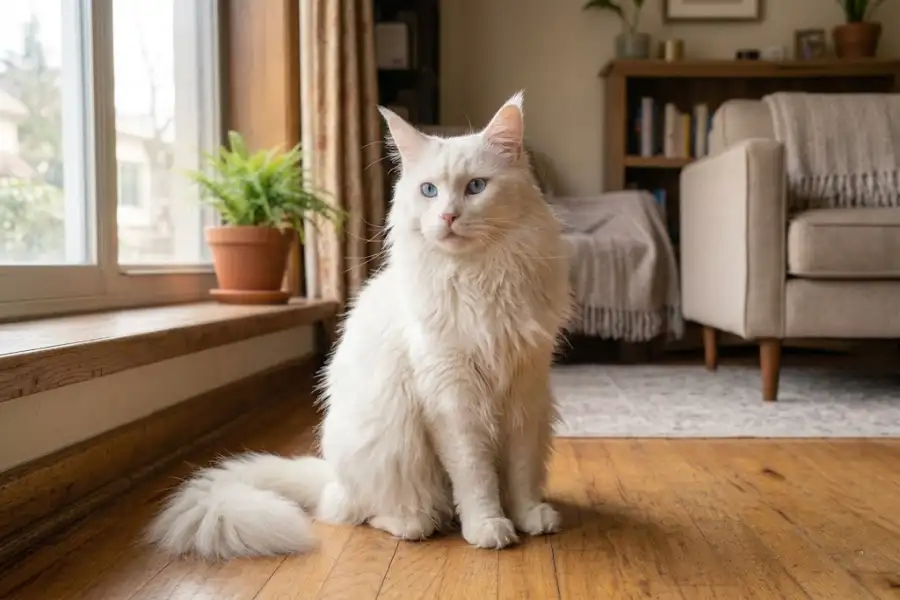
A white Maine Coon looks like a small snow lion walking through your living room. The thick coat, the huge paws, and the tall ear tufts make people stop and stare.
A white coat also comes with facts that many cat sites skip. One is a link between blue eyes and hearing loss. Another is the high price some sellers ask by calling these cats “rare.”
Here you will find what makes a cat white, what the eye colors mean, and how veterinarians test hearing. You will also see what a kitten costs in the US and how to keep that coat clean. The hearing numbers come from veterinary research, including Cornell University and a study of white kittens in the United Kingdom. The care steps match what breeders and vets suggest for long-haired cats.
What Is a White Maine Coon?
A white Maine Coon is a Maine Coon with a fully white coat. It has no stripes, no patches, and no spots. Big cat clubs like the CFA and TICA both accept solid white as an official color for the breed.
The white comes from a dominant gene called W. This gene hides the cat’s true coat color. Under all that white fur, your cat may carry a tabby, black, or smoke pattern. The coat just does not show it.
White Maine Coons are not albino. Albino cats make no color at all, and their eyes often look pink or very pale. A white coat on a Maine Coon can come with blue, gold, or green eyes. The nose and paw pads are usually pink.
Most white kittens have at least one white parent. Some kittens are born with a small patch of color on the head. It often fades in the first weeks.
How Rare Is a White Maine Coon?
White is less common than tabby, the most popular Maine Coon color. But it is not as rare as many sellers claim.
Breeders who focus on white cats do exist, and many work in the US. You may wait a few months for a kitten, much like you would for other special colors.
Be careful when a seller uses the word “rare” to charge more. Cat clubs do not rank white above other colors. A fair price follows health tests and the cat’s family line, not the color of the coat.
Eye Colors of a White Maine Coon
Your cat can have one of four eye looks:
- Blue eyes: Icy and eye-catching. This look has the strongest link to hearing loss.
- Gold or copper eyes: Warm and bright. These are the most common non-blue eyes.
- Green eyes: Less common, but they do show up.
- Odd eyes: One blue eye and one gold or green eye.
The same cells that give color to fur and eyes also help the inner ear grow. When those cells are missing, hearing can suffer. That is where the hearing link starts.
Are White Maine Coons Deaf?
Some are, and many are not. Here is what the numbers say.
Cornell University’s College of Veterinary Medicine reports that 17 to 22 percent of white cats with no blue eyes are born deaf. With one blue eye, the number is near 40 percent. With two blue eyes, it climbs to between 65 and 85 percent. These numbers come from white cats in general.
A study in the United Kingdom tested the hearing of white purebred kittens. It found hearing loss in 8 of 18 solid white Maine Coon kittens, which is about 44 percent. Kittens with at least one blue eye were about three times more likely to have hearing loss than kittens with no blue eyes.
International Cat Care also says that a white cat with two blue eyes is three to five times more likely to be deaf than one with no blue eyes.
Hearing loss can affect one ear or both ears. Loss in one ear is common, and those cats live happy, normal lives. The loss starts at birth, and there is no cure.
How the BAER Test Works
The BAER test is the only sure way to check each ear. A vet places small pads on the head and plays soft clicks. The test takes about 10 to 15 minutes. A hand clap near a kitten is not enough, because a kitten with one good ear can still react.
Ask every breeder for BAER results for each ear before you pay a deposit. A good breeder tests white kittens and shares the papers with no fuss.
Living With a Deaf Cat
A deaf cat can still be a loving, playful pet. A few small changes help a lot:
- Keep your cat inside or in a safe, closed-in cat patio. A deaf cat cannot hear cars, dogs, or other danger. Our post on whether a Maine Coon should be indoor or outdoor covers the safety side.
- Wake your cat with a gentle touch, not a sudden grab.
- Use hand signs or a quick flick of a light to call your cat. Many deaf cats learn these fast.
- Stomp lightly on the floor. Cats can feel those vibrations through their paws.
Size and Looks
A white Maine Coon is one of the biggest house cats in the world. Males often weigh 15 to 20 pounds, and some go higher. Females usually weigh 8 to 14 pounds. Some big males stretch close to 40 inches long, tail included.
These cats grow slowly. Most reach full size between 3 and 5 years old.
The look is easy to spot. Look for a square muzzle, tall ears with tufts, a thick neck ruff like a lion’s mane, big tufted paws, and a long, fluffy tail. White fur makes every one of these features stand out, and it can even make the cat look larger than it is.
Personality and Temperament
Coat color does not change a cat’s nature. A white Maine Coon acts like any other Maine Coon. That means friendly, silly, and full of play.
Many owners call the breed dog-like. These cats follow you from room to room, greet guests at the door, and can even learn to fetch. They do not yell for attention. They chirp and trill instead.
They get along well with kids and with calm dogs when you make slow introductions. Many love water, so do not be shocked if your cat dips a paw in your glass.
How to Care for the Snowy Coat
White fur shows every bit of dirt, much like a white car. A little steady care keeps it bright.
Brushing
Brush your cat three to four times a week with a wide-tooth metal comb, then a slicker brush. In spring and fall, brush every day. Check the armpits, the belly, behind the ears, and the base of the tail first. Mats form there fast.
Maine Coons shed a lot, and white hair shows on dark clothes and couches. Our post on Maine Coon shedding shows how to keep loose hair under control.
Bathing
Most Maine Coons handle a bath well. A bath every four to six weeks is common. Use a shampoo made for cats. A whitening cat shampoo can help with the yellow tint that shows up on the chin and paws. Never bathe a cat that has mats, since water makes them tighter. Our Maine Coon bathing routine post lays out each step.
Eyes, Ears, and Sun
White cats can get tear stains. Wipe the corners of the eyes with a damp cotton pad once a day or every other day. Check the ears each week for dirt or dark wax.
Pale skin on the nose and ear tips can burn in strong sun. Over time, sun damage can lead to skin problems. Keep your cat out of harsh midday sun by the window, and ask your vet about safe ways to protect those spots.
Health Checks Before You Buy
A white Maine Coon shares the health risks of the whole breed, plus the hearing risk. Ask your breeder about these:
- HCM (hypertrophic cardiomyopathy) is a heart disease that thickens the heart muscle. It is the top health worry in the breed. A DNA test checks for one gene, but it does not catch every case, so ask for heart scans too.
- Hip dysplasia is a hip joint problem that is more common in big cats.
- SMA (spinal muscular atrophy) is a muscle disease that a DNA test can find.
- Hearing loss is the extra risk in this color, so ask for BAER results on each kitten.
With good care, Maine Coons often live 12 to 15 years. White coat color is not known to change that. Our Maine Coon lifespan post shows what helps a cat live a longer life.
How Much Does a White Maine Coon Cost?
In the US, a pet-quality kitten from a registered breeder usually costs about $1,000 to $2,500. Show or breeding kittens can cost $2,500 to $4,000 or more. Adult cats from shelters and rescues often cost $100 to $400. Prices change by breeder and by state.
White does not come with an official higher price. If a seller asks for $5,000 or more just for the color, ask why. Some sellers pair two white cats to get more white kittens. That can raise the chance of hearing loss in the litter.
Questions to Ask a Breeder
- Can I see BAER results for each kitten?
- Were the parents tested for HCM with both DNA and heart scans?
- Are the parents registered with the CFA or TICA?
- Can I meet the mother cat?
- Do you give a written health contract?
White Maine Coon vs. Look-Alike Breeds
Other big, fluffy white cats can look like a Maine Coon in photos. Here is how to tell them apart:
- Norwegian Forest Cat has a triangle-shaped face and a straight nose line. A Maine Coon has a square muzzle.
- Turkish Angora has a light, slim, silky build, with a wedge-shaped head. It is much smaller.
- Siberian cats look round and stocky, with a rounder face.
Name Ideas for a Snowy Cat
Snow, Luna, Casper, Pearl, Frost, Misty, and Cloud all suit a white coat. A short name that is fun to say works best.
Frequently Asked Questions
Are all white Maine Coons deaf?
No. Many hear well. The risk is higher with blue eyes. One UK study found hearing loss in about 44 percent of solid white kittens of this breed. A BAER test is the only way to know for sure.
Are the eyes always blue?
No. These cats can have blue, gold, green, or odd eyes. Blue is the most eye-catching, but gold and green are common too.
How big does a white Maine Coon get?
Males often reach 15 to 20 pounds or more. Females usually weigh 8 to 14 pounds. Full size comes at 3 to 5 years.
How often should I groom the coat?
Brush three to four times a week, and every day in spring and fall. Bathe every four to six weeks with a cat shampoo.
Are white Maine Coons hypoallergenic?
No. No cat is fully free of allergens, and Maine Coons shed a lot. Coat color does not change allergen levels, so spend time with the breed before you commit.
Is a White Maine Coon Right for You?
This cat is a gentle, goofy, and beautiful companion. Plan for regular brushing. Ask for hearing and heart test results. Walk away from any seller who pushes a “rare” price. Do those three things, and you will likely bring home a happy cat that follows you around like a shadow.