Maine Coon Sleep Habits Explained: Hours, Poses & Vet Signs
Your Maine Coon is snoring on the couch. Again. One giant paw hangs off the cushion. It looks like it forgot gravity is a thing. You start to wonder: is this normal? Should you worry?
Maine Coon sleep habits confuse a lot of new owners. These cats sleep in odd poses. They nap for most of the day. Then they act shocked when a door gets closed on them. The good news is that almost all of this is normal. The better news is this: once you know why your Maine Coon sleeps this way, you can spot the rare times when something is wrong.
This article covers real Maine Coon sleep habits. You will learn how many hours they need. You will learn what their odd sleeping spots mean. You will learn how to set up a sleep space for a giant cat. You will also learn about one heart risk that every Maine Coon owner should know before it turns into an emergency.
How Many Hours Does a Maine Coon Sleep Each Day?
Most house cats sleep 12 to 16 hours a day. Maine Coons often sleep even more. Some sleep 18 to 20 hours, especially as kittens or seniors. That sounds like a lot. For a cat, it is not.
Cats are not lazy. They save energy in short bursts. Wild cats sleep long hours so they have power to hunt. Your Maine Coon has never hunted anything scarier than a shoelace, but the habit stays. Sleep needs change with age, so it helps to know what is normal at each stage.
Kittens (Under 1 Year)
Kittens grow fast. Growth takes fuel. A Maine Coon kitten can sleep 18 to 20 hours a day. It wakes up, eats, plays hard for ten minutes, then crashes again. This pattern is normal. It is nothing to worry about.
Adult Maine Coons (1 to 10 Years)
Adult Maine Coons settle into a steady rhythm. Most sleep 12 to 16 hours a day. You will see more energy at dawn and dusk. Cats are crepuscular. That means they feel most alert at those hours. Long naps fill in the rest of the day.
Senior Maine Coons (10 Years and Up)
Older Maine Coons sleep more again, especially in the later years of a typical Maine Coon lifespan. Many sleep 16 to 18 hours a day. They pick softer, warmer spots that are easy to reach. Stiff joints make jumping harder, so older cats nap closer to the ground.
Why Do Maine Coons Sleep So Much?
It is not laziness. A few real reasons explain the habit.
- Big bodies need more rest. Maine Coons are one of the biggest cat breeds, and a bigger body needs more downtime to recover, even after short bursts of play.
- Their body clock is built for dawn and dusk. Being crepuscular means a Maine Coon saves energy for low light hours, then rests hard the rest of the time.
- A calm cat sleeps more. Maine Coons are known for being easygoing and friendly. A relaxed cat trusts its home, so it does not stay on guard. That trust lets it fall into long, sound naps.
The Strange Sleeping Positions of a Maine Coon
Maine Coons sleep in poses that look almost impossible. Each one tells you something.
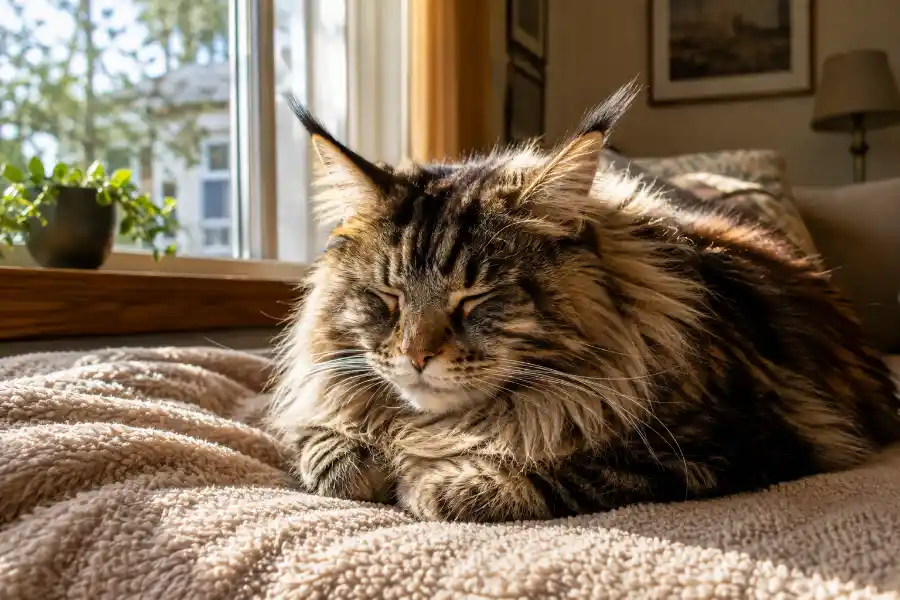
- The loaf. Paws tucked underneath, body shaped like a loaf of bread. This is a light nap. The cat is ready to move fast if needed.
- Belly up. Flat on the back, belly showing. This is one of the clearest signs of trust a cat can give, since the belly is a cat’s most exposed spot. It can also help a warm cat cool off, as less fur covers that area.
- The tight curl. Rolled into a small, round ball, tail often wrapped over the nose. This pose keeps body heat in and usually means the room feels a bit cool.
- The contortionist. Draped over a couch arm, hanging half off a cat tree, or twisted at an odd angle. Maine Coons have long, flexible bodies, and a cat that feels safe will happily fold into strange shapes for a nap.
None of these poses are a problem on their own. Watch for a sudden change instead. For example, a cat that always slept sprawled out now only curls up tight and avoids touch. That kind of change is worth noting.
Do Maine Coons Like to Sleep With You?
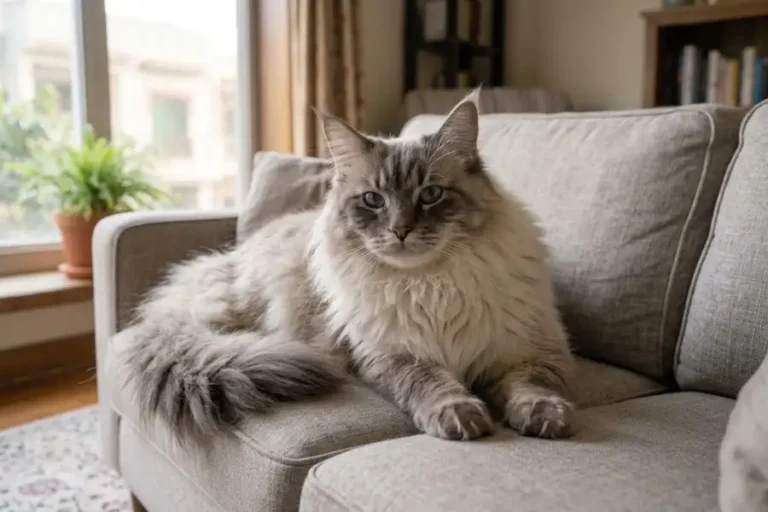
Yes, often more than owners expect. Maine Coons are one of the more social cat breeds. Many like to sleep at the foot of the bed. Some curl against a leg. Some stretch across a pillow.
This goes beyond warmth. Sleeping near you lets a cat pick up your scent. It helps the cat feel close to its family. A cat that trusts its owner is more likely to nap beside them than alone in another room.
If your Maine Coon sleeps in your room and gets shut out one night, expect some protest, often loud Maine Coon vocalizations at the door. A steady routine helps. Feed a solid meal before bed. Offer a warm blanket in another cozy spot. Keep the same bedtime schedule each night. These steps make any change easier on your cat.
Setting Up the Right Sleep Space for a Giant Cat
A regular cat bed can look tiny once a Maine Coon tries to curl up in it. Full-grown males can reach 18 to 25 pounds, and standard beds were not built with that size in mind. A few changes make a real difference.
- Choose an oversized bed. Look for beds made for large or giant breeds, or just use a bigger cushion or a dog bed. A Maine Coon that cannot stretch out fully will often skip the bed and pick the floor instead.
- Add a sturdy, tall perch. Maine Coons keep strong climbing instincts and often like to nap somewhere high. Cat trees for this breed need a wide, stable base, since a heavy cat can tip over a flimsy one.
- Watch the temperature. Maine Coons have thick, water-resistant coats built for cold winters. In winter, they often seek warm spots like sunny windows or heating vents. In summer, they seek out cool tile or shaded floors. Heavy Maine Coon shedding during coat-change season can add to that need for rest too.
- Keep the space quiet and steady. A cat that feels safe sleeps more soundly. A calm spot away from heavy foot traffic helps a Maine Coon settle in for a full, restful nap.
When Changed Sleep Habits Signal a Problem
Most shifts in a Maine Coon’s sleep are harmless. Still, watch for these signs:
- A sudden jump in sleep time, especially with hiding or a lost appetite
- Sleeping noticeably less, along with restlessness, extra noise, or weight loss
- Faster or harder breathing at rest, even in a cat that seems calm
- A cat that avoids jumping or climbing that it used to enjoy
Any one of these might mean nothing serious. But if a few show up together, or the change is sudden and lasts, call your vet instead of waiting it out.
The Heart Risk Every Maine Coon Owner Should Know About
Here is something many general cat articles skip. Maine Coons carry a higher genetic risk for a heart disease called hypertrophic cardiomyopathy, or HCM. It is the most common heart disease in cats, and Maine Coons are one of the breeds hit hardest by it.
HCM makes the heart muscle slowly grow thicker. A thick heart has a harder time pumping blood well. Many cats show no signs at all in the early stages. When signs do show up, they often look like normal tiredness at first. A cat naps more than usual. It seems less interested in play. It breathes a little faster than normal, even at rest.
That overlap is why sudden sleep changes matter in this breed. A vet can check for HCM in a few ways. They can do a physical exam. They can listen for a heart murmur. They can use imaging, like a heart ultrasound, if needed. A DNA test also exists for one known gene linked to HCM in Maine Coons, but a clear test does not rule out every case, since more than one gene can cause the disease.
None of this means every extra nap is a heart problem. Most of the time, a sleepy Maine Coon is just being a Maine Coon. But it does mean regular vet visits matter more for this breed, and a real change in sleep pattern is a reason to call, not only guess.
Quick Sleep Checklist for Maine Coon Owners
- Expect 12 to 20 hours of sleep a day, based on age
- Offer an oversized bed and at least one sturdy, tall perch
- Adjust warm and cool sleeping spots as the seasons change
- Keep a steady bedtime routine if your cat sleeps in your room
- Watch for sudden jumps or drops in sleep, not only the total hours
- Note faster breathing at rest, less jumping, or new hiding as reasons to call the vet
- Ask your vet about heart checks at each visit, given the Maine Coon’s HCM risk
Frequently Asked Questions
How many hours a day should a Maine Coon sleep?
Somewhere between 12 and 20 hours, based on age. Kittens and seniors sleep the most. Adults usually land closer to 12 to 16 hours.
Why does my Maine Coon sleep on its back?
Sleeping belly up is a sign of comfort and trust. It can also help a Maine Coon cool down, since less fur covers the belly than the rest of the body.
Is it bad for my Maine Coon to sleep in my bed?
No, not for most owners or cats. It comes down to comfort, allergies, and how well your cat settles at night. Many owners sleep just fine with a Maine Coon at the foot of the bed.
Why is my Maine Coon suddenly sleeping more than usual?
A short-term change is often nothing. It may follow a busy day or a shift in weather. But a sudden change that lasts, especially with faster breathing, hiding, or less appetite, is worth a vet visit.
Do Maine Coons need a special cat bed?
Not a special one, but a bigger one helps. Their large size means many standard beds are too small. An oversized bed or a soft blanket on a wide surface works better.
Maine Coon sleep habits can look dramatic. One minute your cat is sprawled flat on its back. The next it is curled tight in a sunny window. Almost all of it is normal for this big, easygoing breed. Learn your own cat’s usual pattern. Watch for real changes. Then you will always know the difference between a cat enjoying a well-earned rest and one that needs a trip to the vet.