Bobcat vs Mountain Lion: A Complete Guide
You spot a big cat on a trail, in a field, or on your doorbell camera. Is it a bobcat or a mountain lion? The answer matters. These two cats are very different in size, in how they act, and in how much space they need.
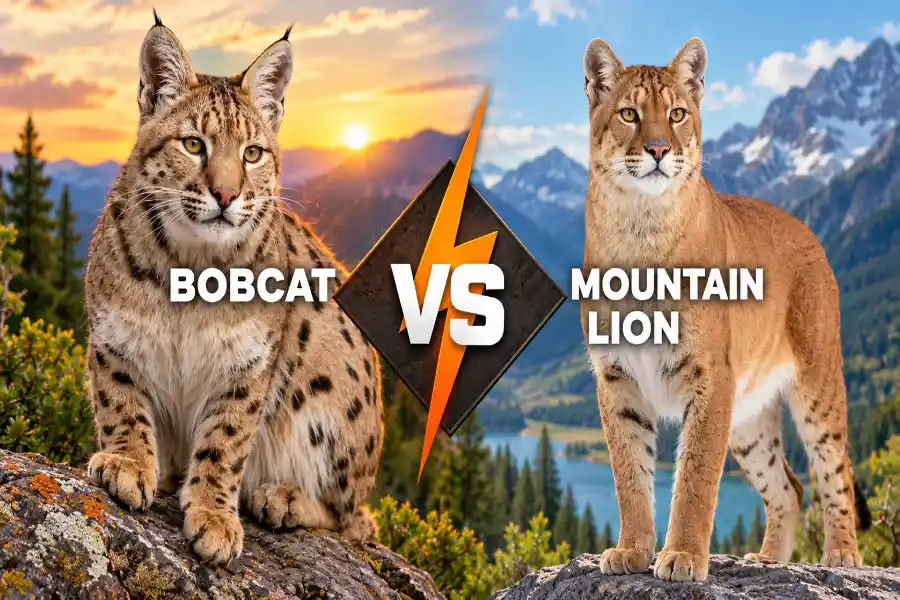
Here is the short version of the bobcat vs mountain lion question. A mountain lion is much bigger, has a long tail, and wears a plain tan coat. A bobcat is only about twice the size of a house cat, has a stubby tail, and has spots. Check the tail first. It is the fastest clue.
This guide covers the full bobcat vs mountain lion comparison: size, looks, tracks, sounds, food, home range, and safety. Every number comes from wildlife agencies, park services, or universities. You can find the list of sources at the end.
Bobcat vs Mountain Lion at a Glance
Use this checklist when you need to name a cat from a photo or a short sighting.
- Tail: A bobcat’s tail is short, about 4 to 7 inches. A mountain lion’s tail is long, about 2 to 3 feet, and makes up about one third of its body length.
- Weight: Most adult bobcats weigh 15 to 30 pounds. Adult mountain lions weigh about 80 to 105 pounds (females) and 130 to 175 pounds (males).
- Coat: A bobcat has spots and streaks. An adult mountain lion is one plain color, from tan to light cinnamon.
- Ears and face: A bobcat has pointed ears with short black tufts and fluffy cheek ruffs. A mountain lion has round ears with black backs.
- Tracks: A bobcat track is about 2 inches wide or less. A mountain lion track is about 2.75 to 3.75 inches wide.
- Home: Bobcats live in nearly every part of the lower 48 states, even near towns. Mountain lions live mostly in the West, plus a small group in Florida.
- Food: A bobcat hunts rabbits, rodents, and birds. A mountain lion hunts deer and elk.
Bobcat vs Mountain Lion Size and Weight
Size is the clearest difference in any bobcat vs mountain lion check. An adult mountain lion is many times heavier than a bobcat.
Think of a bobcat as a large, long-legged house cat. Most adults weigh 15 to 30 pounds. The body is about 25 to 36 inches long, with a tail of only a few inches. A bobcat stands about 18 to 23 inches tall at the shoulder.
A mountain lion is a different class of animal. Adult females usually weigh 80 to 105 pounds. Adult males are about one third bigger and often weigh 130 to 175 pounds. From nose to tail tip, a mountain lion is 6 to 8 feet long. Some big males are longer. At the shoulder, it stands about 24 to 30 inches tall.
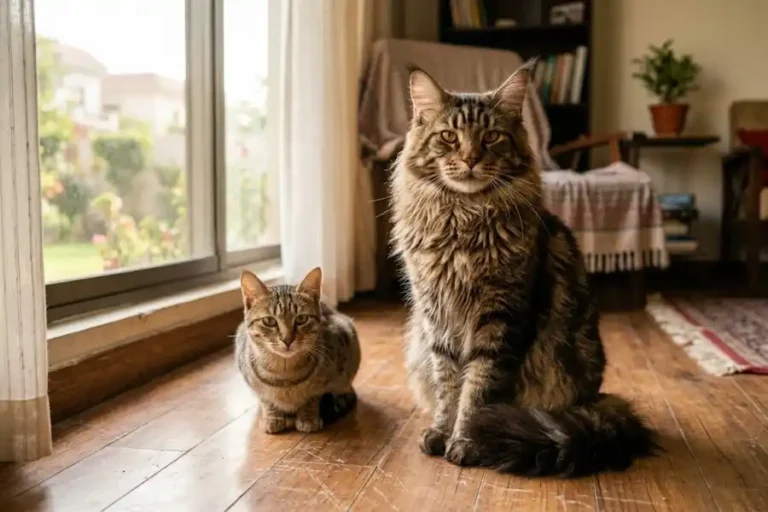
Be careful with photos. A bobcat on a log can look huge on a small screen. Look for something nearby to judge size, like a fence post, a tree trunk, or a door. A cat the size of a fence post is not a bobcat. For a sense of scale against a big house cat, this Maine Coon cat size comparison is a handy reference.
The Tail Tells the Story
If you only have one second to look, look at the tail. This is the easiest way to settle the bobcat vs mountain lion question.
A bobcat’s tail is short and looks “bobbed,” which is how the cat got its name. It is only about 4 to 7 inches long. The tip is black on top and white underneath.
A mountain lion’s tail is thick, long, and heavy. It has a black tip. The tail helps the cat balance when it turns fast or jumps from rocks.
There is one trap to know about. A bobcat that is walking away can line up its short tail with its back leg. From behind, that can look like one long tail. If you can, wait for a side view.
Coat, Ears, and Face
The coat is the next big clue in a bobcat vs mountain lion check.
Bobcat
A bobcat is brown, gray, or reddish. It has dark spots on the body and bars on the legs. The belly is white, often with spots too. The face has long cheek ruffs that look like sideburns. The ears are pointed and have short black tufts. Those tufts are also why some people ask about a Bobcat Maine Coon mix.
Mountain Lion
An adult mountain lion is one color all over. The name “concolor” in its science name means “one color.” The coat is tan to light cinnamon, with a white chest and belly. The backs of the ears and the tip of the tail are black. The ears are round, and the head looks small for the body.
The Spotted Kitten Problem
Many sites skip this part, and it is a common bobcat vs mountain lion mistake. Baby mountain lions are not plain. Kittens have dark spots and a ringed tail, and the spots fade as they grow. A spotted kitten can fool people into thinking they saw a bobcat. The clues are the tail and the ears. A kitten still has a long tail and round ears. A kitten also rarely travels alone. Look for a mother nearby.
Bobcat vs Mountain Lion Tracks
Many people find tracks before they ever see the animal. Tracks are also a great way to check a bobcat vs mountain lion guess.
- Width: Mountain lion tracks are about 2.75 to 3.75 inches wide. Bobcat tracks are smaller, usually about 2 inches wide or less. Even a six-month-old mountain lion kitten leaves a bigger track than a bobcat.
- Claws: Cats keep their claws pulled in when they walk. So neither cat usually leaves claw marks. Dog and coyote tracks often do.
- Toes: Mountain lion toes are somewhat teardrop shaped. Bobcat toes look more oval.
- Four toes: Both cats show four toes on each print, with a large pad behind them.
Here is a simple field tip. Put a coin, key, or ruler next to the track and take a photo from straight above. Without something for scale, nobody can tell how big a track really is.
Where Each Cat Lives
Range is another big part of the bobcat vs mountain lion story. One cat copes with towns and farms. The other needs wild country.
Bobcat Range
Bobcats are the most common wild cat in North America. They live across most of the lower 48 states and in southern Canada and Mexico. They can live in forests, deserts, swamps, farmland, and the edges of cities. Their home ranges are fairly small. In the U.S., the average is about 6 square miles for females and about 15 square miles for males. The range depends on how much food is nearby.
This is why people see bobcats in suburbs more often than they expect. A yard with rabbits, mice, and a bit of brush can be enough.
Mountain Lion Range
Mountain lions need more space. They live mostly in the western United States and Canada, plus a small, protected group in Florida known as the Florida panther. Males often need dozens of square miles, and in some places more than 100. The cat needs enough deer to eat, along with rocky or wooded cover to hide.
The old eastern cougar was declared extinct by the U.S. Fish and Wildlife Service in 2011. Young males from the West still wander far east now and then, but a new eastern population has not been confirmed.
Mountain lions also have the widest range of any wild land mammal in the Americas. They live from Canada all the way to the southern tip of South America. Few animals can say that.
Bobcat vs Mountain Lion Diet and Hunting
Both cats are ambush hunters. They stalk quietly, get close, and pounce. Both are most active at dawn, at dusk, and at night. The big difference in the bobcat vs mountain lion menu is the size of the prey.
Bobcats eat rabbits, hares, mice, squirrels, and birds. A hungry bobcat will sometimes take a young deer, especially in winter, but this is not the usual meal.
Mountain lions eat mostly deer and elk. They also take smaller animals when the chance comes up. A mountain lion eats about 48 deer-sized animals in a year, roughly one a week. After a kill, it often drags the body to a hidden spot and covers it with leaves and sticks to eat over several days.
This is why a mountain lion is called an apex predator. It sits at the top of the food chain and has no natural enemies. A bobcat is a mid-level predator. It keeps rodents and rabbits in check, but larger animals can hunt it, including mountain lions, coyotes, and wolves.
Sounds in the Night
Another thing other guides skip: what each cat sounds like. This matters in any bobcat vs mountain lion mix-up after dark, when you hear something strange outside.
A mountain lion cannot roar. It can hiss, growl, and make soft chirps. During mating season, it can also make loud, high screams. A bobcat can growl, hiss, and yowl, and it can also scream during mating season. Those cries can sound a lot like a person in distress.
Sound alone is a weak clue. Red foxes and other animals make eerie screams too. If you hear a scream, do not guess. Look for a track or a clear sighting before you decide which cat it was.
Bobcat vs Mountain Lion: Which Is More Dangerous?
Many readers want a plain answer to the bobcat vs mountain lion safety question. Here it is. Neither cat hunts people. Both are shy and try to avoid humans. But the mountain lion is the bigger risk, simply because of its size and power.
Mountain Lions and People
Attacks are very rare. The Mountain Lion Foundation counts about 29 deadly attacks on people in North America since 1868. That is roughly one every five years across the whole continent. In early January 2026, Colorado officials reported a suspected fatal attack on a hiker. It was the state’s first since 1999.
Most attacks happen when people are hiking, running, or biking alone, or when children are out of sight of their parents. Fast movement can look like prey to a lion.
Bobcats and People
Bobcats almost never attack people. The rare cases usually involve a sick animal, such as one with rabies, or a bobcat that is cornered. A healthy bobcat will run or hide.
Bobcats are a real risk to small pets, though. A cat, a small dog, or a chicken left outside at dusk can look like prey.
What to Do If You See a Mountain Lion
Wildlife agencies give the same advice again and again. Learn these steps before you go out on a trail.
- Stay calm and do not run. Running can trigger a chase.
- Face the cat. Keep your eyes on it. Do not crouch or bend over.
- Look big. Raise your arms, open your jacket, and pick up small children right away.
- Speak firmly and loudly. Let the cat know you are a person, not prey.
- Back away slowly. Leave the cat an easy way to go.
- Fight back if it attacks. Use rocks, sticks, trekking poles, or anything you have. Aim for the face and head.
Hike in groups when you can. Keep kids close and dogs on a leash. Try not to hike alone at dawn or dusk in mountain lion country.
What to Do If You See a Bobcat
The bobcat vs mountain lion difference is big here too. Your response is much simpler, because most bobcat sightings end with the cat melting into the brush.
- Stay where you are or back away slowly. Do not walk toward it.
- Never try to touch, feed, or corner a bobcat.
- Bring small pets inside, and keep dogs on a leash.
- If a bobcat acts sick, acts strangely bold, or does not fear people, call your local wildlife agency. Do not go near it.
How to Keep Pets and Livestock Safe
The bobcat vs mountain lion risk to pets is real, so plan ahead. The best way to prevent trouble with either cat is to remove the easy meals.
- Keep cats and small dogs inside from dusk until after dawn. For big breeds like the Maine Coon, there is more on whether to let them roam in this Maine Coon indoor or outdoor article.
- Lock chickens, rabbits, and goats in a strong coop or pen at night. Make sure the roof is covered too, because both cats can climb.
- Use motion lights around barns and yards.
- Do not leave pet food outside. It also draws mice, raccoons, and deer, which draw the cats.
- Trim thick brush near your home where a cat could hide.
Common Mix-Ups
A few other animals get mixed up with these two cats in a bobcat vs mountain lion sighting.
- Canada lynx: Very similar to a bobcat, but with longer ear tufts, bigger furry paws, and a tail tip that is black all the way around. Lynx live in far fewer places in the lower 48. Big, tufted house cats get mistaken for lynx too, as this Maine Coon vs Lynx comparison shows.
- House cat: A bobcat is about twice as big and has a stubby tail and ear tufts.
- Coyote or large dog: Tracks show claw marks, and the tail hangs low and bushy.
Frequently Asked Questions
Is a bobcat a baby mountain lion?
No. They are two separate species. A bobcat stays small its whole life and has a short tail. A baby mountain lion is spotted but has a long, ringed tail, and it grows into a cat that weighs 80 pounds or more.
Can a bobcat kill a mountain lion?
It is very unlikely. An adult mountain lion is many times heavier and much stronger. Mountain lions have been known to kill bobcats, and bobcats usually avoid them.
Which is bigger in a bobcat vs mountain lion comparison?
The mountain lion is much bigger. A male can weigh up to about 175 pounds or more, while a big bobcat is rarely over 35 pounds.
Do bobcats and mountain lions live in the same places?
Yes, in much of the West. They share many of the same hills and canyons, but they hunt different animals and stay out of each other’s way.
Are there mountain lions in the eastern United States?
Mostly no. The eastern cougar was declared extinct in 2011. The Florida panther lives in southern Florida. Now and then, a young male from the West travels far east, so a rare sighting is possible.
Is it safe to hike where there are bobcats or mountain lions?
Yes. Millions of people hike in cat country every year, and attacks are very rare. Hike in groups, keep kids and dogs close, and know the steps above.
Final Thoughts
The bobcat vs mountain lion question comes down to a few easy checks. Look at the tail, the size, the coat, and the tracks. Short tail, spots, and a house-cat-plus build mean bobcat. Long tail, plain tan coat, and a heavy build mean mountain lion.
Both cats are shy, helpful wild animals. Bobcats keep small pests in check. Mountain lions keep deer and elk herds in balance. Give them space, protect your pets, and enjoy the rare chance to see one.